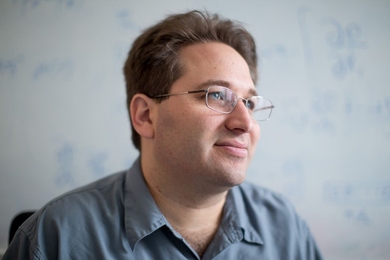
3Q: Scott Aaronson on Google’s new quantum-computing paper
Google experiments suggest that the D-Wave computer exploits quantum phenomena.
Google experiments suggest that the D-Wave computer exploits quantum phenomena.

Looking back on the year that was: Highlights from the Computer Science and Artificial Intelligence Lab in 2015.
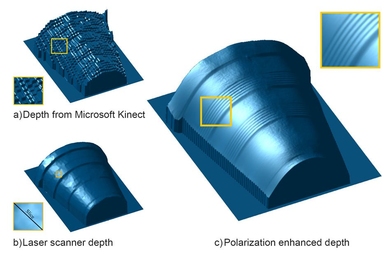
Algorithms exploiting light’s polarization boost resolution of commercial depth sensors 1,000-fold.
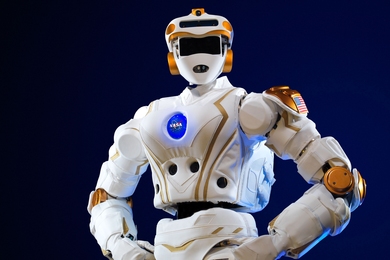
Team led by Professor Russ Tedrake of CSAIL to develop algorithms for 6-foot-tall “Valkyrie” robot to travel to Mars and beyond.

Algorithm may be applied to a broad range of complicated problems.

Technique for mobile image processing in the cloud cuts bandwidth use by more than 98 percent.
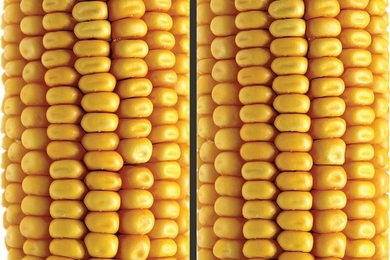
Algorithms could offer new tools for graphics software or reveal structural defects.

A tool that would provide a secure foundation for any cryptographic system may be close at hand.
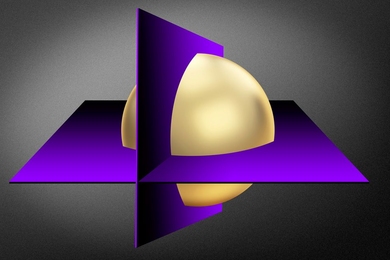
New general-purpose optimization algorithm promises order-of-magnitude speedups on some problems.

Giving machine-learning systems “partial credit” during training improves image classification.
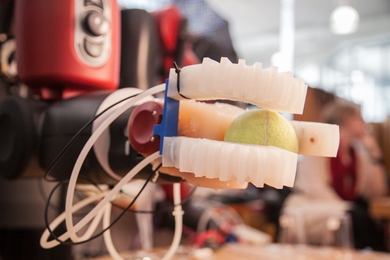
Team from Computer Science and Artificial Intelligence Lab develops silicone rubber gripper and advanced object-identification algorithms.
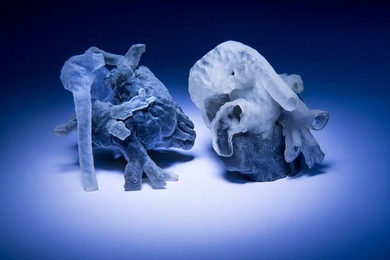
System can convert MRI scans into 3D-printed, physical models in a few hours.

Startup’s platform analyzes data from multiple sources to better predict buying preferences.
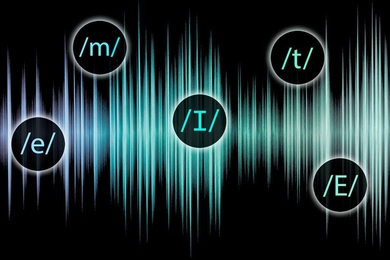
System learns to distinguish words’ phonetic components, without human annotation of training data.

More efficient memory-management scheme could help enable chips with thousands of cores.