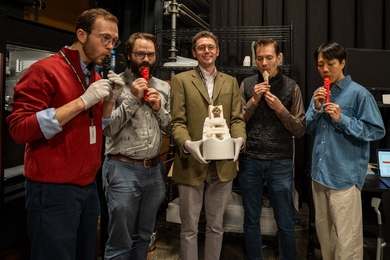
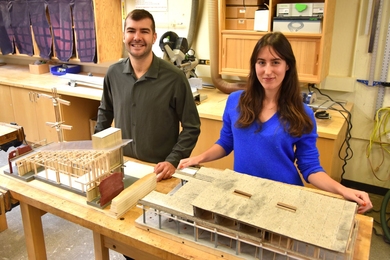
Through an interdisciplinary collaboration between MIT and the Museum of Fine Arts, Boston, researchers are creating playable physical and synthesized replicas.
In research that could help elucidate humans’ role in global warming, scientists showed how three major natural events impacted global atmospheric temperatures.
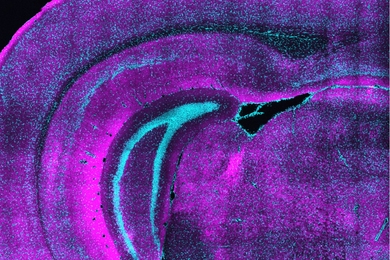
Researchers find mice modeling the autism spectrum disorder fragile X syndrome exhibit the same pattern of differences in low-frequency waves as humans — a new marker for treatment studies.
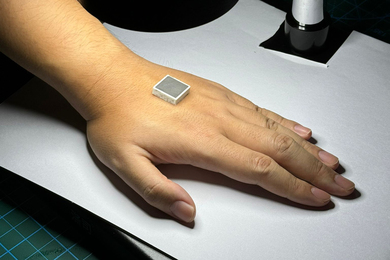
WITEC is working to develop the first wearable ultrasound imaging system to monitor chronic conditions in real-time, with the goal of enabling earlier detection and timely intervention.
Somatostatin-expressing neurons follow a unique trajectory when forming connections in the visual cortex that may help establish the conditions needed for sensory experience to refine circuits.
MIT physicists observed the first clear evidence that quarks create a wake as they speed through quark-gluon plasma, confirming the plasma behaves like a liquid.
Recent summit at MIT brought together educators, policymakers, and community partners, featuring resilience expert Shaka Senghor on transforming lives through learning and redefining pathways to freedom.
Top stories highlighted the Institute’s leading positions in world and national rankings; new collaboratives tackling manufacturing, generative AI, and quantum; how one professor influenced hundreds of thousands of students around the world; and more.
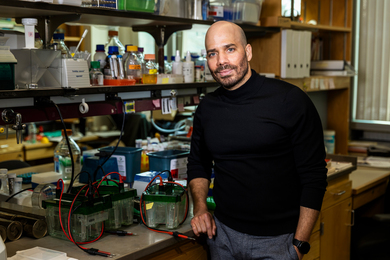
The approach could transform large-scale biomanufacturing by enabling automated and contamination-conscious workflows for cell therapies, tissue engineering, and regenerative medicine.