Explained: Ad hoc networks
Decentralized wireless networks could have applications in distributed sensing and robotics and maybe even personal communications.
Decentralized wireless networks could have applications in distributed sensing and robotics and maybe even personal communications.

Professor Joseph Sussman chaired committee that also required funding for public transportation

$30,000 prizes awarded to inventive students nationwide; four leading universities celebrate 2011 winners
The creation of the first electrical-engineering curriculum may have said as much about MIT’s educational philosophy as it did about the pace of innovation.

Sanyal, Schuh, Verghese and Winston honored for undergraduate teaching excellence

MIT celebrates the official opening of the institute's new building.

New 3-D microfluidic system offers greater control over production of drug-delivering nanoparticles.

Five-year, $2 million commitment will help develop and support careers of underrepresented minorities and women.

A new experiment would use quantum effects to perform otherwise intractable calculations, but conducting it should be easier than building a quantum computer.
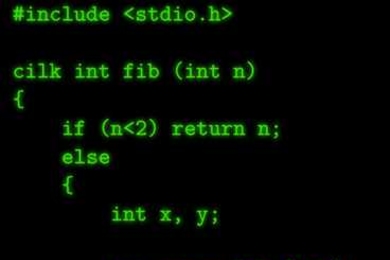
To take advantage of multicore chips, programmers will need software development systems that let them express themselves in fundamentally new ways.

One key to making parallel algorithms efficient is to minimize the amount of communication between cores.

Charles Leiserson and his team are experts at designing parallel algorithms — including one for a chess-playing program that outperformed IBM’s Deep Blue.

Delivers keynote address at the annual Laureates and Leaders induction ceremony