
MIT researchers realize “ideal” kagome metal electronic structure
Newly synthesized compound of iron and tin atoms in 1-to-1 ratio displays unique behavior.
Newly synthesized compound of iron and tin atoms in 1-to-1 ratio displays unique behavior.
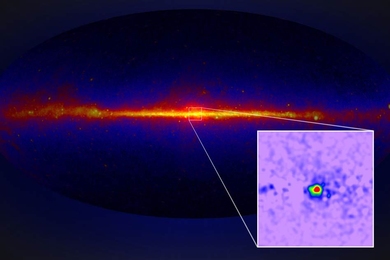
A new analysis puts dark matter back in the game as a possible source of energy excess at the galactic center.

Talya Klinger and Steven Truong will begin graduate studies in the UK next fall.
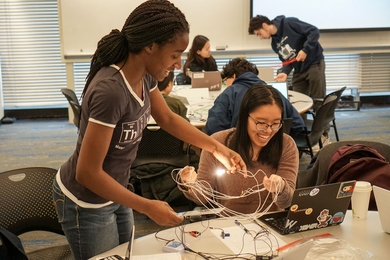
In 8.02 (Electricity and Magnetism), students explore the practical application of electromagnetic concepts.
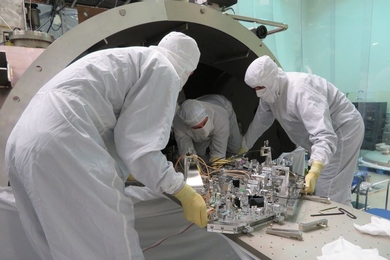
Technology “squeezes” out quantum noise so more gravitational wave signals can be detected.
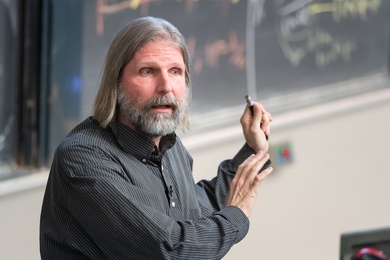
Cornell University professor and physicist uses nanoscale parts to create smart, active microbots.
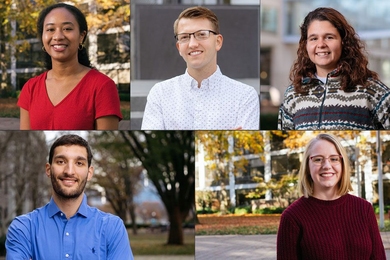
Ali Daher, Claire Halloran, Francisca Vasconcelos, Billy Andersen Woltz, and Megan Yamoah will begin postgraduate studies at Oxford University next fall.
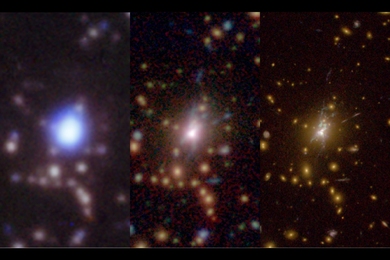
With increasingly advanced data, Michael McDonald and colleagues study a galaxy cluster bursting with new stars.
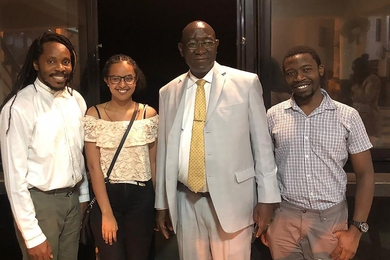
Mgcini "Keith" Phuthi ’19, a native Zimbabwean, uses his experiences at MIT to develop improvements in education policy in Sierra Leone through MISTI-Africa.

Courtyard space celebrates beloved professor’s research and mentorship.
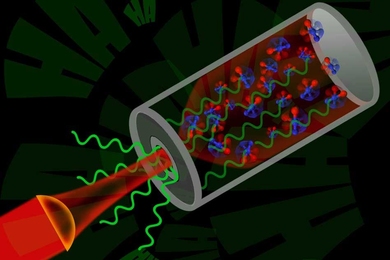
Device may enable “T-ray vision” and better wireless communication.
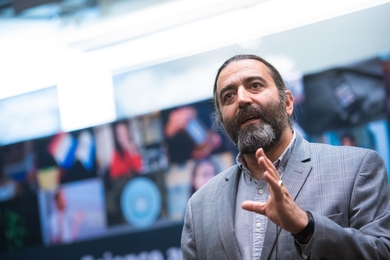
Assistant professor of nuclear science and engineering Areg Danagoulian probes deep inside cargo containers and ballistic warheads to ferret out fissile materials.

Physics experiment with ultrafast laser pulses produces a previously unseen phase of matter.
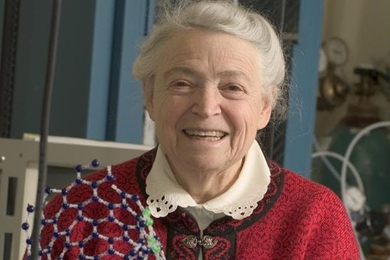
Cornell University’s Paul McEuen will inaugurate series to honor beloved MIT professor.
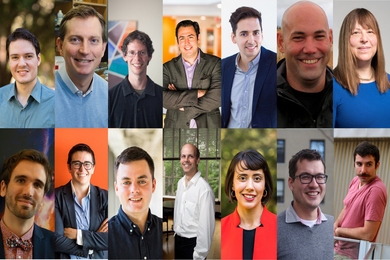
Those selected for these positions receive additional support to pursue their research and develop their careers.