Department
Chemical Engineering
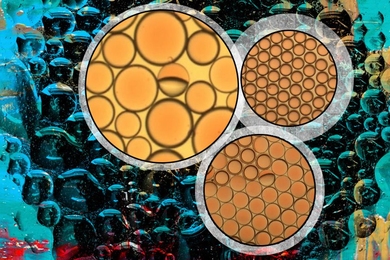
A simple way to make and reconfigure complex emulsions
Researchers can precisely control the distribution of liquids suspended within each other.
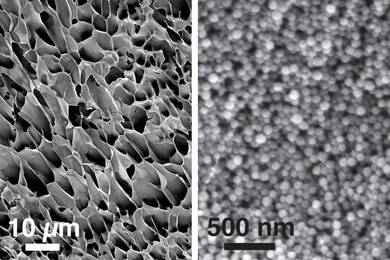
New nanogel for drug delivery
Self-healing gel can be injected into the body and act as a long-term drug depot.

Taking technology from the lab to the patient
Daniel Anderson wants to bring advances in drug delivery and biomaterials to the clinic.

Engineered insulin could offer better diabetes control
Molecule stays in the bloodstream and is turned on when blood sugar levels are too high.

Evaluating strategies for HIV vaccination
Study yields insight into generating antibodies that target different strains of HIV.
Eight from MIT elected to National Academy of Engineering
New members include the Institute’s president and the director of Lincoln Laboratory.

Langer wins Queen Elizabeth Prize for Engineering
Award honors one engineer’s global impact on human health.
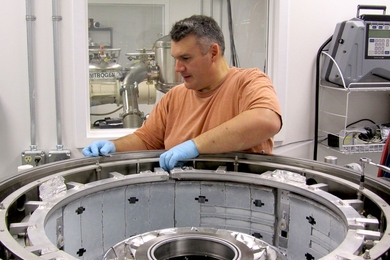
Commercializing a new generation of polymer coatings
GVD’s vapor-deposited polymer coatings improve performance efficiency in critical applications across industries.
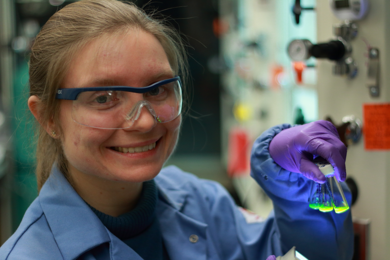
Clocking energy-transfer rates in quantum dots
MIT chemistry graduate student Jolene Mork examines rates of excitonic-energy transfer.

Forbes hails MIT standouts in science, education, energy, technology, and health care
11 MIT affiliates and more than 30 alumni are identified as movers, makers, and game changers in their respective fields.
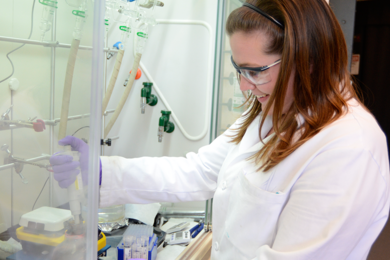
Summer Scholars make an impact
Morgan Beck and Sarah Arveson contribute as interns to research in the Tisdale Lab.
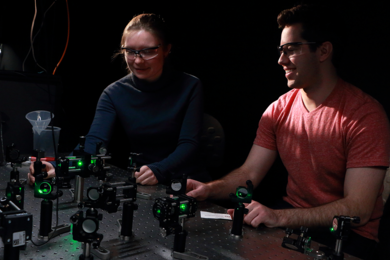
Calling quantum dots to order
MIT chemical engineering graduate student Mark Weidman and colleagues demonstrate how to synthesize lead sulfide nanocrystals of uniform size.

Faculty highlight: William Tisdale
Understanding and controlling how energy moves in nanostructured materials such as quantum dots motivates assistant professor of chemical engineering William Tisdale.
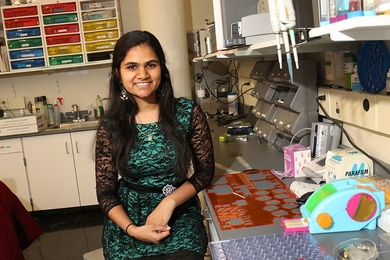
Out of the lab, into the world
Rhodes Scholar Anisha Gururaj aims to connect life-changing technologies with people who need them.