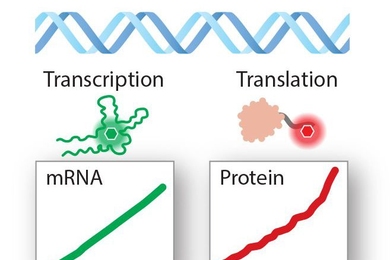
A “biomultimeter” lets scientists measure RNA and protein production in real-time
Fluorescent tagging system can expedite the process of designing genes and personalizing medicine.
Fluorescent tagging system can expedite the process of designing genes and personalizing medicine.
New tools can find patterns in vast online data to track and identify users on illicit forums.
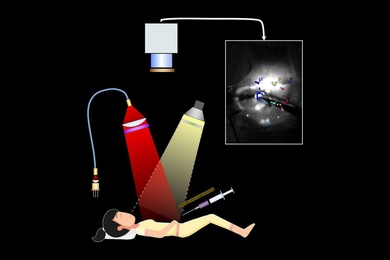
More effective surgery could boost survival rates for ovarian cancer.

Novel batteries are the first to use water-splitting technology at their core.

Facility modernization plan includes a new compound semiconductor laboratory and microsystem integration facility that will enable modern innovation.
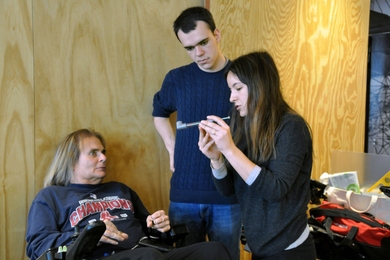
Sixth annual Assistive Technologies Hackathon paired students with client co-designers to create innovative solutions to the everyday problems they face.
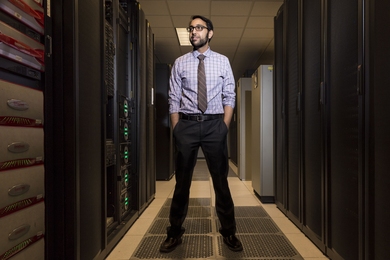
Lincoln Laboratory researchers have developed a technique to compress hours of internet traffic into a bundle that can be analyzed for suspicious behavior.
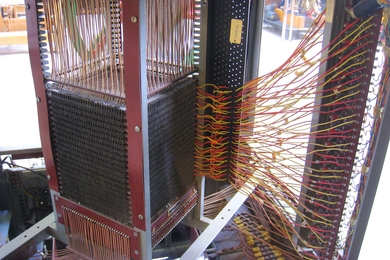
From digital circuits to ingestible robots, the Institute has helped spearhead key innovations in the technology revolution.

Experts assess potential global destabilization caused by climate change impacts on water supplies, land use, and migration.

Members have made advances in molecular processes, rheology, computer networking, nanocrystalline metals, affective computing, and semiconductor tech.

Casey Evans, Stewart Isaacs, and Jessica Zhu are honored for outstanding academic performance, civic contributions, and research.

Undergraduate researchers discussed their projects at a well-attended poster session.

NASA’s OSIRIS-REx sample-return spacecraft, carrying MIT instrument, arrived at asteroid in December; now begins the science to select a sampling location.
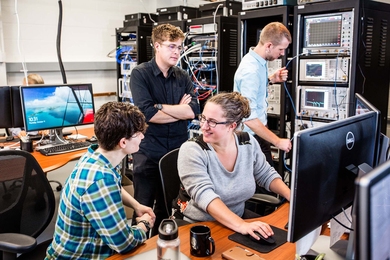
William Oliver says a lack of available quantum scientists and engineers may be an inhibitor of the technology’s growth.

First measurement of its kind could provide stepping stone to practical quantum computing.