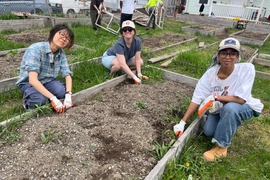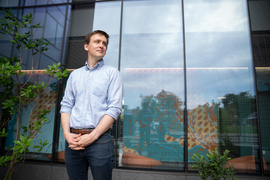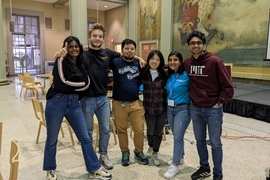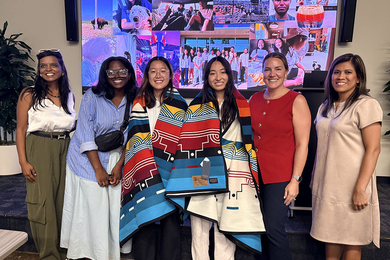
For the past three summers, MIT master’s students and recently graduated planners have collaborated with cities and community organizations to advance climate, infrastructure, and economic development initiatives. They’re known as the Freedom Summer Fellows, participants in an impact-driven program launched in 2023 by the MIT Department of Urban Studies and Planning (DUSP), an expression of the department’s commitment to equal opportunity and experiential learning.
Over the course of eight to 10 weeks, fellows are immersed in the real stakes and challenges of projects that involve navigating a network of interconnected causes, competing agendas, a range of stakeholders, and rapidly changing circumstances. Host organizations define discrete tasks and provide ongoing supervision, while fellows develop actionable tools and materials designed to empower organizations in the long term — from policy research and grant application strategies to navigate funding, to analytical tools and implementation frameworks to ensure informed and streamlined project management.
“You can’t teach planning today without grappling with how policy actually unfolds within communities; under pressure, with limited resources, and with multiple conflicting interests,” says Phillip Thompson, professor of urban planning at MIT and former New York City deputy mayor for strategic policy initiatives under Mayor Bill de Blasio. “The Freedom Summer Fellowship is about capacity building through cooperative learning — a knowledge exchange intended to have lasting positive results for communities, while equipping planners with critical experience as they embark on their careers.”
From classroom to communities
The fellowship emerged from 11.S943 (Bills and Billions), a DUSP course taught by Thompson and Elisabeth Reynolds, professor of the practice at MIT and former special assistant to President Joe Biden for manufacturing and economic development. The course examines U.S. federal policy and its intersection with local economic development, labor markets, and the infrastructure of industry, energy, and the built environment more broadly.
“We were at an inflection point,” says Reynolds, speaking of her return to MIT in fall 2022 after serving at the National Economic Council. “There was a real sense of urgency about the wave of new legislation and funding around clean energy, infrastructure, and reindustrialization, and much of the investment and work in these areas continues today. It’s a very dynamic time for cities and states, with significant experimentation and innovative strategies — a perfect environment for MIT graduate students and recent grads.”
Securing federal funding is typically dependent on competitive grants requiring technical, financial, and community planning that many local governments and nonprofits are not equipped for. “While much funding to localities has since been cut, the momentum for change is still there,” says Thompson. “The incentives put forward by the Inflation Reduction Act encouraged localities and communities to initiate their own clean energy projects, and there’s a continued recognition that climate change is going to take a movement from the bottom up.”
At a time when the U.S. is experiencing a paradigm shift in policy — characterized by challenges to a free-market economy and global trade, renewed investment in industrial strategy, and the lifting of environmental and other regulations — the fellowship offers a way to support the planning and implementation of equitable development strategies and to redirect resources where they are needed most.
From placements to professional practice
Since 2023, 31 Freedom Summer Fellows have collaborated with 19 host organizations, and contributed to more than $100 million in state, federal, and philanthropic grant applications, including a successful $3 million EPA Climate Pollution Reduction grant for Hawaii. Fellows have helped convene more than 3,500 community members and have produced dozens of planning tools, including implementation maps, technical tools, and dashboards that support equitable project design and production. Collaborations have inspired the focus of graduate theses produced as client reports for hosts, and in several cases fellows have extended their positions to full-time roles.
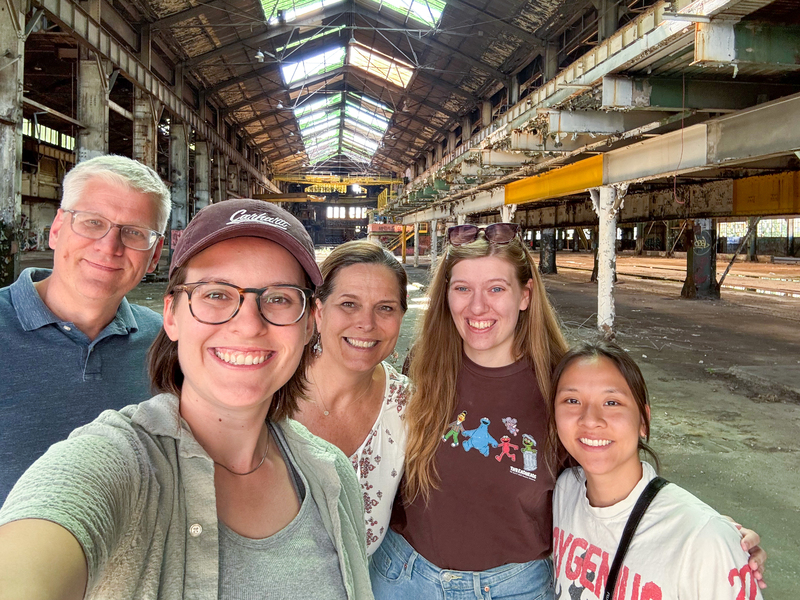
For Sara Jex MCP ’25, her 2024 Freedom Summer Fellowship became a direct pathway from graduate study to professional practice. She was placed with the Site Readiness Fund for Good Jobs in Cleveland, Ohio, an organization working to transform brownfields and disinvested industrial sites into engines of inclusive economic growth.
“Much of my work that summer involved developing an EPA Community Change Grant application for a proposed industrial district spanning over 350 acres — 200 of which we’re looking to reactivate,” says Jex. “So, it’s a transformative project that will bring in new jobs, but there are also major challenges that come with industrial place-making, especially given the proximity to residential neighborhoods. In Rust Belt cities, there’s a history of industrial disinvestment leading to job loss, population decline, and environmental injustices. We don’t want to repeat the harms of the past — we want to create something better.”
To support equitable development strategies for the industrial corridor, Jex helped to prepare technical tools mapping the effects of development on home values, seeking to identify a balance of growth, affordability, and resident benefit. She also evaluated wealth-building strategies such as land trusts and mixed-income neighborhood trusts, offering recommendations for community ownership of land holdings.
“Our vision for the project is not just about bringing in new businesses and creating new jobs,” says Jex, “it’s also about going beyond job creation to create lasting benefit for communities surrounding the sites.”
Jex continued working with Site Readiness Fund for Good Jobs during her second year at MIT and now holds a full-time role at the organization. “The Freedom Summer Fellowship gave me a platform to start building my planning career,” she reflects. “It was eye-opening to be in a cohort of other students doing similar work across the country. The insights from our weekly meetings have stayed with me since graduating — we were able to share perspectives on the challenges we were facing from multiple different contexts, and that brought a new dimension to the learning process.”
Redefining resilience
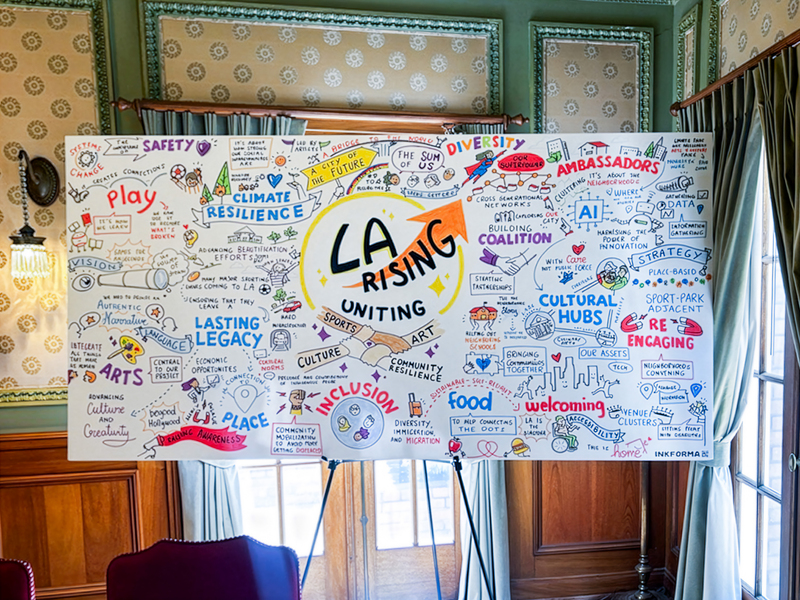
For Deena Darby, an MIT master’s student with a background in architecture and public art, her 2025 Freedom Summer Fellowship offered a way to bridge creative practice with structural change. Working with the LA84 Foundation and the Ubuntu Climate Initiative in Los Angeles, Darby focused on neighborhood-based resilience in the context of the 2025 wildfires and the upcoming 2028 Olympics.
“My decision to apply to do a master’s in city planning at MIT was informed by the projects I had been working on in Harlem, the Bronx, Brooklyn, and other cities, including Philadelphia and Detroit. Much of that work involved community engagement work when producing public art at an architectural scale, but I kept feeling that residents deserved more than an art piece at the end of a project.”
During the fellowship, Darby contributed to asset mapping across six neighborhoods, developed case studies on resilience hubs, and helped shape strategies that tied climate adaptation to culture, play, and community ownership. Her immersion in the lived experience of those neighborhoods — visiting sites, meeting organizers, and participating in local coalitions — was crucial to her development of strategic recommendations for decentralized infrastructure, cultural arts cohorts, and neighborhood-based resilience festivals.
“Resilience is often narrowly framed around climate,” Darby reflects. “But what we were really redefining was economic resilience, social resilience, and the ability of communities to tell their own stories.”
Darby’s fellowship experience has led to her thesis project, working with the residents of a historically Black neighborhood in her hometown of Savannah, Georgia, who are experiencing displacement. “Coming from an architecture and planning background, my instinct is to ask, How can we frame these issues in terms of cultural preservation and community-based policy development and implementation?” says Darby. “How can we manage change, with the goal of benefiting present residents as well as honoring those who have lived here in the past?”
For Darby, gaining practical understanding of the inseparability of planning and policy has been key to shaping her approach to navigating the educational opportunities at MIT. “In a higher-education context, you’ll often find policy housed separately from planning. But the moment you’re working in situ, it doesn’t make sense to separate the two. For me, the fellowship was a bridge between two often-siloed disciplines.”
Reassessing expertise
“Impact at MIT is typically associated with technological breakthroughs,” says Reynolds. “But much of MIT’s work can make a huge difference when applied in the near term, on the ground. At DUSP, we’re all about bringing theory and practice together, about the interrelation of communities, infrastructure, policy, and how that maps out in the built environment. We can bring expertise and knowledge into the field tomorrow, into places that can immediately benefit from the collaboration.”
Initial funding for the fellowship at MIT was provided by the MIT Climate Project, in addition to national foundations. Faculty are exploring ways to expand and increase the number of student placements, further embedding relationships between MIT and cities across the United States. There are also discussions about sharing the model with other institutions, including historically Black colleges and international collaborators.
“We’re just starting these conversations with other institutions, but it’s the model of engaged, experiential, cooperative learning that matters,” says Thompson. “It’s clear that the experts aren’t necessarily those who have read a lot of books about planning or design, but those who are embedded within communities, trying to figure out these challenges from the inside.”
The planner might not be the primary expert — but they are the ones who guide decisions that shape the futures of communities. The Freedom Summer Fellowship is about fostering a culture of urban planning in which those decisions are centered upon the lived experience of stakeholders. An approach to practice in which — as Jex put it, reflecting on her experience in Cleveland: “Planners are the people who make decisions about how cities shape access to opportunity.”
Applications for the 2026 Freedom Summer Fellowships are being accepted now through April 7.