
In the small coastal town of Prince Rupert, British Columbia, the port is the backbone of the community.
Growing up there, with a father who works as a longshoreman, Chelsea Mitchell witnessed the port’s importance firsthand. From an early age, she understood that the port was essential to the transportation of goods in and out of not only Prince Rupert but all of British Columbia’s North Coast. Disruptions to port operations could have ripple effects reaching from dockworkers’ families to the regional economy and beyond.
“The port is central to my hometown’s economy,” Mitchell says. “Having family in the industry gave me visibility into the complexity and the volatility of the shipping industry.”
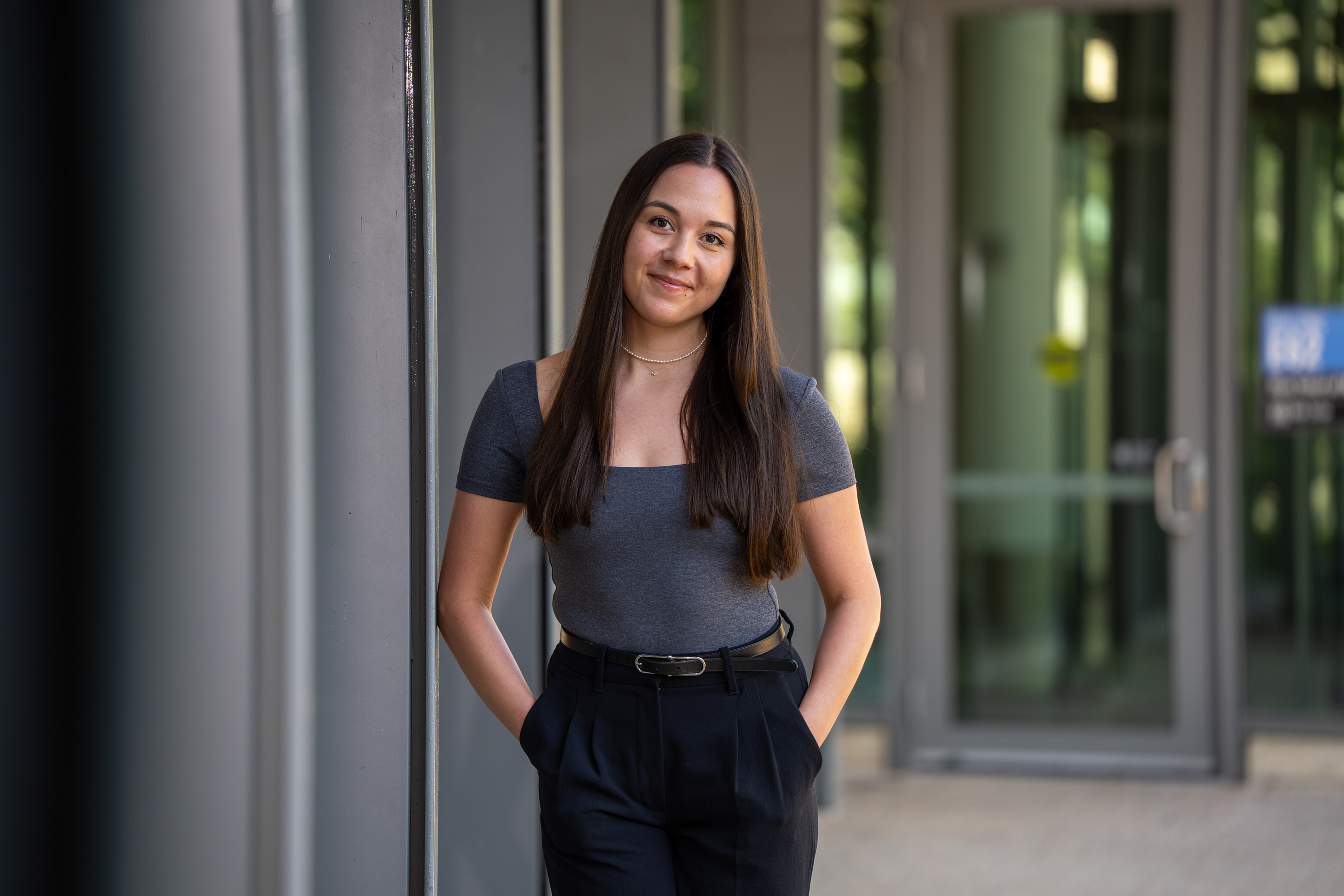
Today, that industry and the forces that shape it are the subject of Michell’s research as a fourth-year PhD student in MIT’s Department of Economics. She studies how ports and shipping companies compete, how goods move through congested terminals, and how disruptions affect global supply chains.
“When I was younger, I never would have imagined I would get to conduct research at MIT,” Mitchell says. “Prince Rupert is largely a blue-collar town, so I had minimal insight into the world of academic research growing up. But in high school I realized I thrived in an academic environment, especially studying math, and hoped one day I could pursue a PhD.”
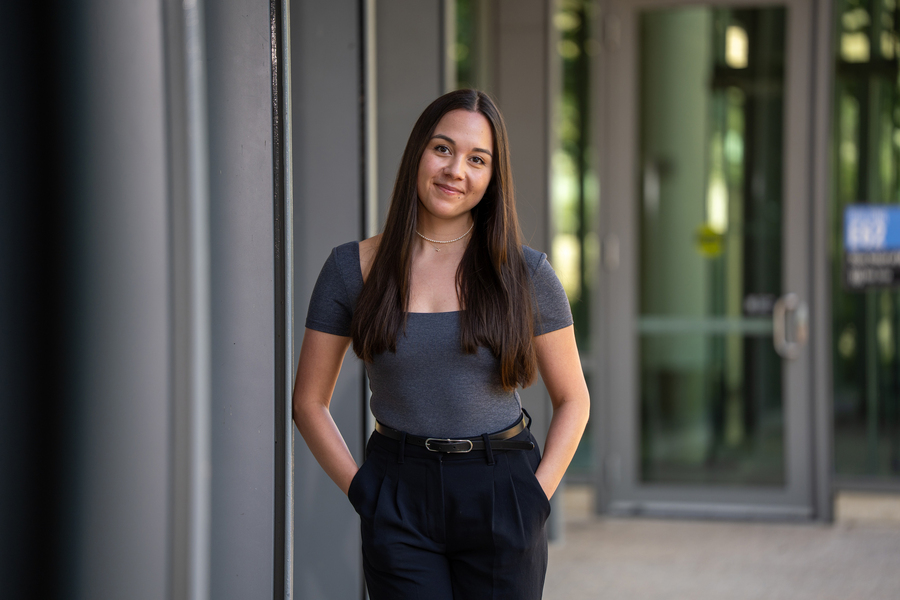
She left British Columbia to attend the University of Toronto, where she studied math and economics. There, faculty mentors introduced her to economic research and encouraged her to apply to doctoral programs, eventually leading her to the Institute.
“I was lucky to have mentors in college who encouraged me to apply to MIT. The level of support and quality of advising here has consistently amazed me,” Mitchell says.
Her research focus became clearer in 2023, when longshore workers along Canada’s West Coast walked off the job during a labor dispute centered, in part, on automation and its effect on port employment. The strike lasted roughly two weeks and shut down 35 terminals across the province. That experience left a lasting impression on Mitchell.
“These labor disruptions made me acutely aware that ports were a choke point in our supply chains,” Mitchell says. “They seemed understudied relative to how important they are.”
Because of her family’s ties to the industry, Mitchell was able to spend time speaking not only with her father’s co-workers who were involved in the strike but also with people working throughout the shipping industry.
One of her first major projects examined labor negotiations and competition among American ports. She found that even just the possibility of work disruptions in ports could alter shipping patterns, prompting companies to reroute cargo away from West Coast ports and toward East Coast facilities despite added logistical cost.
Her current work focuses on another major shift in the industry: the growing number of shipping companies that own container terminals.
Traditionally, carriers relied on independent terminal operators to load and unload cargo. Increasingly, however, major shipping lines have begun acquiring terminals themselves. Using detailed vessel-tracking and port-call data, Mitchell studies what happens after those acquisitions occur.
Her findings suggest that ships operated by the acquiring carrier often receive faster service, particularly during periods of congestion when terminal capacity is limited. Competing carriers, meanwhile, face longer wait times and are more likely to divert cargo to other terminals.
“Ports are notoriously capacity constrained, but all carriers need access to them,” Mitchell says. “A central question is what advantages these acquisitions create and whether they affect competition.”
More broadly, Mitchell hopes her work highlights the importance of an industry that has often gone unnoticed by consumers. Approximately 80 percent of global trade moves by sea, making ports essential infrastructure for the modern economy.
“People have become increasingly aware of the shipping industry, but we can’t ship goods without functioning ports,” she says. “We want ports to be reliable and efficient so that supply chains function and goods can remain affordable.”
Mitchell credits her advisors, Nancy Rose and Tobias Salz, with helping her navigate her research, especially through difficult obstacles. More broadly, she says the people she has met at MIT have been the most rewarding part of her experience thus far.
Outside of economics, Mitchell enjoys exercising, skiing, reading, and spending time with friends. She finds that having a work-life balance is essential to her success as a researcher.
“Research is extremely challenging,” Mitchell says. “You invest a lot of time trying to answer questions that you don’t necessarily know are answerable given the data you have. It’s important to have rewarding aspects of your life outside of research that can help keep you motivated.”
Still, whether she is analyzing data in Cambridge, Massachusetts, or returning home to the rugged coastline of northern British Columbia, Mitchell takes a people-first approach to her research.
“I see numbers. I see data. But it’s challenging to tell a story with that data when you don’t have insights from the people who are actually doing the work,” Mitchell says. “Talking to people in the industry has been fundamental to understanding what’s really happening.”