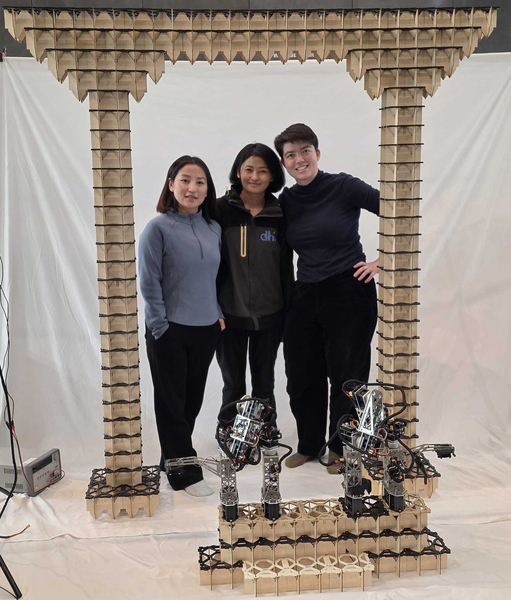
Robotically assembled building blocks could be a more environmentally friendly method for erecting large-scale structures than some existing construction techniques, according to a new study by MIT researchers.
The team conducted a feasibility study to evaluate the efficiency of constructing a simple building using “voxels,” which are modular 3D subunits that assemble into complex, durable structures.
After studying the performance of multiple voxels, the researchers developed three new designs intended to streamline building construction. They also produced a robotic assembler and a user-friendly interface for generating voxel-based building layouts and feeding instructions to the robots.
Their results indicate this voxel-based robotic assembly system could reduce embodied carbon — all of the carbon emitted during the lifecycle of building materials — by as much as 82 percent, compared with popular techniques like 3D concrete printing, precast modular concrete, and steel framing. The system would also be competitive in terms of cost and construction time. However, the choice of materials used to manufacture the voxels does play a major role in their carbon footprint and cost.
While scalability, durability, long-term robustness, and important considerations like fire resistance remain to be explored before such a system could be widely deployed, the researchers say these initial results highlight the potential of this approach for automated, on-site construction.
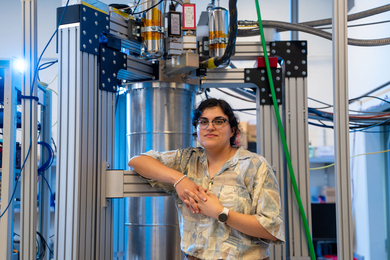
“I’m particularly excited about how the robotic assembly of discrete lattices can enable a practical way to apply digital fabrication to the built environment in a way that can let us build much more efficiently and sustainably,” says Miana Smith, a graduate student in the Center for Bits and Atoms (CBA) at MIT and lead author the study.
She is joined on the paper by Paul Richard, a graduate student at École Polytechnique Fédérale de Lausanne in Switzerland and former visiting researcher at MIT; Alfonso Parra Rubio, a CBA graduate student; and senior author Neil Gershenfeld, an MIT professor and the director of the CBA. The research appears in Automation in Construction.
Designing better building blocks
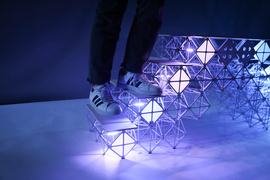
Over the past several years, researchers in the Center for Bits and Atoms have been developing voxels, which are lattice-structured building blocks that can be assembled into objects with high strength and stiffness, like airplane wings, wind turbine blades, and space structures.
“Here, we are taking aerospace principles and applying them to buildings. Why don’t we make buildings as efficiently as we make airplanes?” Gershenfeld says, based on prior work his lab has done on voxel assembly with NASA, Airbus, and Boeing.
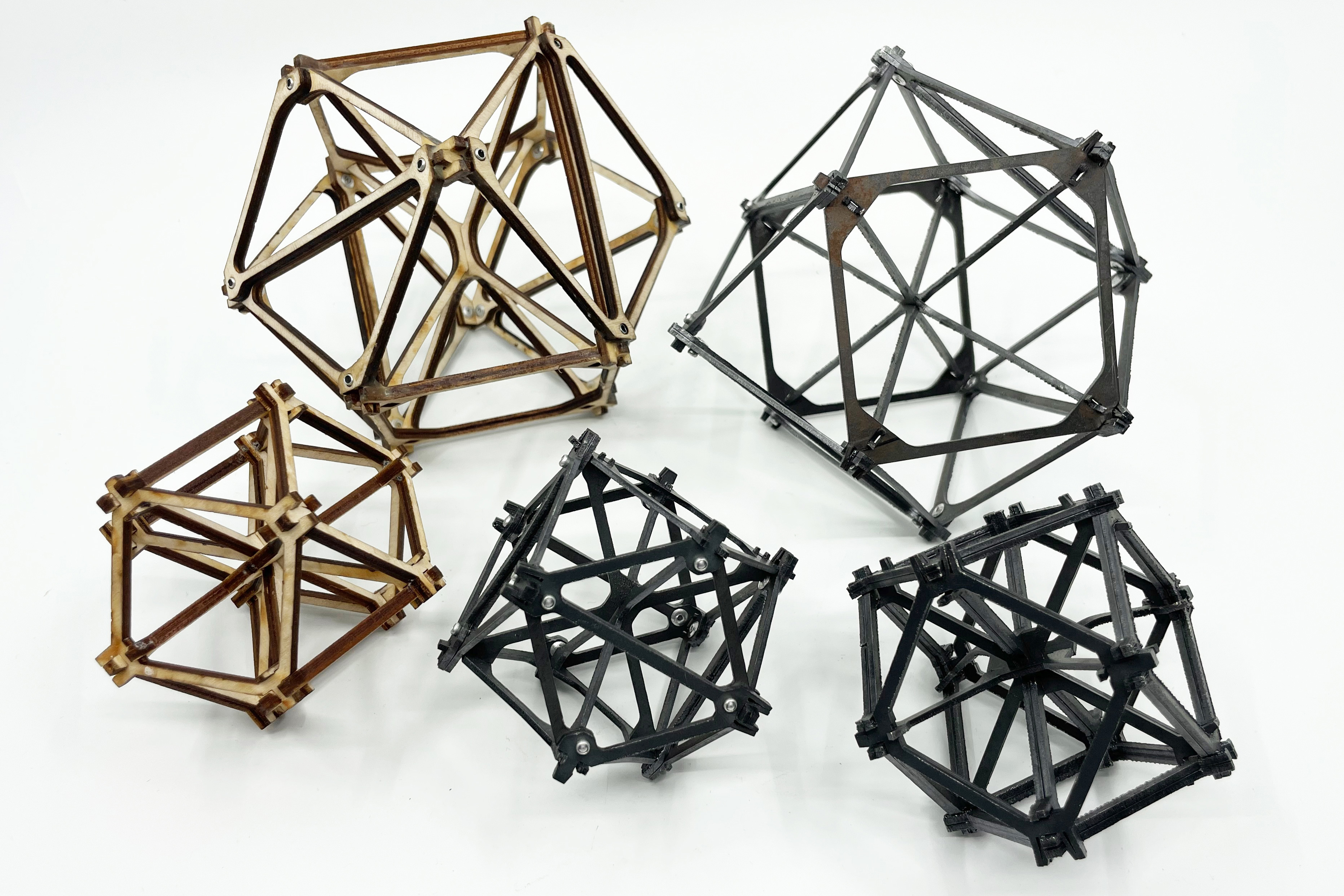
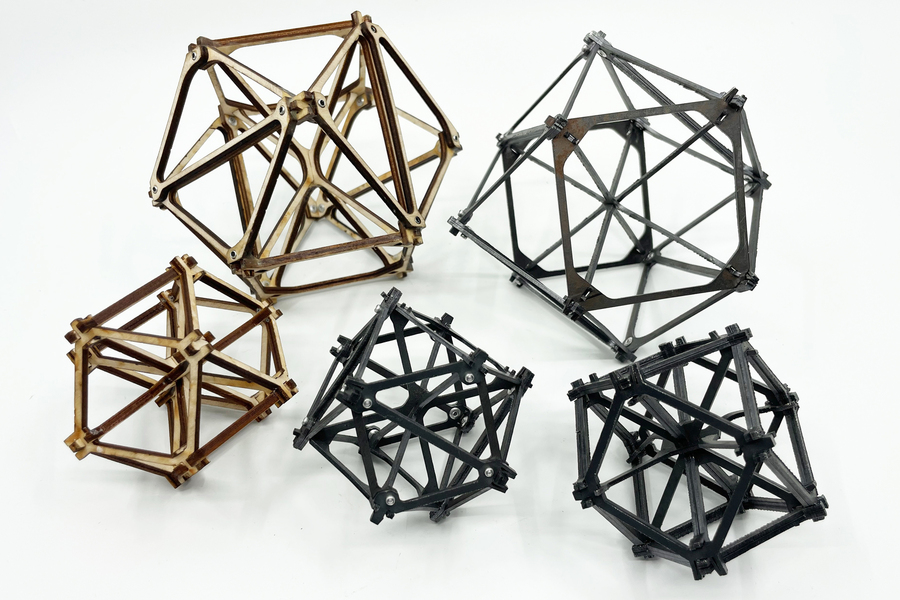
To explore the feasibility of voxel-based assembly strategies for buildings, the researchers first evaluated the mechanical performance and sustainability of eight existing voxel designs, including a cuboctahedron made from glass-reinforced nylon and a Kelvin lattice made from steel.
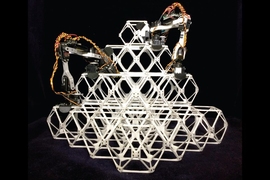
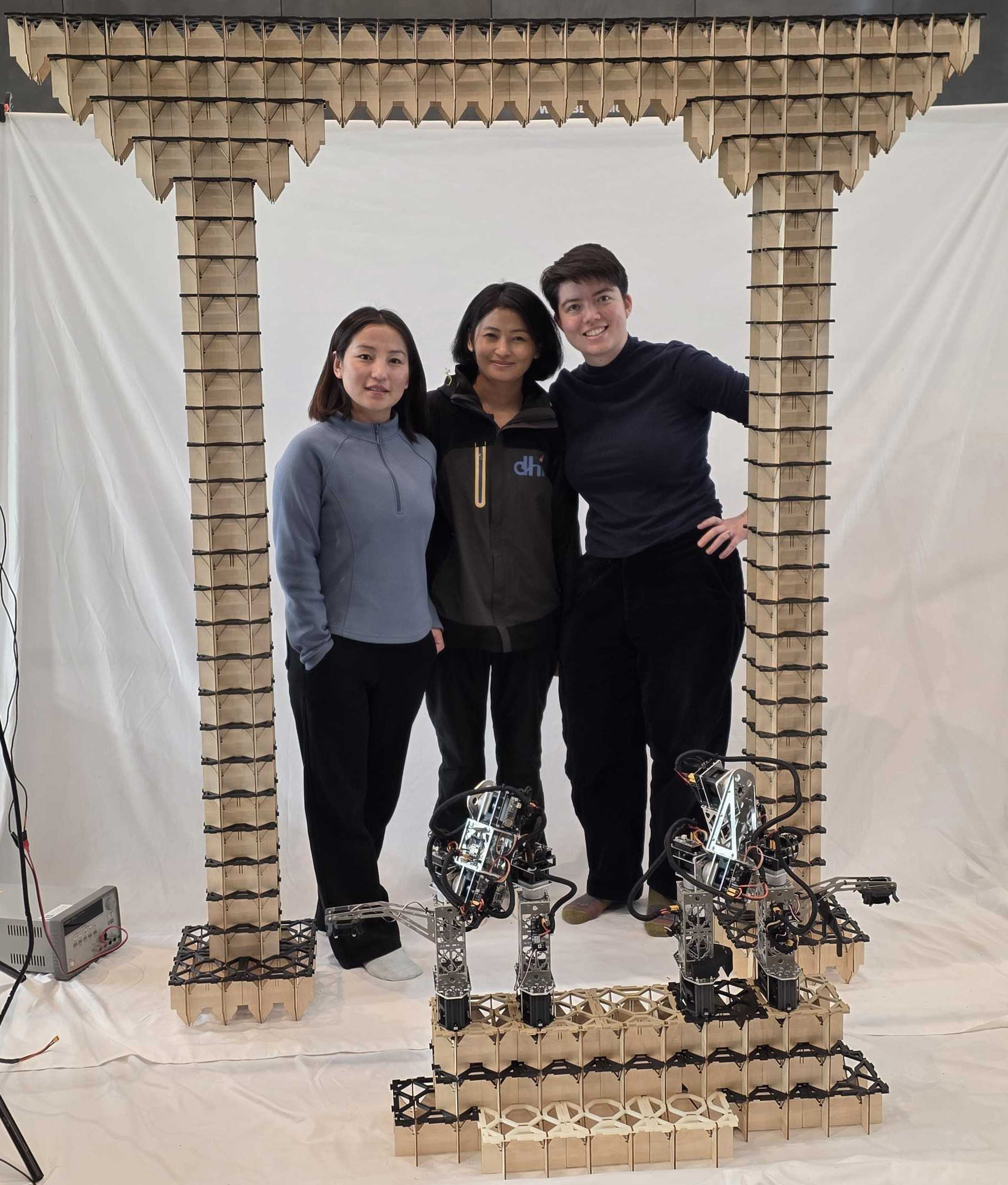
Based on those evaluations, they developed a set of three voxels using a new geometry that could be more easily assembled robotically into a larger structure. The new design, based on a high-strength and high-stiffness octet lattice, mechanically self-aligns into rigid structures.
“The interlocking nature of these voxels means we can get nice mechanical properties without needing to have a lot of connectors in the system, so the construction process can run a lot faster,” Smith says.
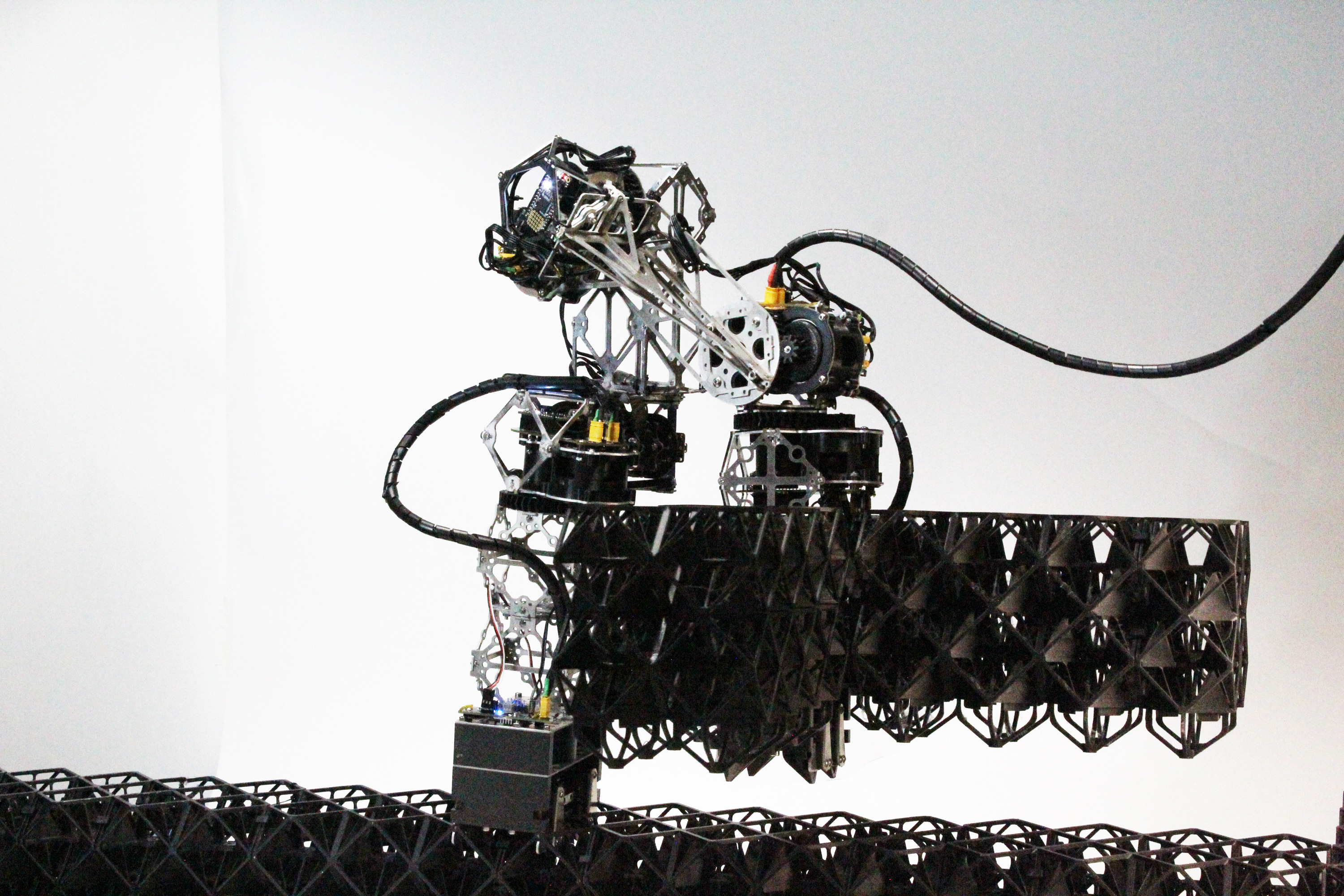
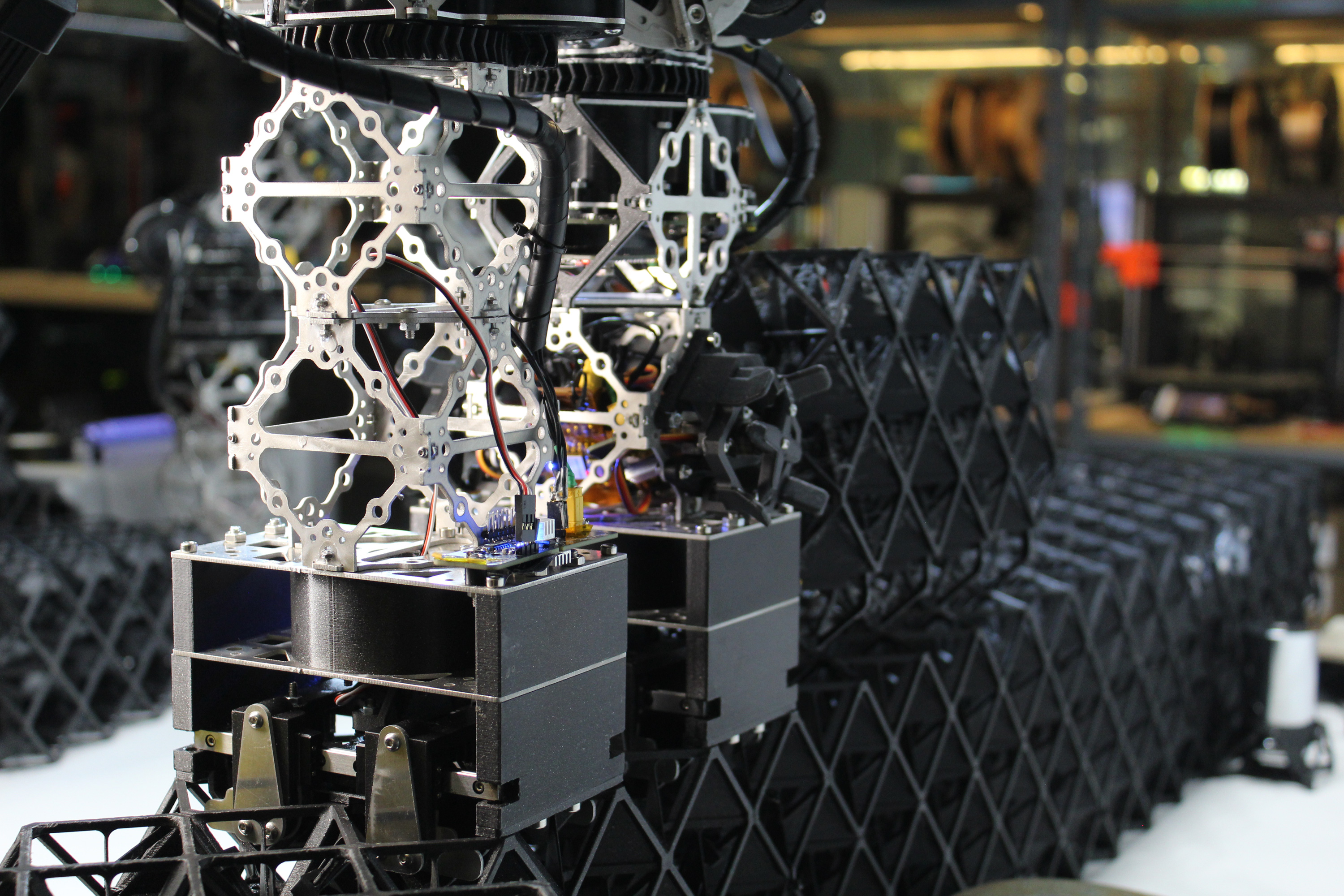
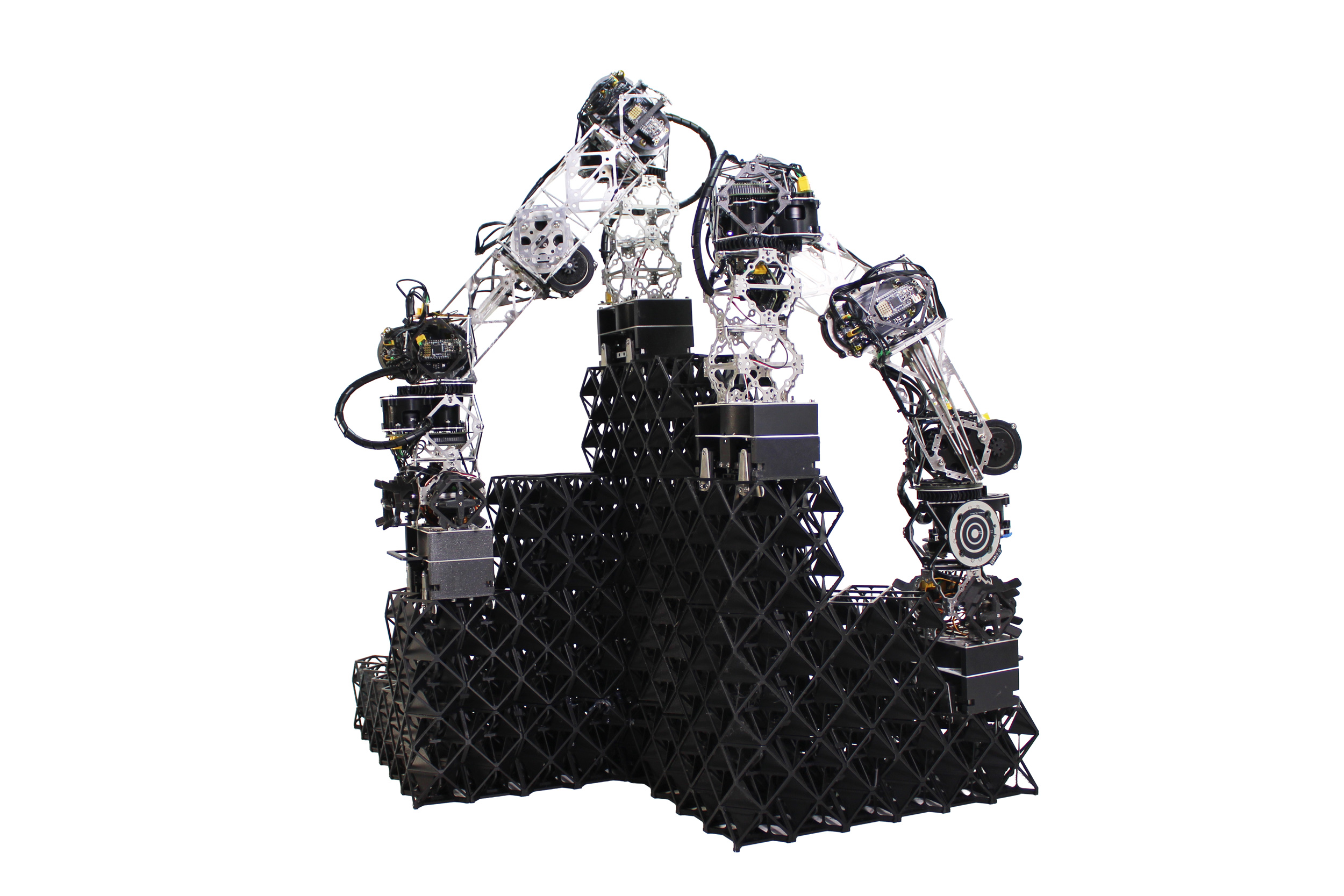
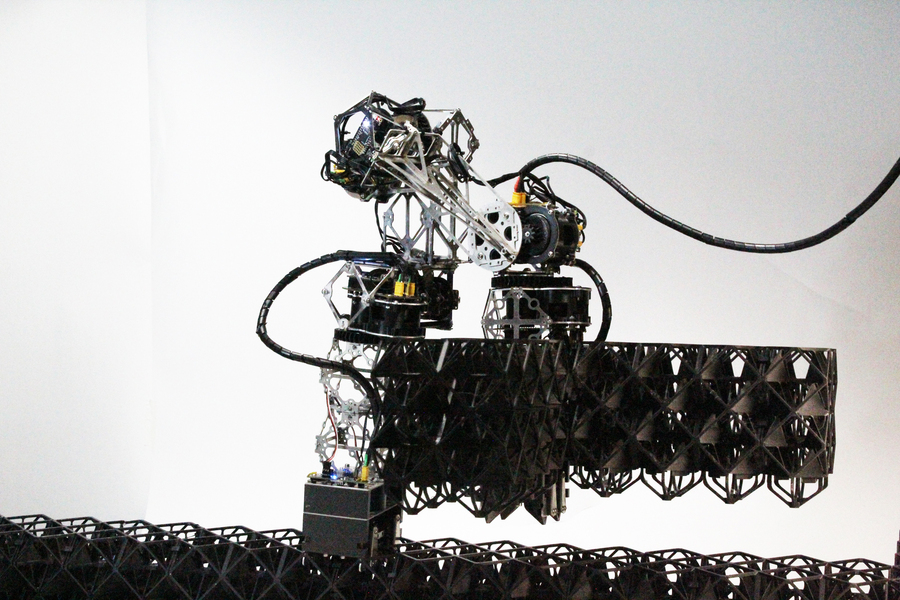
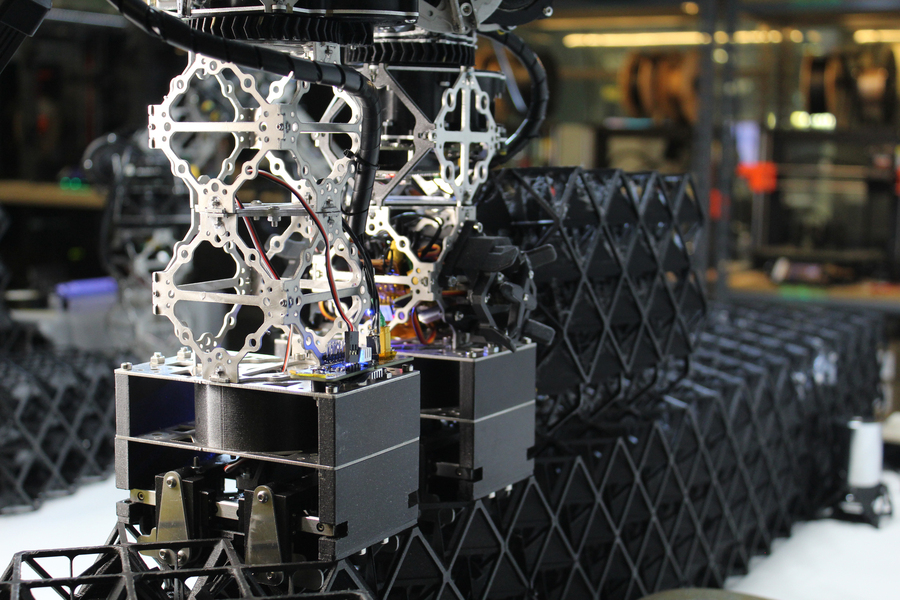
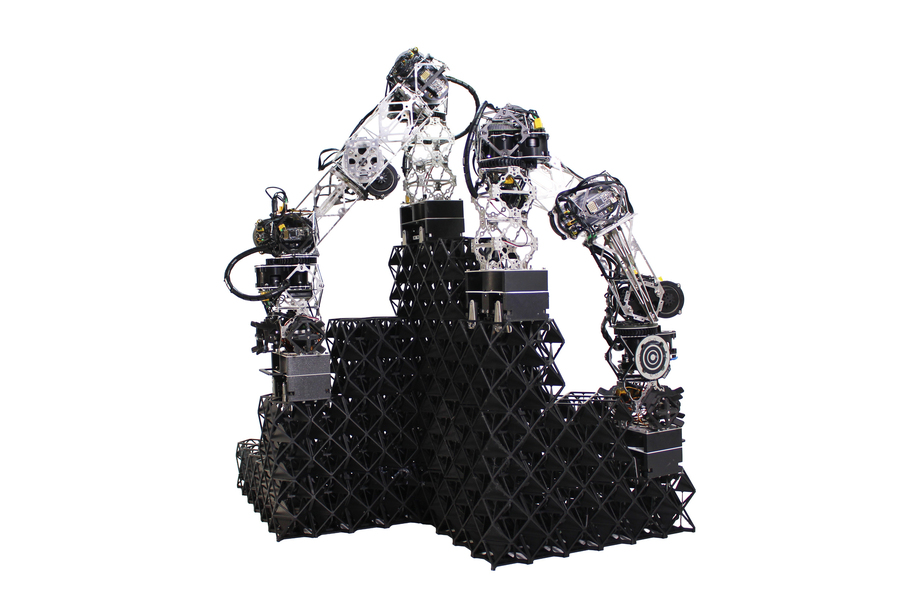
To accelerate construction, they designed a robotic assembly system based on inchworm-like robots that crawl across a voxel structure by anchoring and extending their bodies. These Modular Inchworm Lattice Assembler robots, or MILAbots, use grippers on each end to place voxel building blocks and engage the snap-fit connections.
“The robots can assemble the voxels by dropping them into place and then stepping on them to have the pieces interlock. We can do precise maneuvers based on the mechanical relationship between the robots and the voxels,” Smith explains.
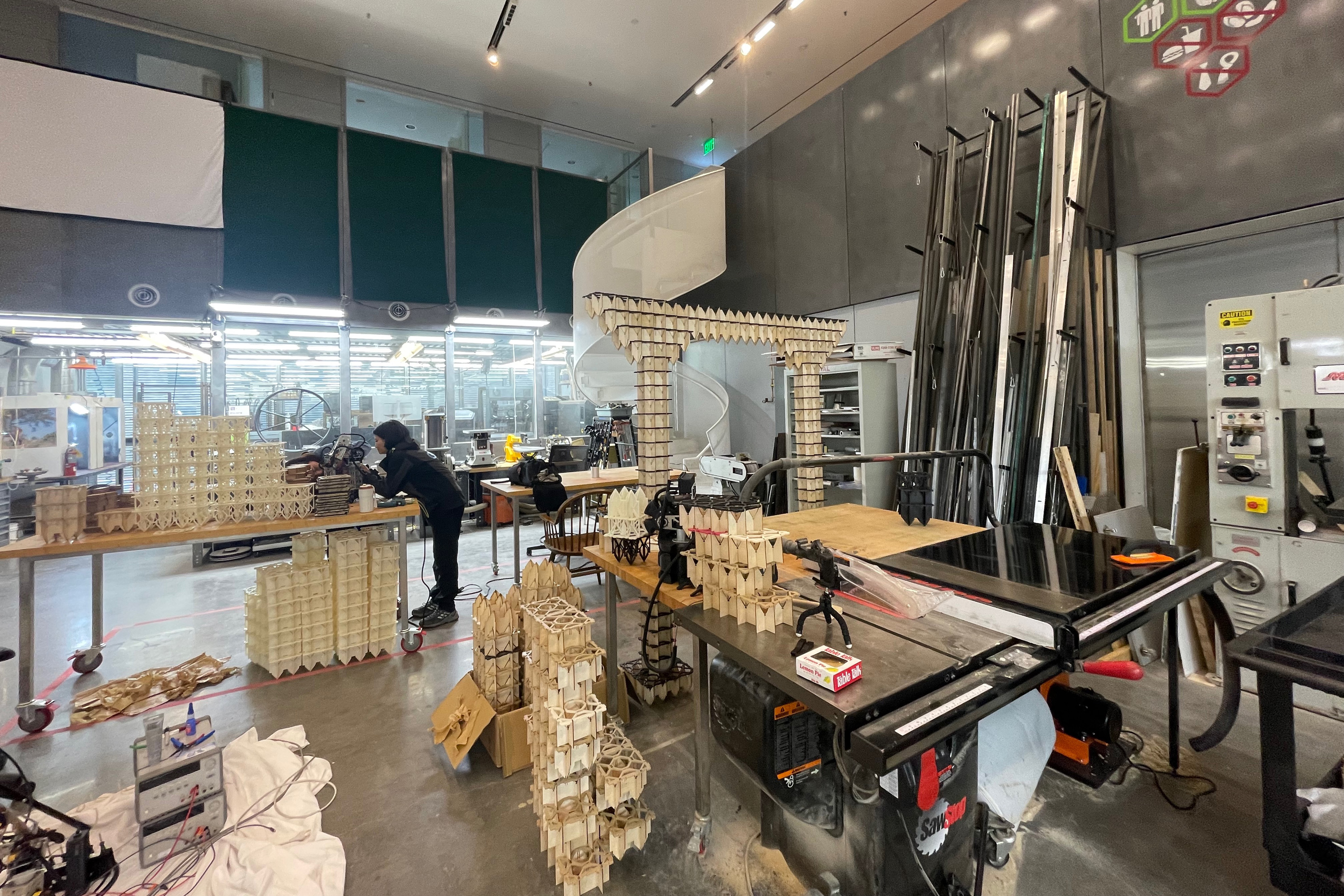
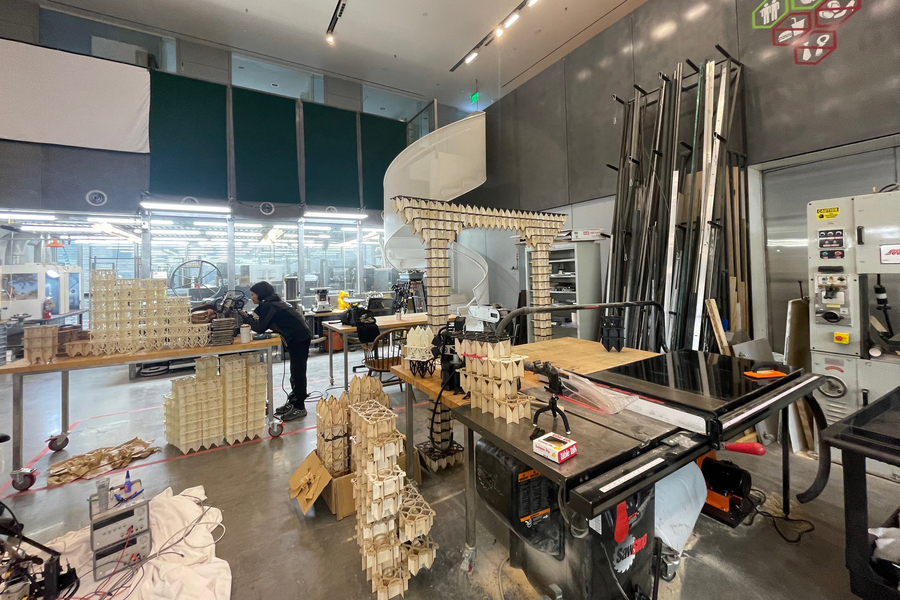
The team studied the embodied carbon needed to fabricate their new voxel designs using three materials: plastic, plywood, and steel. Then they evaluated the throughput and cost of using the robotic assembly system to build a simple, one-story building. The researchers compared these estimates with the performance of other construction methods.
Potential environmental benefits
They found that most existing voxels, and especially those made from plastics, performed poorly compared to existing methods in terms of sustainability, but the steel and wood voxels they designed offered significant environmental benefits.
For instance, utilizing their steel voxels would generate only 36 percent of the embodied carbon required for 3D concrete printing and 52 percent of the embodied carbon of precast concrete. The plywood voxels had the lowest carbon footprint, requiring about 17 percent and 24 percent of the embodied carbon needed, respectively.
“There is still a potential viable option for a plastics-based voxel approach, we just have to be a bit more strategic about which types of plastics, infills, and geometries we use,” Smith says.
In addition, projected on-site assembly time for the steel and wood voxel approaches averaged 99 hours, whereas existing construction methods averaged 155 hours.
These speed benefits rely on the distributed nature of voxel-based assembly. While one MILAbot working alone is far slower than existing techniques, with a team of 20 robots working in parallel, the system catches up to or surpasses existing automation methods at a lower cost.
“One benefit of this method is how incremental it is. You can start building, and if it turns out you need a new room, you can just add onto the structure. It is also reversible, so if your use changes, you can dissemble the voxels and change the structure,” Gershenfeld says.
The researchers also developed an interface that enables users to input or hand-design a voxelized structure. The automatic system determines the paths the MILAbots should follow for construction and sends commands to the assemblers.
The next step in this project will be a larger testbed in Bhutan, using the “super fab lab” that CBA helped set up there to replicate the robots to test construction for a planned sustainable city, Gershenfeld says.
Additional areas of future work include studying the stability of voxel structures under lateral loads, improving the design tool to account for the physics of the system, enhancing the MILAbots, and evaluating voxels that have integrated sheeting, insulation, or electrical and plumbing routing.
“Our work helps support why doing this type of distributed robot assembly might be a practical way to bring digital fabrication into building construction,” Smith says.
“This is yet another visionary example from Neil Gershenfeld and his team, of finding ways for buildings to build themselves with the help of tiny robotic machines. I’m now fascinated by how we can harness an idea like this to make it more affordable to make the outsides of buildings more engaging and joyful,” says Thomas Heatherwick, founder of the design and architecture firm Heatherwick Studio, who was not involved with this research.
This work was funded, in part, by the MIT Center for Bits and Atoms Consortia.