MIT’s Kavli Institute for Astrophysics and Space Research (MKI) is launching a pilot artist-in-residence program to facilitate cross-disciplinary dialogue between art, science, and the public.
MKI is a world-leading institution for research in astrophysics, combining more than 60 years of expertise in space and ground-based instrumentation development with the intellectual energy of MIT’s faculty, research and technical staff, and students in the departments of Aeronautical and Astronautical Engineering; Earth, Atmospheric and Planetary Sciences; and Physics.
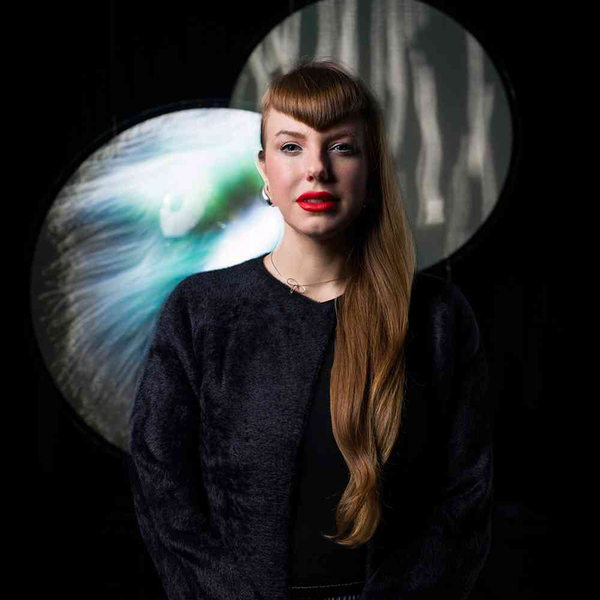
During the 2026-27 academic year, internationally acclaimed ultra-contemporary artist Amy Karle will work as the program’s inaugural artist-in-residence alongside MKI researchers to explore the research and processes behind cutting-edge astrophysical discoveries and instrumentation, and to translate this experience into an immersive, multimedia installation available for public display beginning in early 2028. Karle is known for her work as an artist, designer, and researcher whose projects explore how science and technology shape humanity, evolution, and the future across scales and systems, from cells to cosmos.
“We are excited to work with Amy in this collaborative environment” says MKI Director Robert Simcoe, the Bruno B. Rossi Professor of Experimental Physics at MIT. “Her approach is unlike anything we have previously experienced at MKI and presents many opportunities to challenge the way we, as scientists and engineers, think about our study of the universe. At the same time, the resulting artwork will be shaped by the deep research we do, and the wide-ranging scientific and technical perspectives of the MKI community.”
Karle’s proposal, which envisions astrophysical research and data as a co-creative experience toward embodied understanding of cosmic phenomena and touches on themes of scientific observation, signals, and inference, was selected by an interdisciplinary committee of astronomers, museum curators, and art-science practitioners. Reviewers praised Karle’s ambitious-yet-grounded approach to engagement, her attention to audience experience, her unique approach to science communication through art and technology, and the collaborative potential of her artistic vision.
“I am thrilled to be partnering with MKI,” says Karle, whose practice over the years has included dedicated art-science collaborations with Copernicus Science Centre, the Interstellar Foundation, and Studio Quantum, as well as multiple installations for museums, festivals, and public spaces across the globe. “My first job was at a public observatory. I still remember showing strangers Saturn’s rings through a telescope and watching awe and understanding arrive as felt experience. That has shaped my work since. What MKI does at the frontier of astrophysics, translating faint signals into knowledge through instruments, computation, and human judgment, is a profound expression of that same process. I am excited to be in dialogue with that work and with MKI scientists to create art that makes this tangible and deeply felt, inviting people into the threshold where our ways of knowing the universe reshape how we understand ourselves.”
The residency begins with a one-month exploratory period in the fall semester, centered on meetings with MKI researchers, attendance at seminars and classes, and a public presentation to the MKI community. The project will then move from conceptualization to development, shaped through continued exchange with MKI researchers and complementary independent work in Karle’s California studio throughout 2027.
In March, Karle and selected scientific collaborators will be in residence at the Studios at MASS MoCA, a national and international residency program embedded within one of the world’s largest and liveliest museums dedicated to contemporary art. During their time in residence, Karle and collaborators will test ideas, exchange knowledge, and engage with a multidisciplinary cohort of 16 other artists from across the globe.
“MASS MoCA [the Massachusetts Museum of Contemporary Art] is pleased to be part of MKI’s artist-in-residence program and to contribute to the meaningful exchange between art and science,” says Susan Cross, MASS MoCA director of curatorial affairs. “We look forward to welcoming artist Amy Karle and collaborators from MIT’s Kavli Institute for Astrophysics and Space Research to our campus, and to the Studios at MASS MoCA.”
The residency is supported by the Kavli Foundation’s Kavli Innovation Fund. The initiative seeks to develop new modes of public engagement with astrophysical research and discovery, and deepen emotional connections across the interplay of science and art.
“We are grateful for the Kavli Foundation’s support,” says Simcoe, “as it allows us to push boundaries and engage new audiences in the wonder of the universe and the process of science.”
Karle’s work has been exhibited internationally at institutions including Centre Pompidou, Mori Art Museum, the Smithsonian Institution, the Museum of Modern Art, Ars Electronica, ArtScience Museum, Triennale Milano, and the Victoria and Albert Museum, with works on the moon and in space. She collaborates with and presents at scientific, technological, and cultural institutions including NASA, CERN, SLAC National Accelerator Laboratory, Autodesk, HP Labs, and NVIDIA.
She was honored as one of BBC’s 100 Most Inspiring and Influential Women, a Pioneer in Design, and one of the Most Influential Women in 3D Printing. Karle also served as an American Arts Incubator U.S. Department of State artist diplomat. Her first job was at a public observatory, where she began asking fundamental questions about space and witnessing the wonder it can awaken in people, an early experience that continues to inspire her to create works that allow people to feel how we come to know the universe and our place within it.
To learn more about Karle's work, visit amykarle.com. As the project develops, MKI will be seeking museum and festival partners to host the installation in 2028 and beyond.