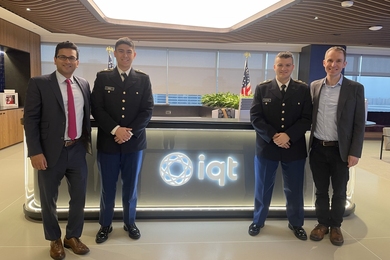
3 Questions: From the bench to the battlefield
Rising senior and Army ROTC cadet Alexander Edwards and Aneal Krishnan ’02 discuss a new UROP fellowship with the Institute for Soldier Nanotechnologies.
Rising senior and Army ROTC cadet Alexander Edwards and Aneal Krishnan ’02 discuss a new UROP fellowship with the Institute for Soldier Nanotechnologies.
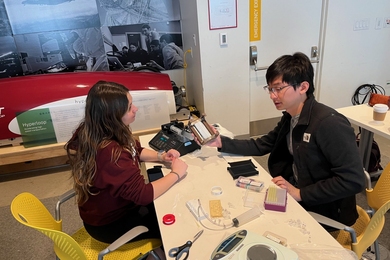
MIT students who participated in the pilot program developed tools to rapidly screen for novel biosynthetic capabilities.
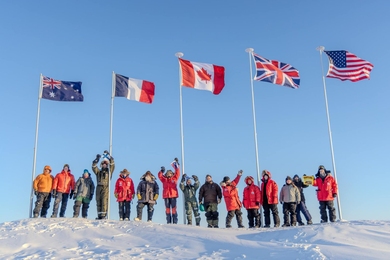
The nodes are intended to become part of a widespread sea-ice monitoring network.
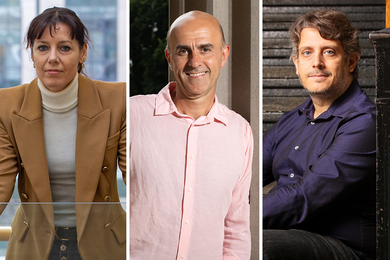
Domitilla Del Vecchio and Themis Sapsis of MechE and Mehrdad Jazayeri of BCS will each receive up to $3 million for blue-sky research.

The award recognizes his contributions as director of MIT Lincoln Laboratory and as vice chair and chair of the Defense Science Board.
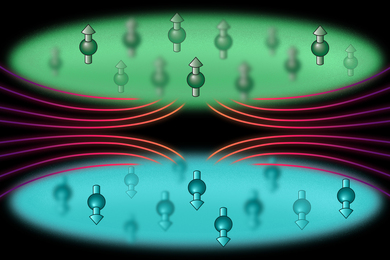
The technique opens possibilities for exploring exotic states of matter and building new quantum materials.
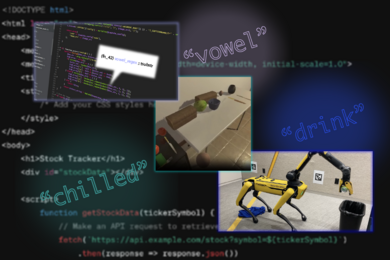
Three neurosymbolic methods help language models find better abstractions within natural language, then use those representations to execute complex tasks.
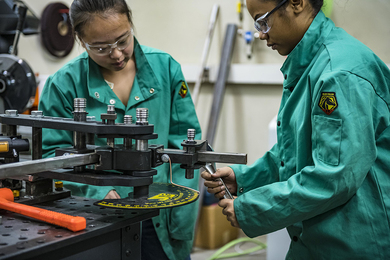
New curriculum from MIT and collaborating institutions aims to give technicians a ladder to become shop-floor leaders — “technologists” who bridge the gap between technicians and engineers.
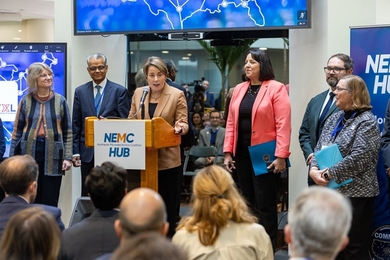
Northeast Microelectronics Coalition Hub funding will expand the reach of the Northeast Microelectronics Internship Program for first- and second-year college students.

State-of-the-art toolset will bridge academic innovations and industry pathways to scale for semiconductors, microelectronics, and other critical technologies.

Through the GradEL program, Lieutenant Asia Allison is developing a deeper understanding of her own background and profile as a leader.
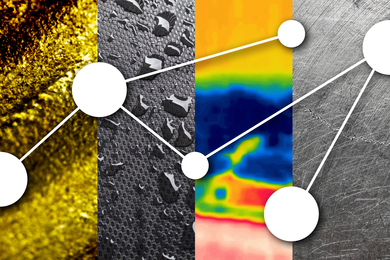
Using machine learning, the computational method can provide details of how materials work as catalysts, semiconductors, or battery components.
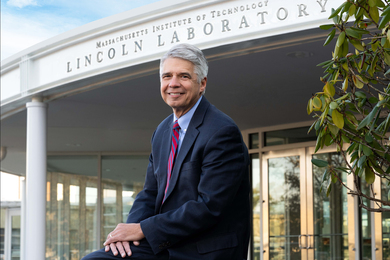
During 18 years of leadership, Evans established new R&D mission areas, strengthened ties to the MIT community, and increased inclusion and education efforts.

Working with mentors and military operators, cadets are addressing challenges in such areas as autonomy, data analytics, communications, and blood delivery.
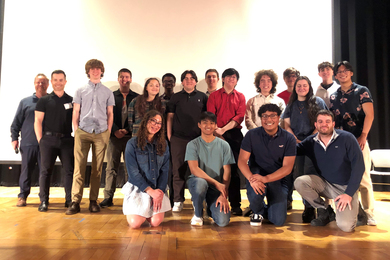
The Spark Photonics Foundation works with educators to get K-12 and college students interested in STEM fields, including advanced manufacturing and semiconductors.