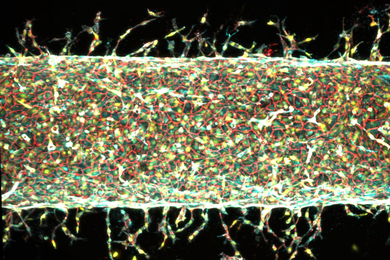
MIT engineers find a precise way to grow artificial blood vessels
Gently stretching and pulling a “blood vessel on a chip” encourages controlled sprouting of new vessels, for possible use in artificial tissues or organs.
Gently stretching and pulling a “blood vessel on a chip” encourages controlled sprouting of new vessels, for possible use in artificial tissues or organs.
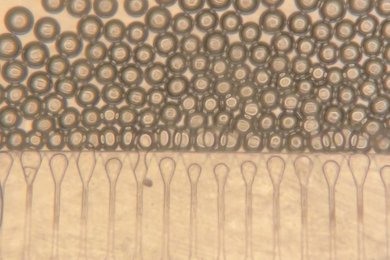
The engineered tissue grafts could take on the liver’s function and help thousands of people with liver failure.
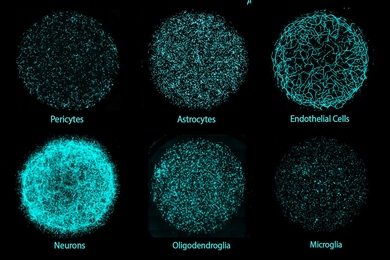
Cultured from induced pluripotent stem cells, “miBrains” integrate all major brain cell types and model brain structures, cellular interactions, activity, and pathological features.

The method enhances 3D bioprinting capabilities, accelerating process optimization for real-world applications in tissue engineering.
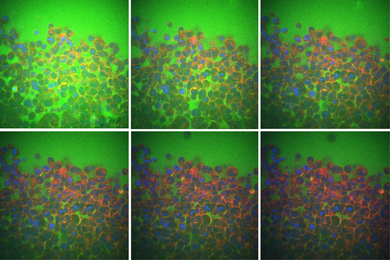
Watery fluid between cells plays a major role, offering new insights into how organs and tissues adapt to aging, diabetes, cancer, and more.
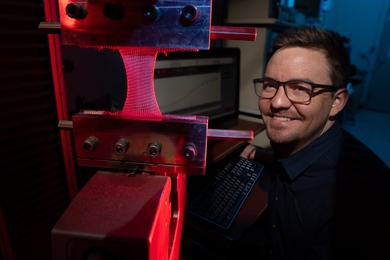
Lincoln Laboratory and MIT researchers are creating new types of bioabsorbable fabrics that mimic the unique way soft tissues stretch while nurturing growing cells.
MIT spinout Strand Therapeutics has developed a new class of mRNA molecules that can sense where they are in the body, for more targeted and powerful treatments.
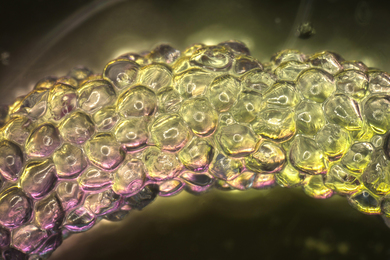
A new computational framework could help researchers design granular hydrogels to repair or replace diseased tissues.

Family’s health trauma translates into mission to solve a chronic health problem suffered by more than a million Americans.

M-CELS are purpose-driven living systems with multiple interacting living components.

MIT researchers pinpoint mechanism and demonstrate that drugs could help.
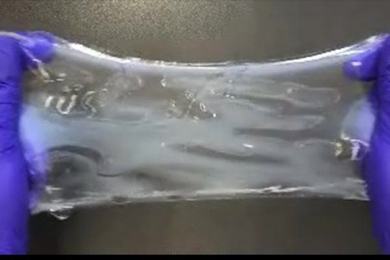
Chemical process called ELAST allows labeling probes to infuse more quickly, and makes samples tough enough for repeated handling.
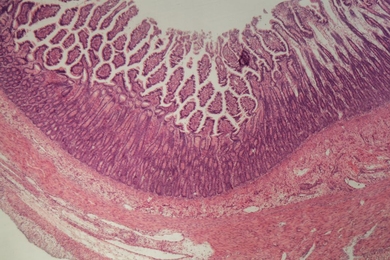
A new approach reveals how different tissues contribute to inflammatory diseases such as ulcerative colitis.
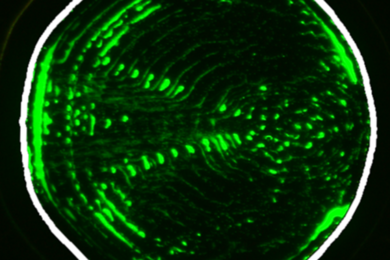
Device developed within the Department of Civil and Environmental Engineering has the potential to replace damaged organs with lab-grown ones.

Successfully launched project aims to understand why some injuries result in post-traumatic osteoarthritis while others heal and recover.