
Rethinking how our brains use categories to make sense of the world
Researchers propose a challenge to the traditional view of how the brain uses its ability to categorize.
Researchers propose a challenge to the traditional view of how the brain uses its ability to categorize.
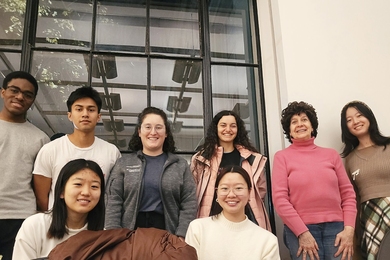
Nearly 100 MIT students participate in a buddy program that assists Boston-area residents.

New measurements of a hot Jupiter and its mini-Neptune companion suggest both planets formed surprisingly far away from their host star.
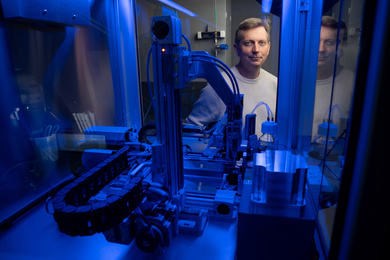
His studies have shed light on the assembly instructions that govern ribosomes, the critical protein-building machines of the cell.
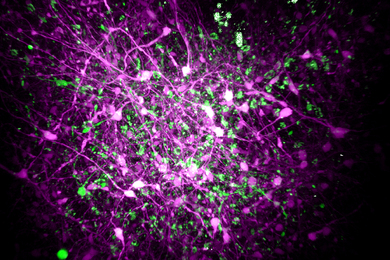
Using advanced human cell cultures, MIT researchers tracked how two different mutations alter neural circuit development, and how each could be addressed with distinct potential therapeutics.
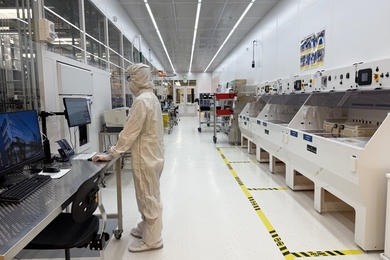
NanoFab Equipment Management and Operations (NEMO) system streamlines shared facilities management via tool trainings, reservations, and lab communications.
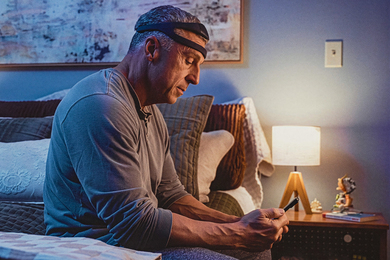
Founded by Jake Donoghue PhD ’19 and former MIT researcher Jarrett Revels, the company is creating an AI-driven platform to help diagnose and treat disease.
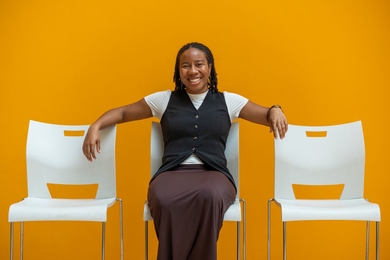
MIT senior Olivia Honeycutt investigates how the ways we communicate can shape our views of the world.
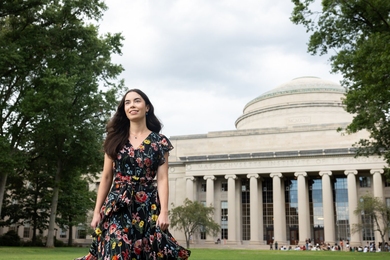
Mathematician Amanda Burcroff is developing frameworks for understanding algebraic and geometric spaces in science as part of the School of Science Dean’s Postdoctoral Fellowship.
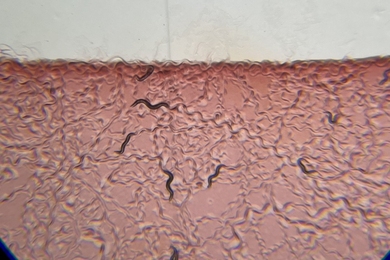
Neural interaction with bacteria has important effects on animal brains. A new study investigates how neurons sense bacteria by revealing, in nematodes, the bacterial signals that a key neuron detects.
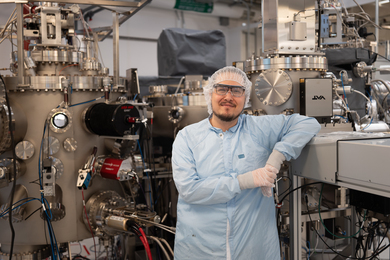

An immersive sound installation at Oulu Cathedral, Finland, co-created by MIT Associate Professor Kiyoshi Masui, transforms more than 4,000 cosmic signals into spatial audio.
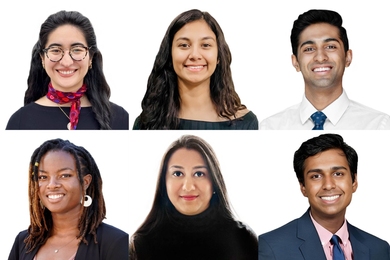
Fellowship honors contributions of immigrants to American society by awarding $90,000 in funding for graduate studies.
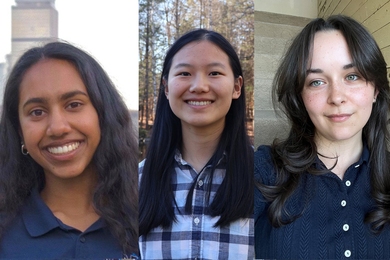
Rising seniors Deeksha Kumaresh, Anna Liu, and Charlotte Myers are honored for their academic achievements.
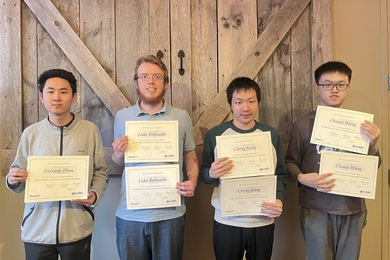
The undergraduate team topped the scoreboard for the sixth year in a row and also took the Elizabeth Lowell Putnam Prize again.