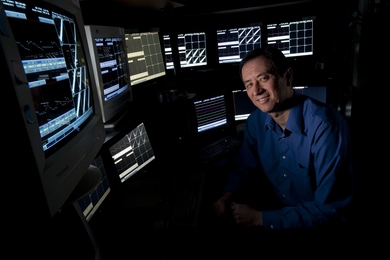
Real-time readouts of thinking in rats
New open-source system provides fast, accurate neural decoding and real-time readouts of where rats think they are.
New open-source system provides fast, accurate neural decoding and real-time readouts of where rats think they are.

Headquarters would replace Building 44, forming an “entrance to computing” near the intersection of Vassar and Main streets.
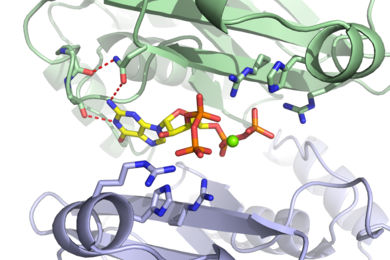
Researchers develop a method to investigate how bacteria respond to starvation and to identify which proteins bind to the “magic spot” — ppGpp.

Whitehead Institute and MIT researchers uncover the detailed molecular structure of the sporopollenin polymer, an inert material key for the emergence of land plants.

A recent MIT symposium explores methods for making artificial intelligence systems more reliable, secure, and transparent.

New research finds a unique component of cell membranes in an archaea species conveys protection against acidic surroundings.
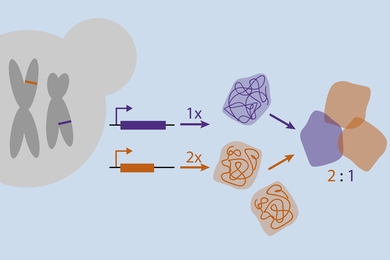
Researchers refine a method to quantify protein production, show that the precision with which bacteria and eukaryotes tune their gene expression is remarkably similar.
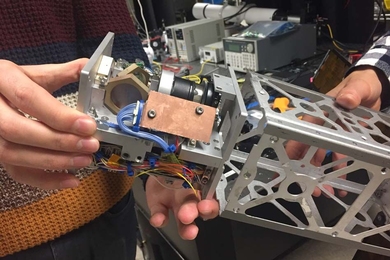
Platform offers the precision that shoebox-sized CubeSats need to beam down hefty data packets.
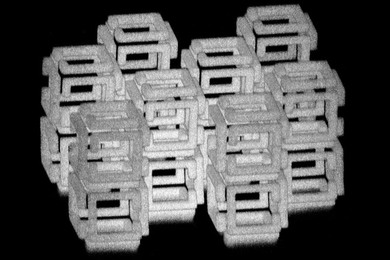
It’s not quite the Ant-Man suit, but the system produces 3-D structures one thousandth the size of the originals.
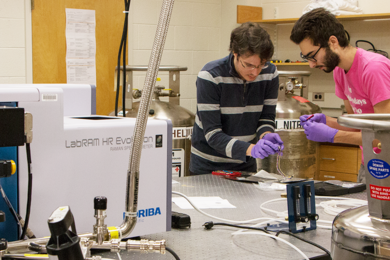
Riccardo Comin seeks to elucidate the microscopic physics of high-temperature superconducting devices to advance their technological applications.
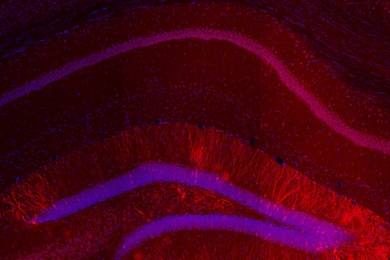
Picower Institute researchers discover the brain mechanism that helps details come flooding back when you visit a scene again.
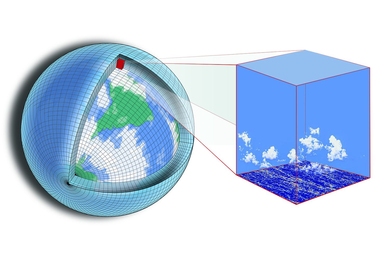
Scientists and engineers will collaborate in a new Climate Modeling Alliance to advance climate modeling and prediction.
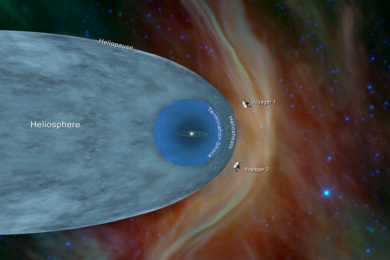
MIT Kavli's John Richardson describes MIT's role in the historic passing of the Voyager 2 craft past the heliopause and into the interstellar medium.

Forbes calls its 2019 30 Under 30 honorees “a collection of bold risk-takers who are putting a new twist on the old tools of the trade.”
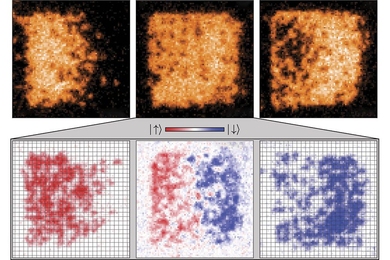
Using new “quantum emulator,” physicists can observe individual atoms moving through these materials, and measure their speed.