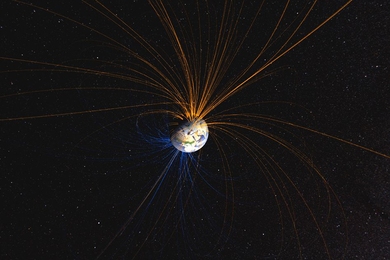
MIT Forum for Supply Chain Innovation and Infosys form Global Risk Advisory Group
Group will focus on helping industry expose and mitigate risk.
Group will focus on helping industry expose and mitigate risk.

New CSAIL system lets users customize the mailing-list experience by following and blocking users and “upvoting” messages.
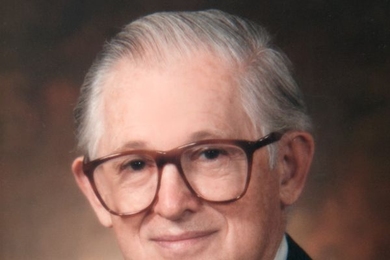
Pioneer in semiconductors created MIT's magnet laboratory and served as associate director of the MIT Lincoln Laboratory.
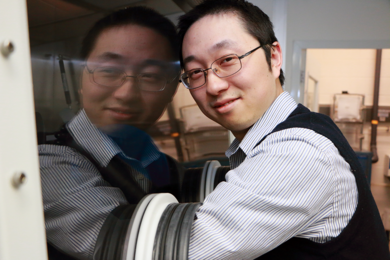
MIT Assistant Professor Juejun Hu melds fundamental materials science and new device designs to enable flexible photonics and other applications.
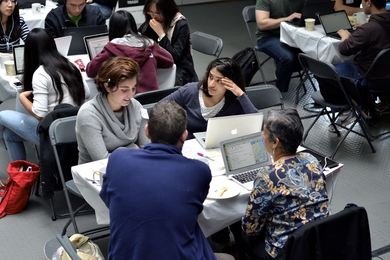
Winning teams combined talents to solve real sustainability challenges.
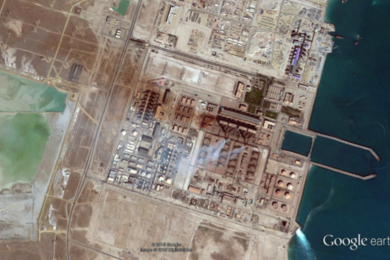
Funding sponsored through the Kuwait-MIT Center for Natural Resources and the Environment.
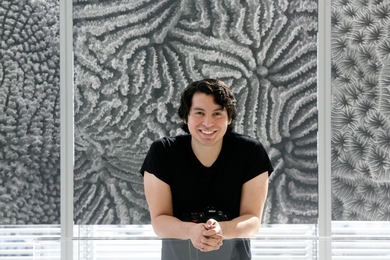
Senior Walter Menendez applies dynamic visuals to conceptual datasets.
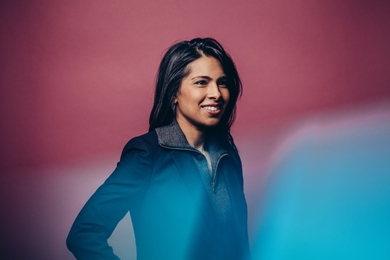
Bhatia is recognized for her work in tissue engineering, disease detection, and advocacy for women in STEM.

Model from MIT's Computer Science and Artificial Intelligence Laboratory aims to automatically distinguish lymphoma subtypes.

System for defending against memory-access attacks implemented in chips.
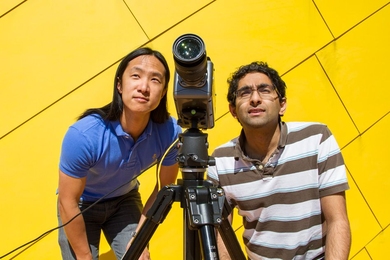
Researchers apply computer vision technique to see tiny vibrations in large structures.
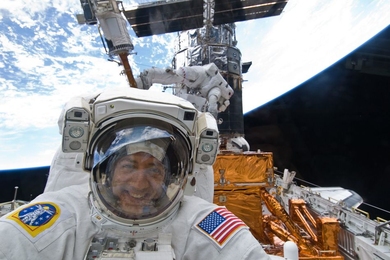
Astronaut and alumnus will be the first-ever speaker at MIT’s Investiture of Doctoral Hoods.
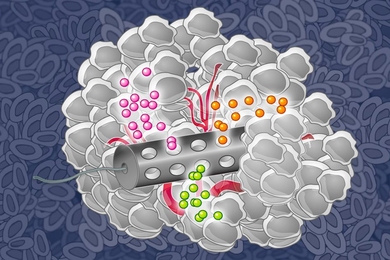
Implantable device could allow doctors to test cancer drugs in patients before prescribing chemotherapy.

Report from conference at MIT addresses potential effects of huge construction project.
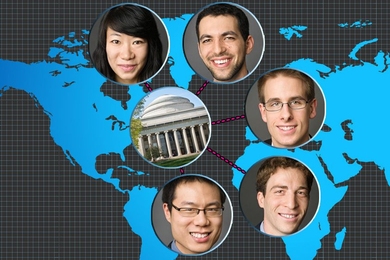
Recipients, all immigrants or children of immigrants, win $90,000 apiece to support graduate studies.