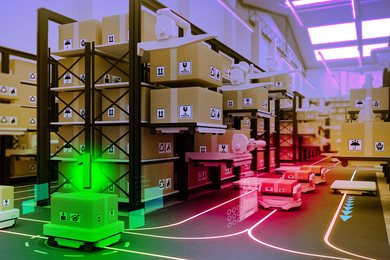
AI system learns to keep warehouse robot traffic running smoothly
This new approach adapts to decide which robots should get the right of way at every moment, avoiding congestion and increasing throughput.
This new approach adapts to decide which robots should get the right of way at every moment, avoiding congestion and increasing throughput.
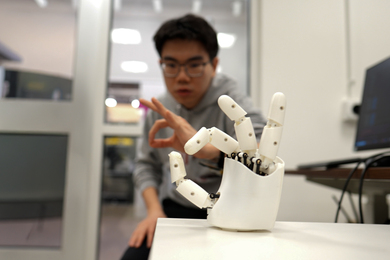
By moving their hands and fingers, users can direct a robot to play piano or shoot a basketball, or they can manipulate objects in a virtual environment.
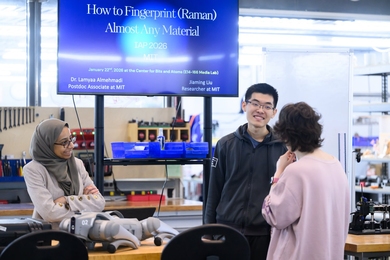
Participants learn how laser “fingerprinting” can help identify materials in fields ranging from law enforcement to art restoration.
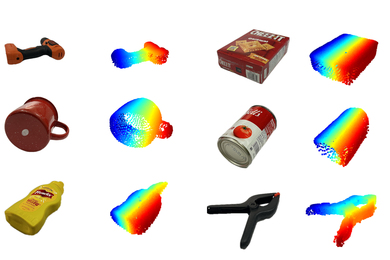
With this new technique, a robot could more accurately detect hidden objects or understand an indoor scene using reflected Wi-Fi signals.

Academia-industry relationship is an early-stage accelerator, supporting professional progress and research.
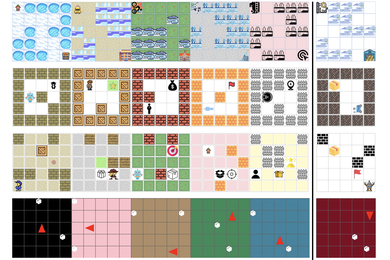
A new hybrid system could help robots navigate in changing environments or increase the efficiency of multirobot assembly teams.
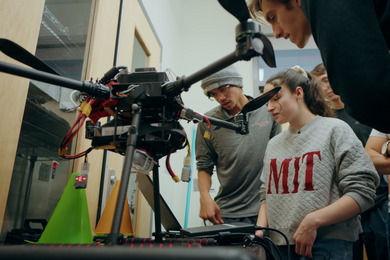
In 16.85 (Design and Testing of Autonomous Vehicles), AeroAstro students build software that allows autonomous flight vehicles to navigate unknown environments.

Lincoln Laboratory intern Ivy Mahncke developed and tested algorithms to help human divers and robots navigate underwater.
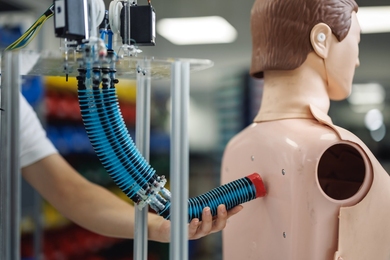
An AI control system co-developed by SMART researchers enables soft robotic arms to learn a broad set of motions once and adapt instantly to changing conditions without retraining.
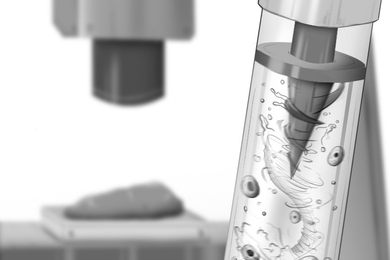
MagMix, an onboard mixing device, enables scalable manufacturing of 3D-printed tissues.

From robotics to apps like “NerdXing,” senior Julianna Schneider is building technologies to solve problems in her community.
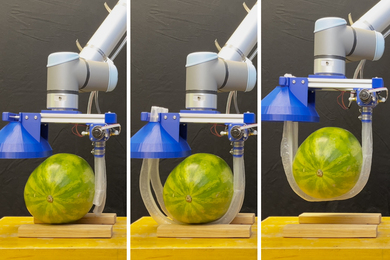
The new design could be adapted to assist the elderly, sort warehouse products, or unload heavy cargo.
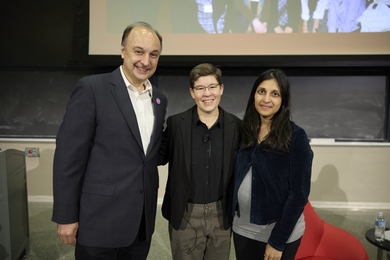
In the 2025 Dresselhaus Lecture, the materials scientist describes her work 3D printing soft materials ranging from robots to human tissues.

The speech-to-reality system combines 3D generative AI and robotic assembly to create objects on demand.
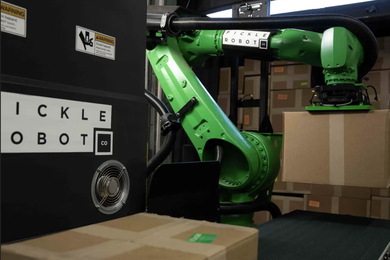
Founded by MIT alumni, the Pickle Robot Company has developed machines that can autonomously load and unload trucks inside warehouses and logistic centers.