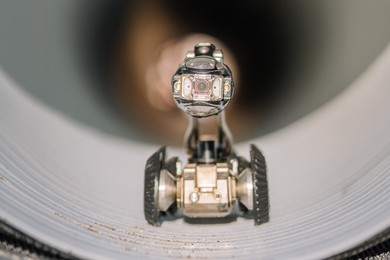
New chip could help tiny robots traverse complex environments
Researchers combined an efficient algorithm with dedicated hardware to rapidly generate 3D maps for navigation using minimal memory and power.
Researchers combined an efficient algorithm with dedicated hardware to rapidly generate 3D maps for navigation using minimal memory and power.
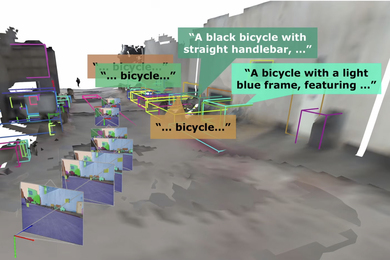
A new spatial memory system for robots efficiently captures details about the objects they see while exploring their environment.
The fellowships in applied sciences, engineering, and mathematics recognize doctoral students who are pursuing solutions to the most pressing challenges in science and technology.
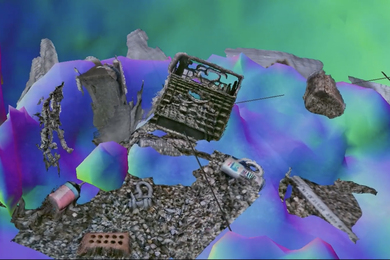
The “Sonar-MASt3R” combines sonar and visual data to create real-time 3D maps, even in cloudy water.
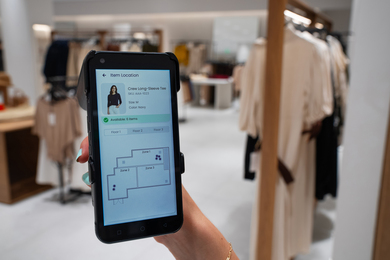
Using technology invented at MIT, Cartesian’s system for locating objects could also find uses in manufacturing, logistics, and robotics.
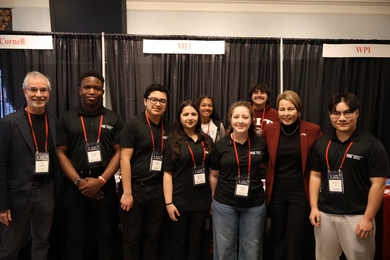
A new MIT student club for FIRST Robotics alumni aims to promote hands-on STEM education enrichment for K-12 students.
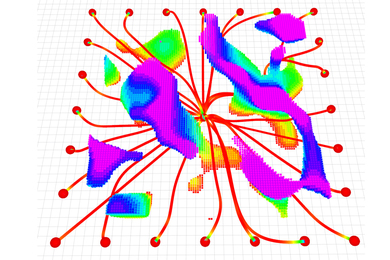
By rapidly generating a smooth path plan that cuts travel time and avoids obstacles, the open-source “MIGHTY” system could streamline disaster recovery and parcel delivery.
The prestigious fellowship funds graduate studies at Stanford University.
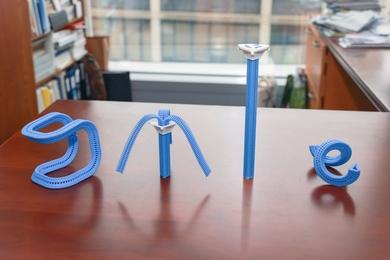
An old patent from MIT Professor Bill Freeman inspired the new “Y-zipper,” a three-sided fastener that snaps gear, robots, and art into shape at the push of a button.
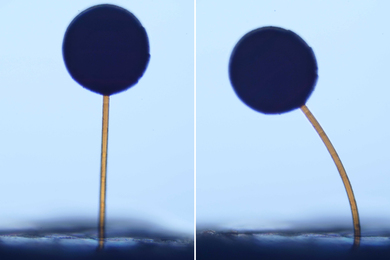
MIT researchers’ new fabrication technique can produce soft, microscopic structures with magnetically activated moving parts.
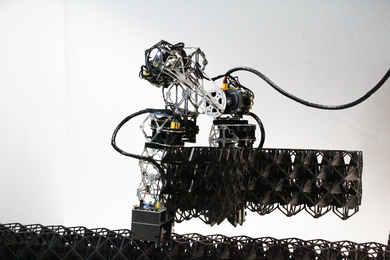
New research suggests constructing a simple building from interlocking subunits should be mechanically feasible and have a much smaller carbon footprint.

Reframe Systems, co-founded by Vikas Enti SM '20, creates microfactories for modular home construction, reducing carbon emissions and costs.
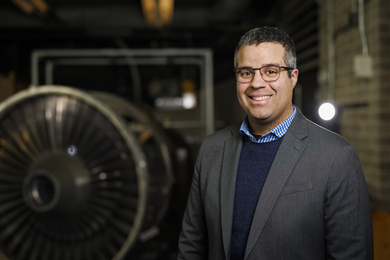
Associate Professor Richard Linares is helping satellites safely navigate in increasingly congested orbits.
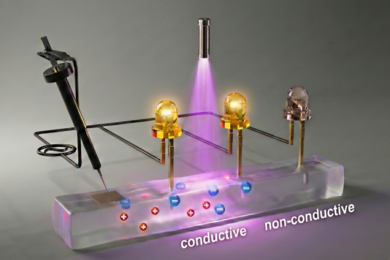
New MIT work advances the growing field of ionotronics, in which data are transferred through ions, potentially providing a bridge between electronics and biological tissue.
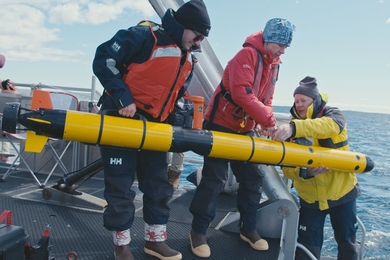
Researchers are developing hardware and algorithms to improve collaboration between divers and autonomous underwater vehicles engaged in maritime missions.