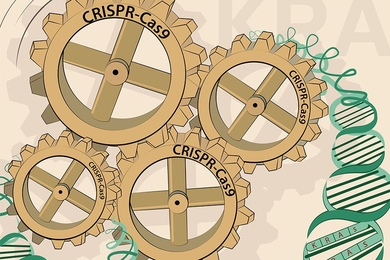
Researchers engineer new mouse model to study disease
Time-saving tool takes advantage of CRISPR gene-editing technology.

How to make stronger, “greener” cement
Analysis of material's molecular structure leads to a new formula that could cut greenhouse-gas emissions.
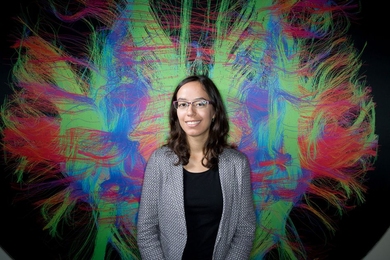
Using science for service
Sofia Essayan-Perez is inspired by those around her to teach in Nicaragua, conduct neuroscience research.
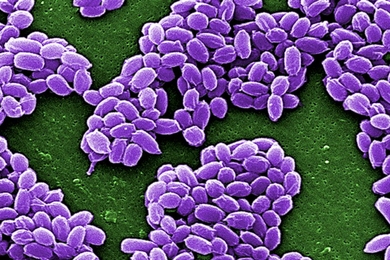
Chemists recruit anthrax to deliver cancer drugs
With some tinkering, a deadly protein becomes an efficient carrier for antibody drugs.

Can you out-race a computer?
Deep-learning algorithm can weigh up a neighborhood better than humans.

Study: Online classes really do work
Detailed quantitative study of learning online shows success, even among those with least preparation.
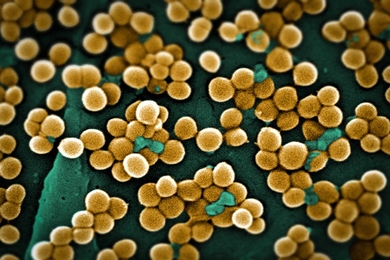
Battling superbugs
Two new technologies could enable novel strategies for combating drug-resistant bacteria.
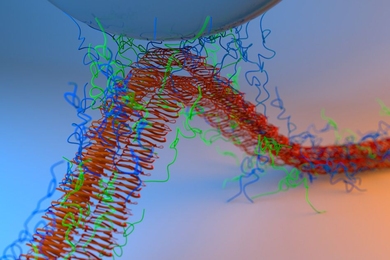
Engineered proteins stick like glue — even in water
New adhesives based on mussel proteins could be useful for naval or medical applications.
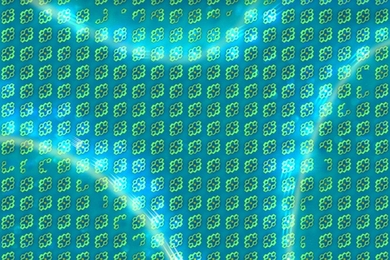
Magnetic fields make the excitons go ’round
Theorists find a new way to improve efficiency of solar cells by overcoming exciton “traps.”
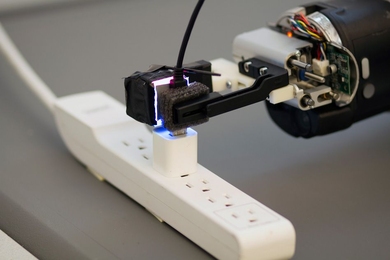
Fingertip sensor gives robot unprecedented dexterity
Equipped with a novel optical sensor, a robot grasps a USB plug and inserts it into a USB port.
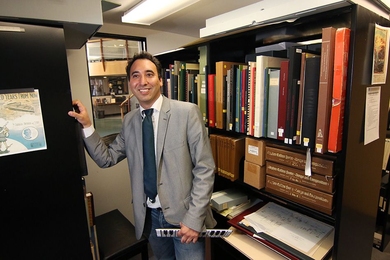
Keeping score
Newly tenured professor Michael Cuthbert dives into old music to recreate the art of centuries past.

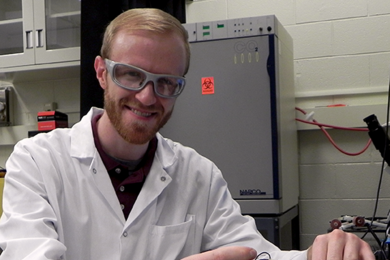
Magnetic neural control with nanoparticles
Customized arrays of iron oxide nanoparticles are possible based on their differing responses to alternating magnetic fields, MIT researchers report.
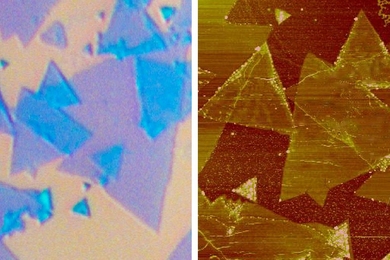
Toward optical chips
A promising light source for optoelectronic chips can be tuned to different frequencies.