Said and Done for October 2014
Digest of the MIT humanities, arts, and social sciences features a Nobel Prize, a new professorship in the Department of Linguistics and Philosophy, three new SHASS websites, and more.
Digest of the MIT humanities, arts, and social sciences features a Nobel Prize, a new professorship in the Department of Linguistics and Philosophy, three new SHASS websites, and more.
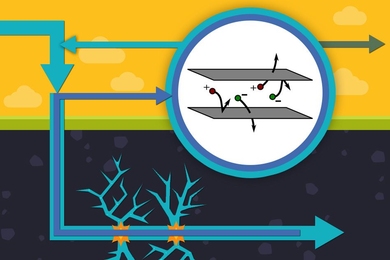
Study shows electrodialysis can provide cost-effective treatment of salty water from fracked wells.
Study: Autocratic leaders who sign human-rights treaties seek political gain, not material benefits.

The professors have been awarded $1.8 million each for discovery-driven, high-risk research, with potential for new experimental techniques.
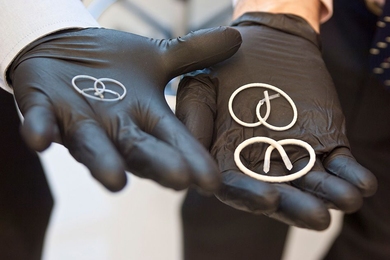
Novel device that stays in the bladder and slowly releases drugs sells to pharmaceutical giant.
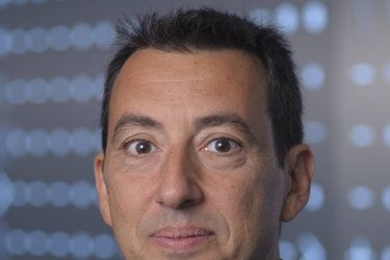
Federico Casalegno designs technology environments that keep human experience at the center of user experience.
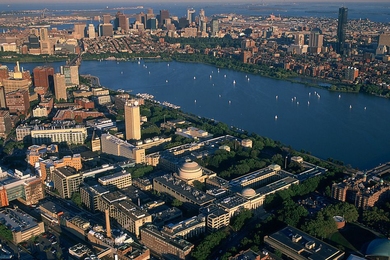
First set of grants support projects designed to improve diagnostic accuracy and cost-effectiveness.
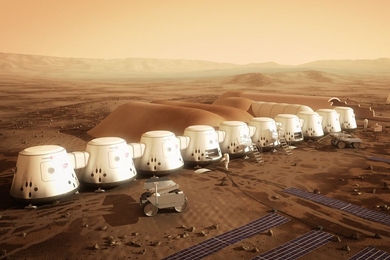
MIT team independently assesses the technical feasibility of the proposed Mars One mission.
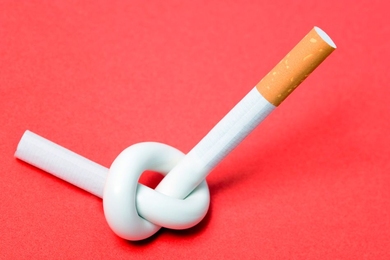
Leading health care economist weighs in on a proposed cost-benefit analysis of smoking.
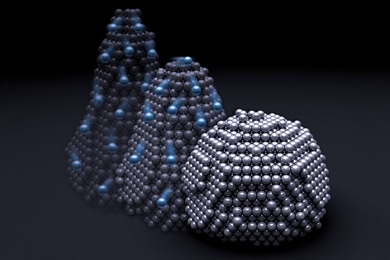
Unexpected finding shows tiny particles keep their internal crystal structure while flexing like droplets.
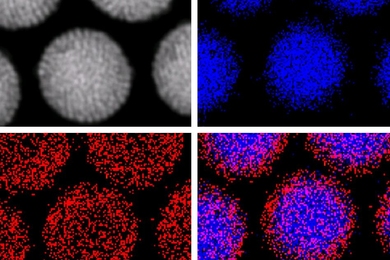
New method produces particles that can glow with color-coded light and be manipulated with magnets.

The pulsar, about as large as the city of Boston, is 10 million times brighter than the sun.

Researchers suggest autism stems from a reduced ability to make predictions, leading to anxiety.
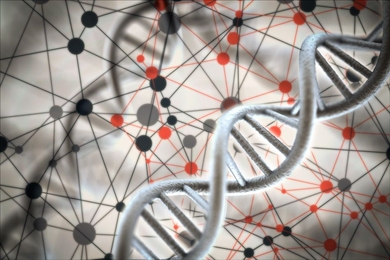
Analysis of 89 models of metabolic processes finds flaws in 44 of them — but suggests corrections.