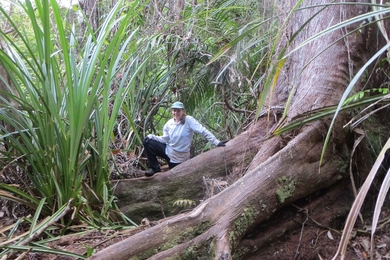
Stories from the swamp
Graduate student Alison Hoyt gets knee deep in the exploration of carbon cycling in the peat swamp forests of Borneo.
Graduate student Alison Hoyt gets knee deep in the exploration of carbon cycling in the peat swamp forests of Borneo.
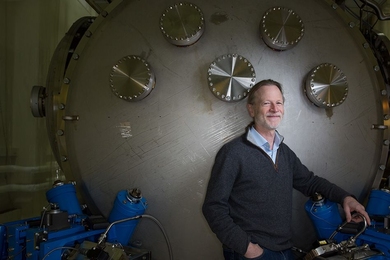
MIT’s David Shoemaker testifies before Congress on the significance of LIGO.

Ultrathin, flexible photovoltaic cells from MIT research could find many new uses.

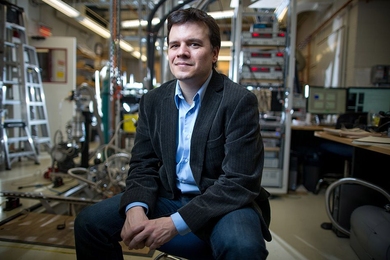
Experimental physicist explores the wild frontiers of graphene and other ultrathin materials.

Not without a carbon tax, suggests a study by an MIT economist.

Political science PhD student Marika Landau-Wells is using psychology and neuroscience to better understand political behavior.

Detailed model can help planners meet climate goals, increase resilience.
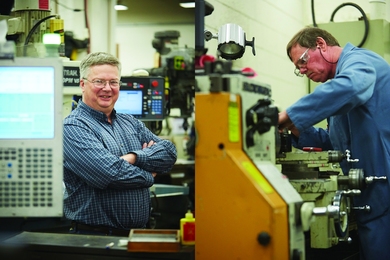
A secret to the success of many projects at MIT, the Central Machine Shop helps students, faculty, and staff build just about anything that can be machined.
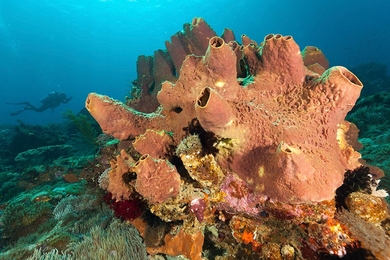
Sponges may be source of molecular fossils that significantly predate Cambrian explosion.
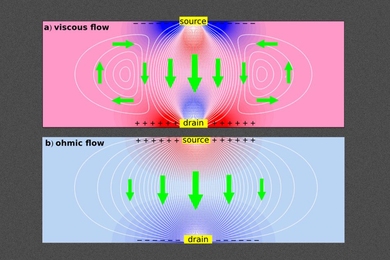
Analysis predicts exotic behaviors such as “negative resistance,” based on fluid-like effects.
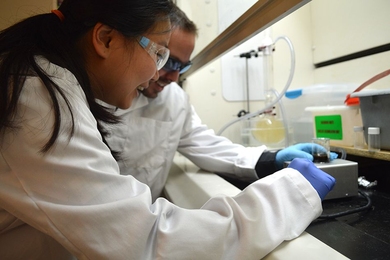
Mini-UROP pairs freshmen with graduate students and postdocs while broadening opportunities for enhanced learning, collaboration, and networking.
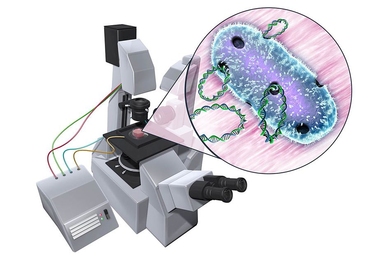
New microfluidic device may speed up DNA insertion in bacteria, the first step in genetic engineering.

Stalagmites reveal huge shift in ancient Madagascar’s plant life, unrelated to climate change.

Turning on a gene later in life can restore typical behavior in mice.