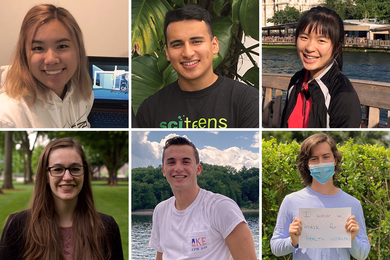
Learning by doing, remotely
Despite the disruption caused by the pandemic, MIT students have carved out meaningful hands-on experiences.
Despite the disruption caused by the pandemic, MIT students have carved out meaningful hands-on experiences.

Convened by the MIT Schwarzman College of Computing, the AI Policy Forum will develop frameworks and tools for governments and companies to implement concrete policies.

MIT professor’s study quantifies how many mail-in ballots became “lost votes” in the 2016 U.S. federal election.

Electrically switchable system could continuously separate gases without the need for moving parts or wasted space.
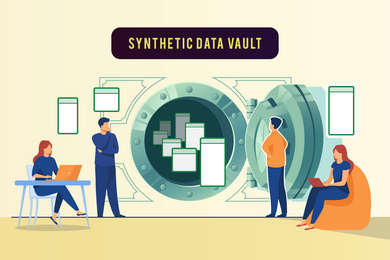
MIT researchers release the Synthetic Data Vault, a set of open-source tools meant to expand data access without compromising privacy.
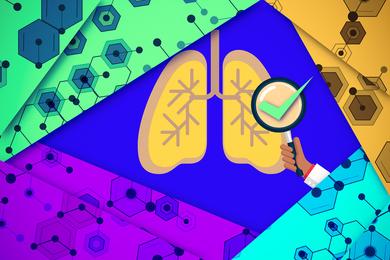
Computational method for screening drug compounds can help predict which ones will work best against tuberculosis or other diseases.
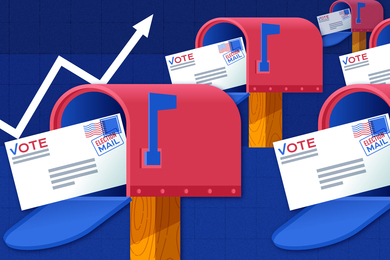
Study measures the “blue shift” from absentee and provisional ballots, underscores uncertainties of 2020 vote.
Political science professor will spearhead the Institute’s interdisciplinary center that studies high-impact, complex societal challenges.

Using novel computational approaches, graduate student Shiyao Liu develops better tools for analyzing data.
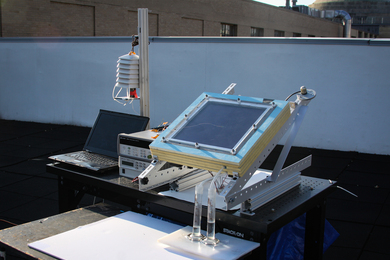
MIT engineers have made their initial design more practical, efficient, and scalable.

Designed for students, the program explores on a grand scale how technology can aid or hinder human rights.
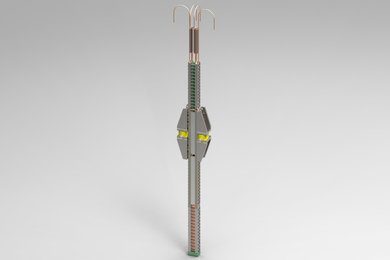
MIT-Commonwealth Fusion Systems demonstration of new superconducting cable is a key step on the high-field path to compact fusion.

Tool developed at MIT simultaneously measures chemical and electrical brain signals, revealing unexpectedly complex relationship between brain signals.

Boosting the efficiency of single-cell RNA-sequencing helps reveal subtle differences between healthy and dysfunctional cells.
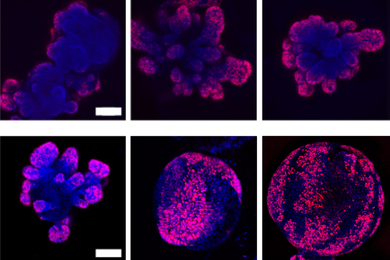
Study finds that compressing cells, and crowding their contents, can coax them to grow and divide.