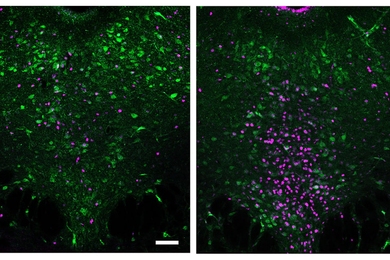
Too sick to socialize: How the brain and immune system promote staying in bed
MIT researchers discover how an immune system molecule triggers neurons to shut down social behavior in mice modeling infection.
MIT researchers discover how an immune system molecule triggers neurons to shut down social behavior in mice modeling infection.

MIT researchers analyzed a recently discovered ancient construction site to shed new light on a material that has endured for thousands of years.
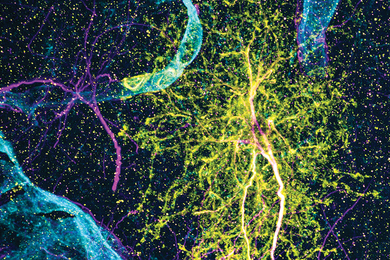
A new atlas charts the diversity of an influential cell type in the brains of mice and marmosets.

Using a versatile problem-solving framework, researchers show how early relapse in lymphoma patients influences their chance for survival.

Cutting air travel and purchasing renewable energy can lead to different effects on overall air quality, even while achieving the same CO2 reduction, new research shows.

The speech-to-reality system combines 3D generative AI and robotic assembly to create objects on demand.

New findings may help researchers identify genetic mutations that contribute to rare diseases, by studying when and how single genes produce multiple versions of proteins.

A study by MIT researchers illuminates choices about reliability, cost, and emissions.

This new technique enables LLMs to dynamically adjust the amount of computation they use for reasoning, based on the difficulty of the question.
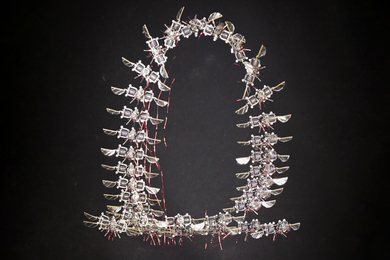
With insect-like speed and agility, the tiny robot could someday aid in search-and-rescue missions.

Whether they walk on two, four, or six legs, animals maintain stability by monitoring their body position and correcting errors with every step.

Macro, a modeling tool developed by the MIT Energy Initiative, enables energy-system planners to explore options for developing infrastructure to support decarbonized, reliable, and low-cost power grids.

MIT engineers show they can accurately measure blood glucose by shining near-infrared light on the skin.
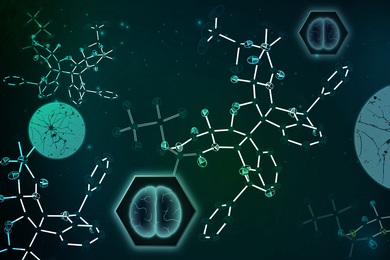
Preliminary studies find derivatives of the compound, known as verticillin A, can kill some types of glioma cells.
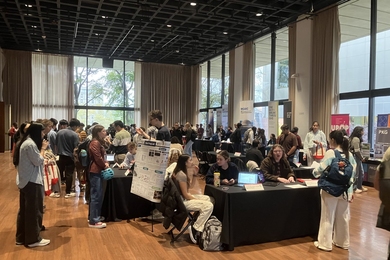
The Institute will commit up to $1 million in new funding to increase supply of UROPs.