
A new approach to rechargeable batteries
New metal-mesh membrane could solve longstanding problems and lead to inexpensive power storage.
New metal-mesh membrane could solve longstanding problems and lead to inexpensive power storage.

New model measures characteristics of carbon nanotube structures for energy storage and water desalination applications.
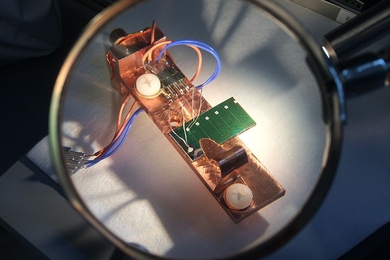
Approach could bypass the time-consuming steps currently needed to test new photovoltaic materials.

Two-day summit on climate leadership in northeastern North America draws almost 200 to MIT.

In the face of global challenges, leading women in energy and climate convene at the C3E 2017 Clean Energy Symposium.
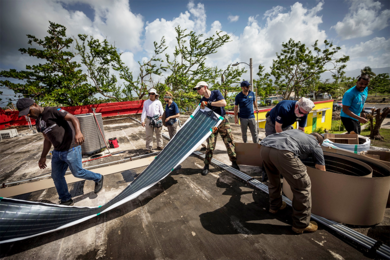
An off-grid, battery-less system from MIT Lincoln Laboratory and Infinitum Humanitarian Systems will be run indefinitely by a local Boys and Girls Club.

MIT researchers are working with the Mexican government on carbon pricing options to meet the country’s climate goals under the Paris Agreement.
New framework guarantees stability of microgrids that supply local power in developing countries.
Research, education, and student activities help create a robust community focused on fueling the world's future.
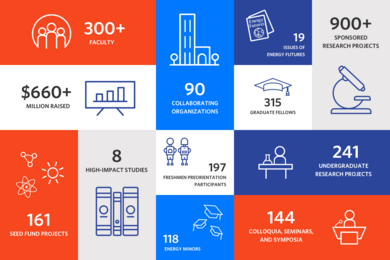
MIT Energy Initiative Director Robert Armstrong shares perspectives on past successes and ongoing and future energy projects at the Institute.

Undergraduate Olorunsola “Jerry” Akinsulire spearheads a new builder space in the Department of Nuclear Science and Engineering.

MIT Energy Initiative seminar examines the role of the humanities, design, and aesthetics in catalyzing a fairer, more diverse energy future.
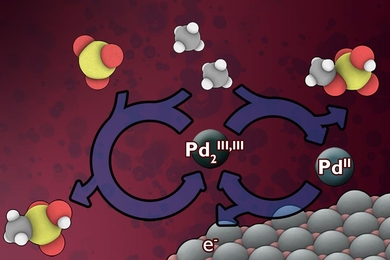
Approach developed at MIT could help curb needless “flaring” of potent greenhouse gas.
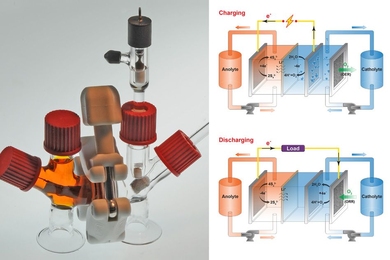
“Air-breathing” battery can store electricity for months, for about a fifth the cost of current technologies.

Nuclear science and engineering graduate student receives Department of Energy Innovation Award for his work on plasma turbulence.