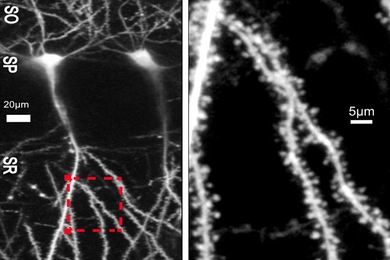
Findings weaken notion that size equals strength for neural connections
Among study’s many surprises may be a new way to address Fragile X syndrome — by finding a “protein X.”
Among study’s many surprises may be a new way to address Fragile X syndrome — by finding a “protein X.”
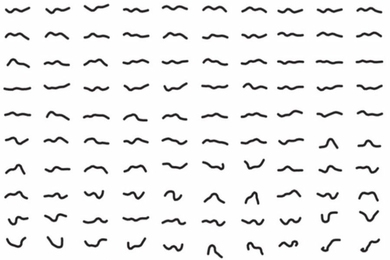
To spy on worms for days on end, Picower Institute scientists invent a new open-source microscopy platform.

The lateral septum encodes spatial information with a special emphasis on where the reward lies.

MIT researchers pinpoint mechanism and demonstrate that drugs could help.
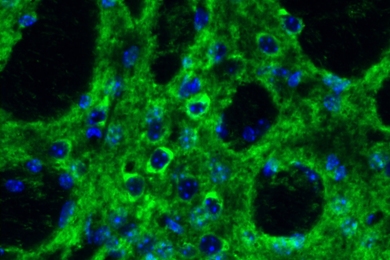
Knocking out the immune cytokine IL-6 exacerbates symptoms in HD model mice, affects neural connection genes.
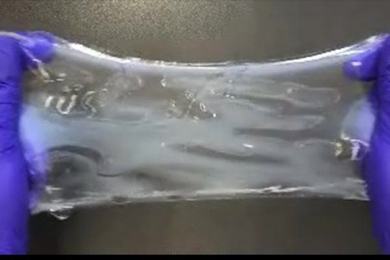
Chemical process called ELAST allows labeling probes to infuse more quickly, and makes samples tough enough for repeated handling.
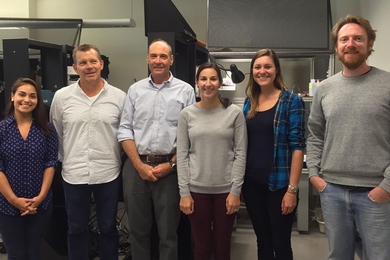
Drug compound, tested in mice, could be effective in treating the leading heritable cause of intellectual disability and autism.
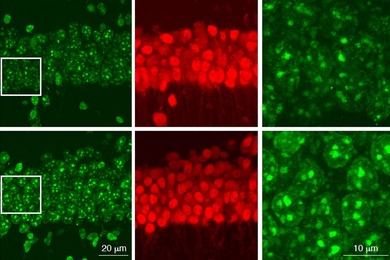
Reactivating an enzyme that promotes DNA repair can help to reverse age-related cognitive decline in mice.

The protein Synaptotagmin 7 limits supply of neurotransmitter-containing vesicles for release at synapses.
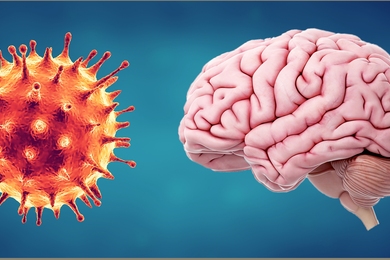
Picower Institute researchers are embarking on experiments to learn the mechanisms by which coronavirus might affect mental health.
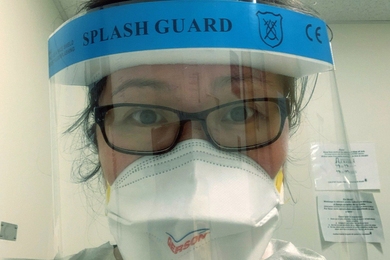
Neurologist and researcher Diane Chan pitches in to help New England get through tough times.
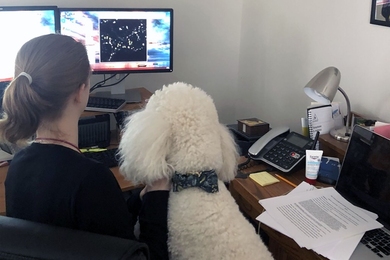
Picower Institute researchers are advancing their work in many ways despite time away from the lab required to corral Covid-19.

Neurons that store abstract representations of past experiences are activated when a new, similar event takes place.

Ten staff members recognized for dedication to School of Science and to MIT.
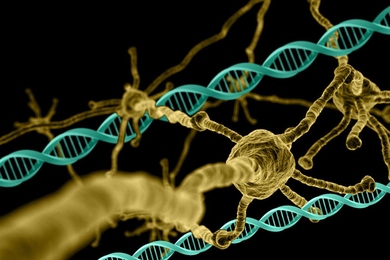
Neuroscientists identify genes that modulate the disease’s toxic effects.