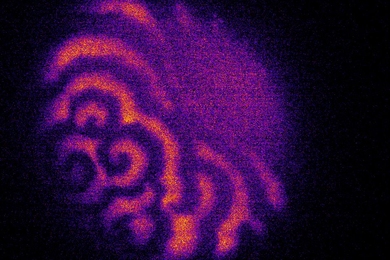
The growth of an organism rides on a pattern of waves
Study shows ripples across a newly fertilized egg are similar to other systems, from ocean and atmospheric circulations to quantum fluids.
Study shows ripples across a newly fertilized egg are similar to other systems, from ocean and atmospheric circulations to quantum fluids.
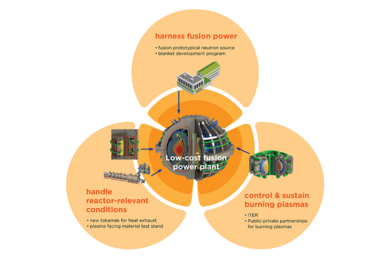
Fusion energy community makes unified statement on priorities in report for Department of Energy Policy Advisory Group.

Ten staff members recognized for dedication to School of Science and to MIT.
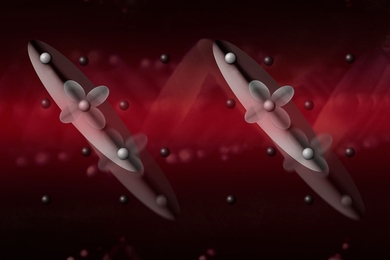
Physicists use extreme infrared laser pulses to reveal frozen electron waves in magnetite.

System “recruits” defects that usually cause disruptions, using them to instead carry out quantum operations.

Institute ranks second in five subject areas.
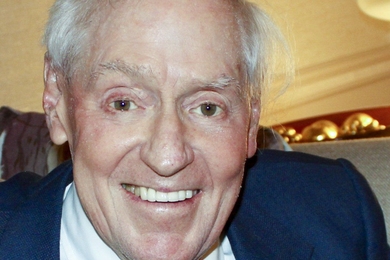
Highly regarded physicist was well-known for studying plasma turbulence in terms of coherent structures.

Study identifies a transition in the strong nuclear force that illuminates the structure of a neutron star’s core.

Method with polarized light can create and measure nonsymmetrical states in a layered material.
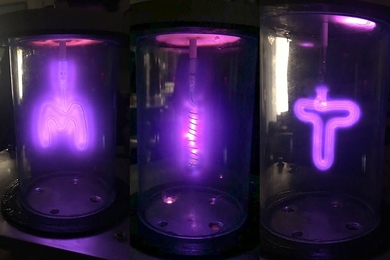
Building devices to study fusion at the new (and highly controlled) “MIT Nucleus” makerspace generates enthusiasm — and a purple glow.
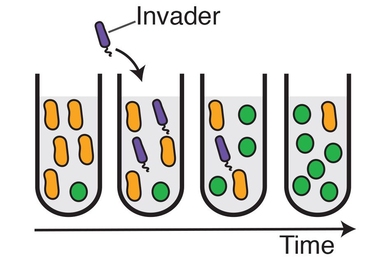
Study finds microbes can alter an environment dramatically before dying out.

Junior double major seeks to piece together puzzles of the universe, particle by particle.

Bernstein was a member of the Hadronic Physics Group in the Laboratory for Nuclear Science, and a longtime anti-nuclear weapons activist.
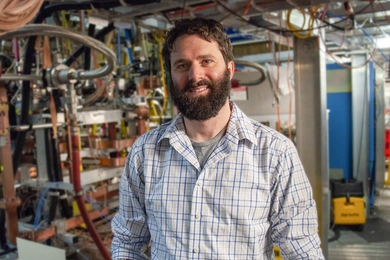
Researcher unravels the mystery of heat loss in turbulent fusion plasmas.
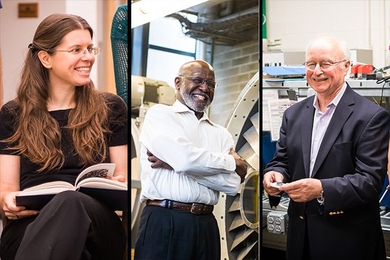
Anna Frebel, Wesley Harris, and Harry Tuller honored by graduate students as “Committed to Caring.”