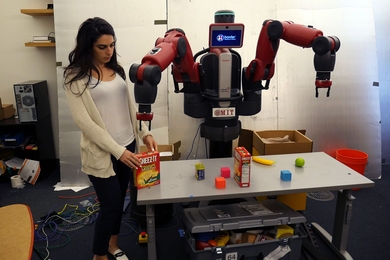
Robot learns to follow orders like Alexa
ComText, from the Computer Science and Artificial Intelligence Laboratory, allows robots to understand contextual commands.
ComText, from the Computer Science and Artificial Intelligence Laboratory, allows robots to understand contextual commands.

Estimate will help gauge hang time of greenhouse gases, water vapor, and ozone in upper atmosphere.

Programming language plus simple circuit design could let routers report on their own operation.
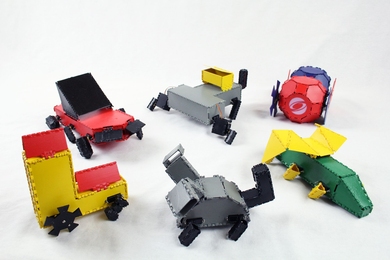
CSAIL’s “Interactive Robogami” lets you design and 3-D print origami-inspired robots from 2-D designs.
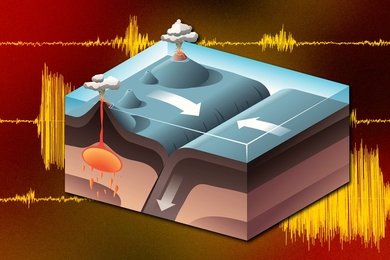
Higher mantle temperatures caused subducting tectonic plates to sink much further than they do today.

New CSAIL research employs many types of medical data, including electronic health records, to predict outcomes in hospitals.
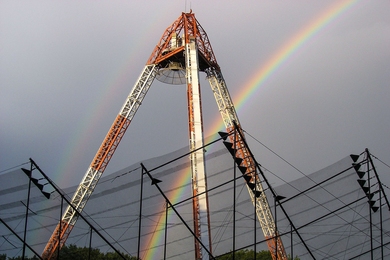
Atmospheric scientists at the MIT Haystack Observatory will study North American eclipse effects on space weather with radar and navigational satellites.
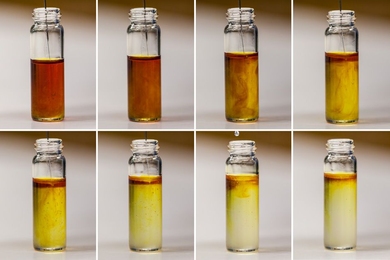
Study explains conflicting results from other experiments, may lead to batteries with more energy per pound.
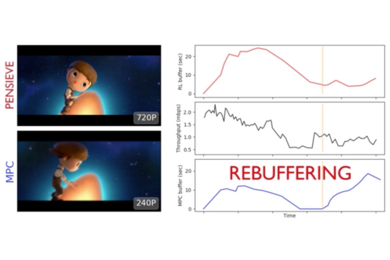
CSAIL’s machine-learning system enables smoother streaming that can better adapt to different network conditions.

New design boosts the power output of the best-performing chip-scale terahertz laser by 80 percent.
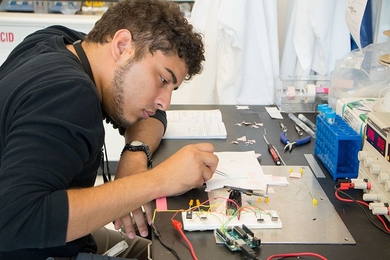
Summer Scholar Alejandro Aponte troubleshoots the design for an implantable pump that can deliver drugs to the brain.
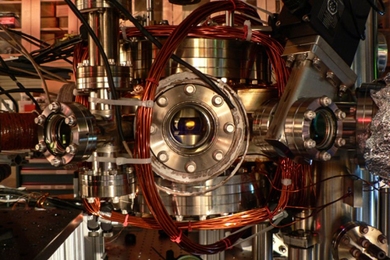
New approach yields long-lasting configurations that could provide long-sought “qubit” material.

A 50-year dry spell has reversed, with more rain to come.
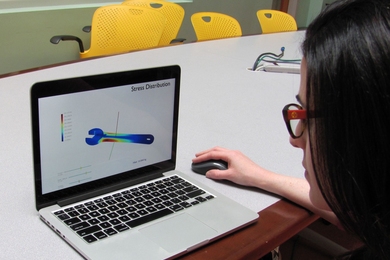
CSAIL’s InstantCAD allows manufacturers to simulate, optimize CAD designs in real-time.
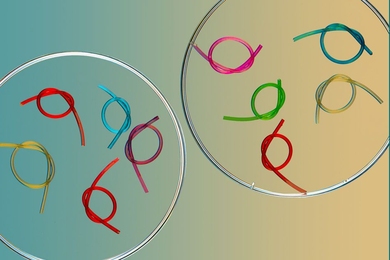
Bonded layers of rubber and hydrogel yield tough, slippery, and impermeable coatings.