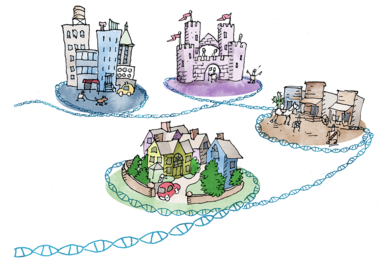
Rethinking transcription factors and gene expression
Study shows that, like proteins, genomes must fold appropriately to function properly and that some transcription factors provide the structural support.
Study shows that, like proteins, genomes must fold appropriately to function properly and that some transcription factors provide the structural support.

Findings present a puzzle as to how such a huge object could have grown so quickly.

New technique 3-D prints programmed cells into living devices for first time.

Ten-month-old infants determine the value of a goal from how hard someone works to achieve it.
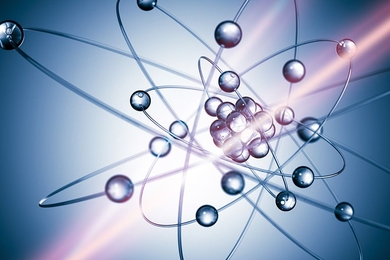
Method of laser cooling may speed up investigations into magnetism and superconductivity.

Study finds state’s annual risk of extreme rainfall will rise from 1 to 18 percent.
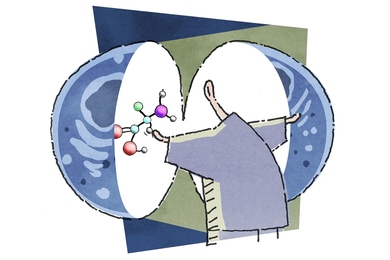
Researchers have identified a key nutrient sensor in the mTOR pathway that links nutrient availability to cell growth.
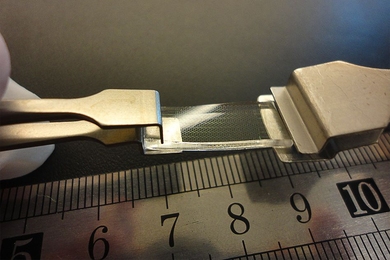
Light-based devices could be used as biomedical sensors or as flexible connectors for electronics.
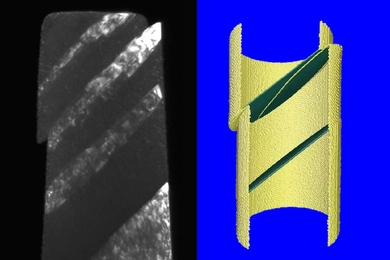
Materials with a special kind of boundary between crystal grains can deform in unexpected ways.
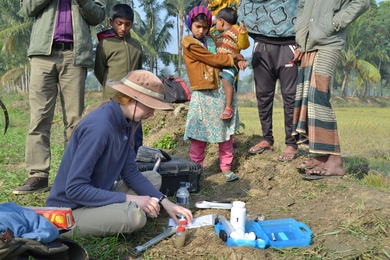
MIT field study shows that arsenic in groundwater reduces rice yields in Bangladesh.
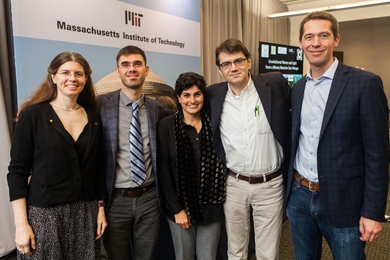
Mavalvala, Evans, Frebel, Katsavounidis, and Vitale discuss the science behind LIGO's observations of a neutron star collision.

Professor of physics describes our understanding of the expansion of the universe through “standard sirens.”

Discovery marks first cosmic event observed in both gravitational waves and light.

Surprisingly, pressurization isn’t to blame for fouling of membranes, study finds.
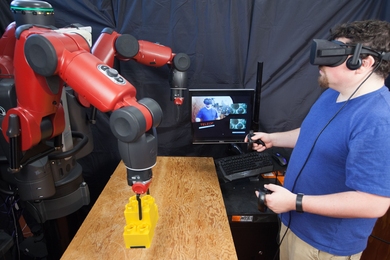
A virtual reality system from the Computer Science and Artificial Intelligence Laboratory could make it easier for factory workers to telecommute.