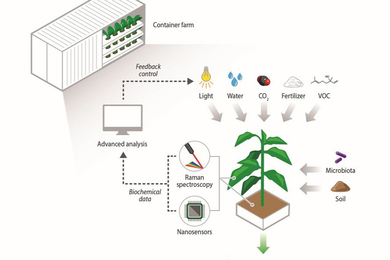
SMART develops analytical tools to enable next-generation agriculture
Engineered plant nanosensors and portable Raman spectroscopy will help enable sustainable practices in traditional and urban agriculture.
Engineered plant nanosensors and portable Raman spectroscopy will help enable sustainable practices in traditional and urban agriculture.
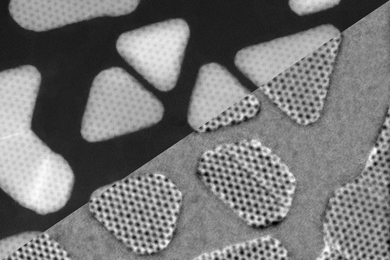
Cutting-edge microscope helps reveal ways to control the electronic properties of atomically thin materials.

Reducing internal losses could pave the way to low-cost perovskite-based photovoltaics that match silicon cells’ output.

Inspired by decades-old MIT research, the new technology could boost quantum computers and other superconducting electronics.
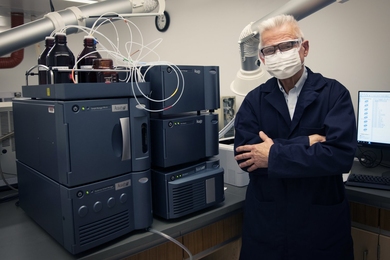
Cutting edge-tool reserved exclusively for students is fast, efficient, and environmentally friendly.
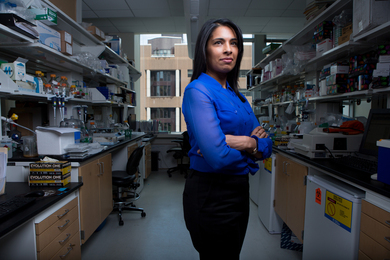
Biological sensors developed by MIT spinout Glympse Bio could help clinicians make decisions for individual patients.

Structure may reveal conditions needed for high-temperature superconductivity.

Company specializing in atomic force microscopy to advise, collaborate with MIT researchers.
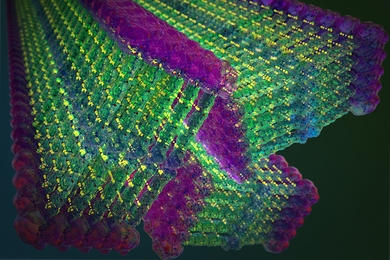
Self-assembly of Kevlar-inspired molecules leads to structures with robust properties, offering new materials for solid-state applications.

Manipulating materials at a fundamental level, Ju Li reveals new properties for energy applications.

New design could speed reaction rates in electrochemical systems for pulling carbon out of power plant emissions.

Facility within MIT.nano offers equipment and capabilities for visualizing data, creating immersive environments.
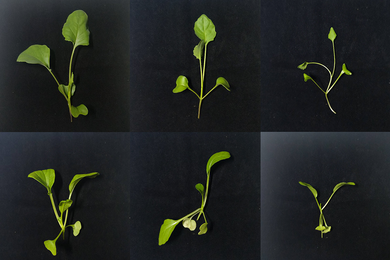
SMART researchers use Raman spectroscopy for early detection of SAS, which can help farmers better monitor plant health and improve crop yields.

Physicist and Harvard University professor discusses silicon vacancies, reflects on inspiration from Mildred Dresselhaus.

Nanoscale devices integrated into the leaves of living plants can detect the toxic heavy metal in real time.