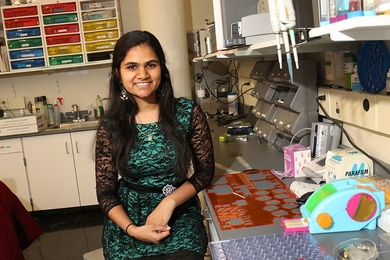
Out of the lab, into the world
Rhodes Scholar Anisha Gururaj aims to connect life-changing technologies with people who need them.
Rhodes Scholar Anisha Gururaj aims to connect life-changing technologies with people who need them.
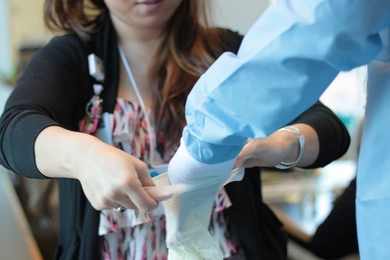
More than 100 spend a weekend devising better personal protections, diagnostics, and medical records in the face of a deadly disease.
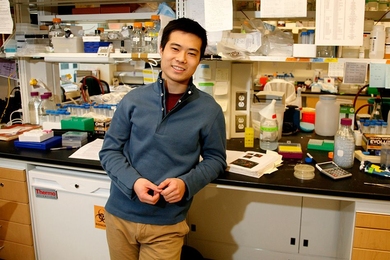
Rhodes Scholar Elliot Akama-Garren seeks to harness the power of the immune system to combat cancer.
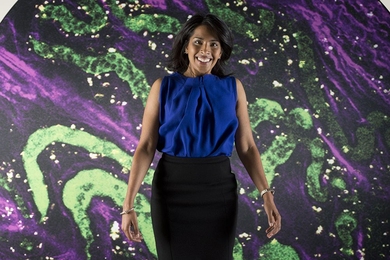
Sangeeta Bhatia's research defies tradition, drawing on biological and medical sciences, and multiple engineering disciplines.

Leaders to gather for keystone event at MIT next October.
Inaugural event, “Examining Ebola,” probes the current global public health emergency from multiple disciplinary perspectives.
PhD student Andrea Ippolito improves health care through engineering, entrepreneurship, and systems design.
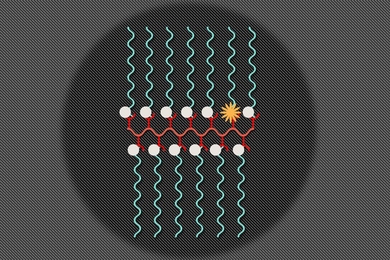
Nanoparticles that enable both MRI and fluorescent imaging could monitor cancer, other diseases.
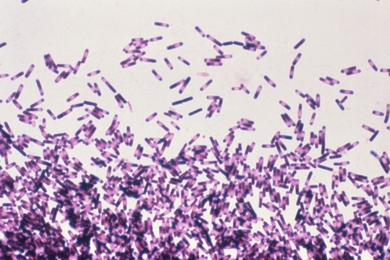
Partnership with MGH, other institutions to foster regional ecosystem for rapidly evolving field.
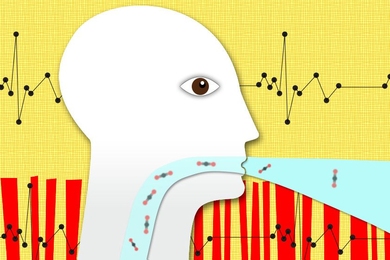
By analyzing carbon dioxide in the breath, an algorithm could help determine how to treat patients.
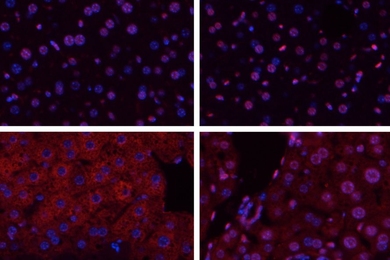
An enzyme key to DNA repair can worsen tissue damage caused by stroke and organ transplantation.
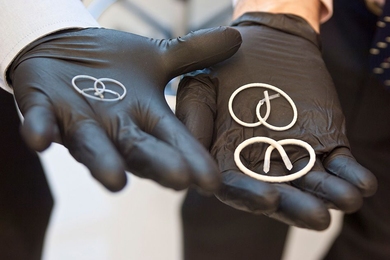
Novel device that stays in the bladder and slowly releases drugs sells to pharmaceutical giant.

First set of grants support projects designed to improve diagnostic accuracy and cost-effectiveness.
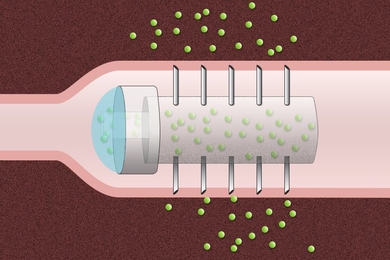
Pill coated with tiny needles can deliver drugs directly into the lining of the digestive tract.