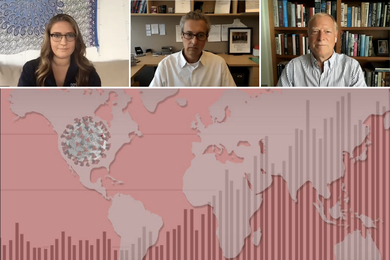
Covid-19 scientific leaders share expertise in new MIT class
MIT course on the Covid-19 pandemic, available to the public online, brings together top experts to educate students on up-to-date science.
MIT course on the Covid-19 pandemic, available to the public online, brings together top experts to educate students on up-to-date science.
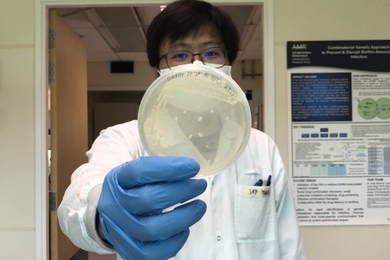
SMART researchers find exposing bacteria to hydrogen sulfide can increase antimicrobial sensitivity in bacteria that do not produce H2S.
New faculty in these areas will connect the MIT Schwarzman College of Computing and a department or school.
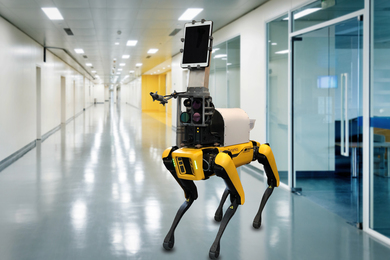
Mobile system could reduce health care workers’ exposure to Covid-19 virus.
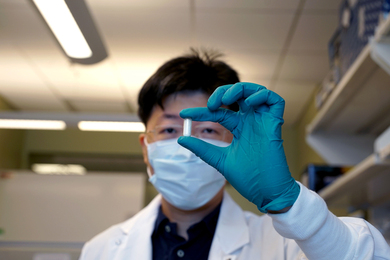
MIT engineers devise a temporary film that may help treat diabetes, infections, and other conditions.
Over 8,000 tests were performed last week by MIT Medical.

The startup Kinsa uses its smart thermometers to detect and track the spread of contagious illness before patients go to the hospital.
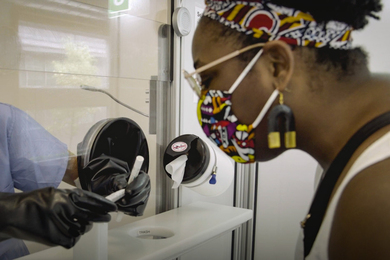
Designed and assembled by experts from across the Institute, the facility should enable testing of up to 1,500 people a day.
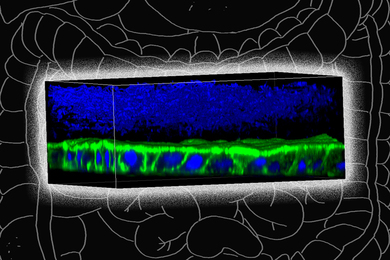
Bacteria linked to Crohn’s disease are difficult to grow in the lab, but MIT engineers have found a way.
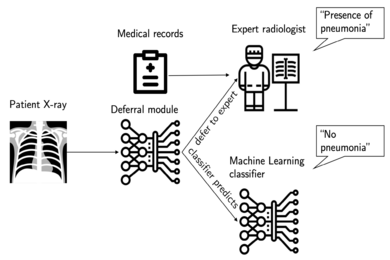
Machine learning system from MIT CSAIL can look at chest X-rays to diagnose pneumonia — and also knows when to defer to a radiologist.

MIT researchers propose a design to overcome a major challenge in hydrocephalus catheters — clogging — by leveraging catheter geometry.

Alumni from MISTI’s Empowering the Teachers program innovate together to save lives.
![“The biology [around gut bacteria’s influence on health] is fairly complex, and we’re still in the early days of unravelling it, but there have been a number of clinical studies that have reported benefits to restoring gut health, and that’s our north star: the clinical data,” Finch co-founder and Chief Executive Officer Mark Smith PhD ’14 says.](/sites/default/files/styles/term_page__news_article/public/images/202007/MIT-Finch-01.jpg?itok=-8olXqg-)
The company is developing treatments that restore gut bacteria in people struggling with a range of diseases.
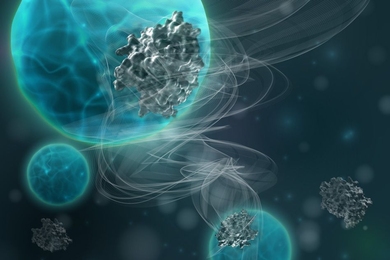
Specialized nanoparticles create a “breath signal” that could be used to diagnose pneumonia and other infectious or genetic diseases.
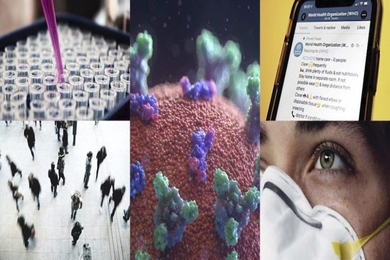
C3.ai Digital Transformation Institute awards $5.4 million to top researchers to steer how society responds to the pandemic.