
Fast-moving magnetic particles could enable new form of data storage
Recently discovered phenomenon could provide a way to bypass the limits to Moore’s Law.
Recently discovered phenomenon could provide a way to bypass the limits to Moore’s Law.

Insight into cement’s microscopic properties may lead to stronger, more sustainable concrete.

MIT spinout prepares to launch line of wristbands that keep wearers thermally comfortable.

Award recognizes outstanding contributions to the field of crystal growth and epitaxy, the development of crystals for use in photonics, microelectronics, and more.

MIT researchers supported by J-WAFS present results of their work on food and water security.
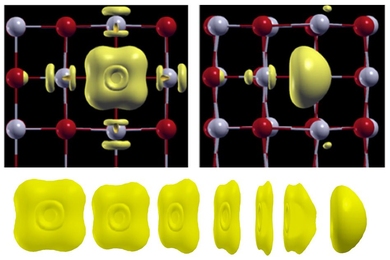
Harnessing these imperfections could have implications for computer memory and energy conversion.

Microfluidic device uses acoustics to quickly analyze blood for signatures of cancer and other diseases.

Unusual fluorescent materials could be used for rapid light-based communications systems.
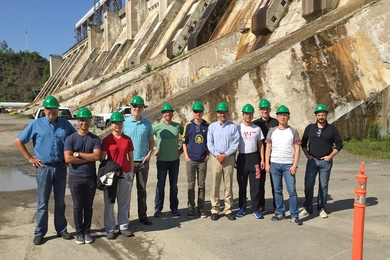
Researchers working to address concrete durability get a close look at the impacts of a chemical reaction known to cause structural problems.
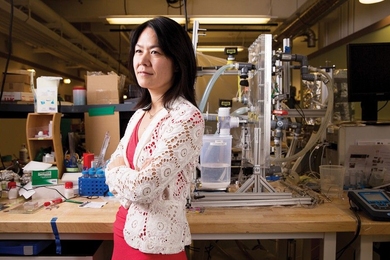
Mechanical engineering alumna and internationally recognized professor is the new associate head of the department.
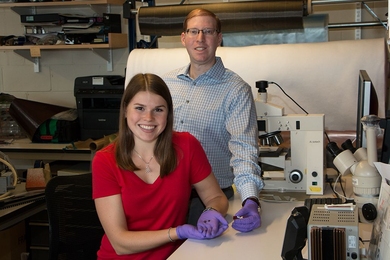
Carbon nanotubes lower the transformation temperature of glassy carbon, possibly aiding manufacturers, MIT researchers report.
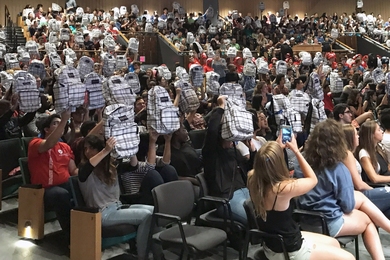
Members of MIT’s class of 2021 get a free backpack — and a glimpse at the future of “smart” fabrics.
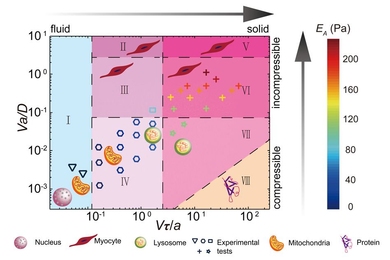
In study that may guide drug design, researchers find organelles encounter varying levels of resistance.

Engineer brings active interest in innovation to new role.
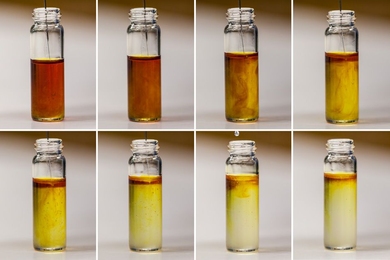
Study explains conflicting results from other experiments, may lead to batteries with more energy per pound.