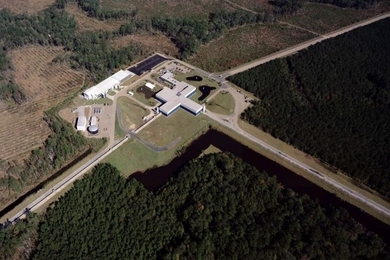
LIGO and Virgo announce four new gravitational-wave detections
The observatories are also releasing their first catalog of gravitational-wave events.
The observatories are also releasing their first catalog of gravitational-wave events.
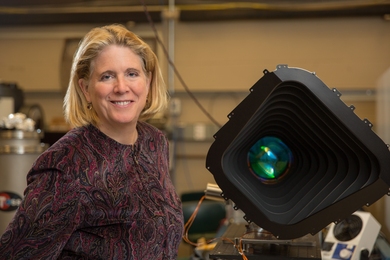
Physics professor brought leadership, resources, and an intellectual focus to the MIT astrophysics faculty and research staff during 15 years at the helm.

Senior Radha Mastandrea analyzes data from CERN in search of more information about the universe’s fundamental particles.
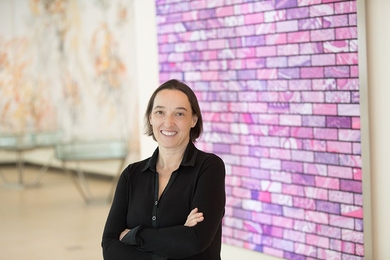
Four other MIT researchers to receive New Horizons Prizes in math and physics; two alumni win Breakthrough Prize in Fundamental Physics.
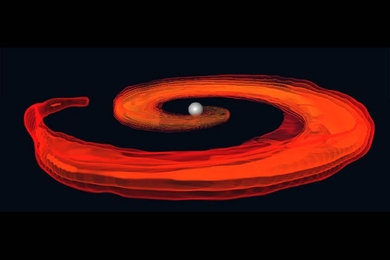
Signals from rare black hole-neutron star pairs could pinpoint rate at which universe is growing, researchers say.
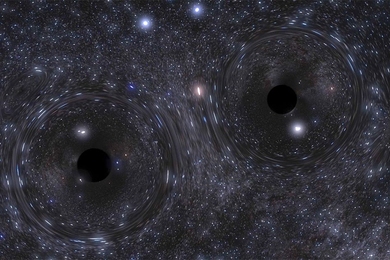
Black holes in these environments could combine repeatedly to form objects bigger than anything a single star could produce.
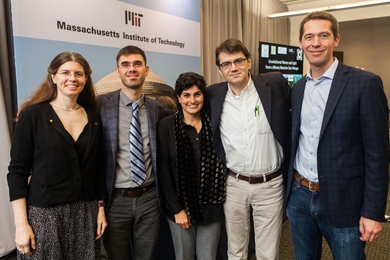
Mavalvala, Evans, Frebel, Katsavounidis, and Vitale discuss the science behind LIGO's observations of a neutron star collision.
Professor of physics describes our understanding of the expansion of the universe through “standard sirens.”
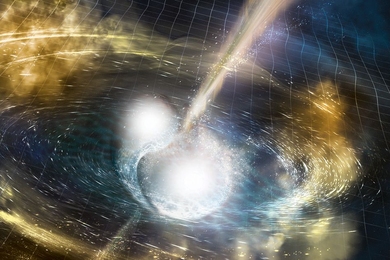
Discovery marks first cosmic event observed in both gravitational waves and light.
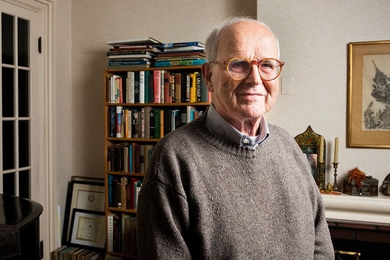
LIGO inventor and professor emeritus of physics recognized “for decisive contributions to the LIGO detector and the observation of gravitational waves.”
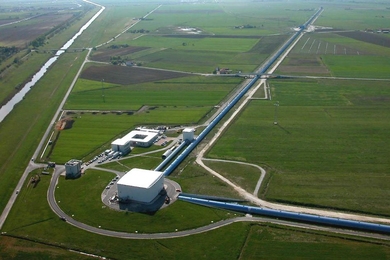
Finding represents first joint detection of gravitational waves with both detectors.
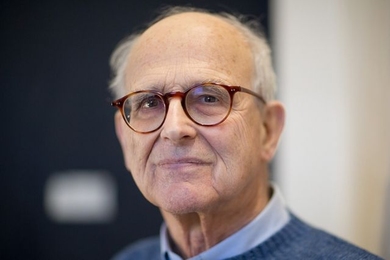
Prestigious Spanish award shared with Caltech's Kip Thorne and Barry Barish and the LIGO Scientific Collaboration for work in detecting gravitational waves.
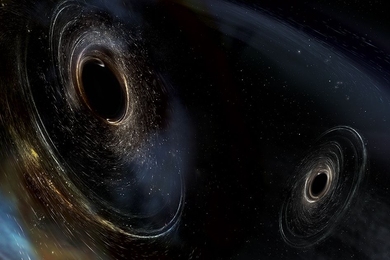
Nearly 3 billion light years from Earth, the black holes are the farthest ever detected.
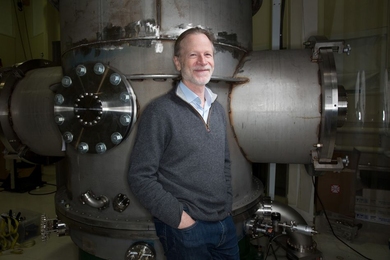
Senior MIT research scientist to speak for international collaboration for gravitational wave detection research.
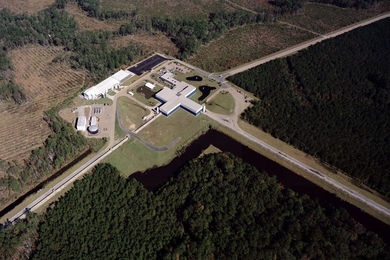
Upgrades make detectors more sensitive to gravitational waves.