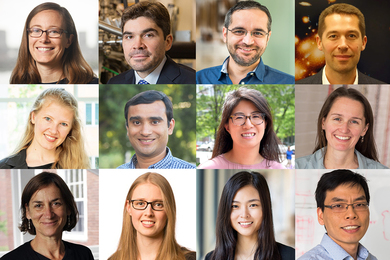
School of Science appoints 12 faculty members to named professorships
Those selected for these positions receive additional support to pursue their research and develop their careers.
Those selected for these positions receive additional support to pursue their research and develop their careers.
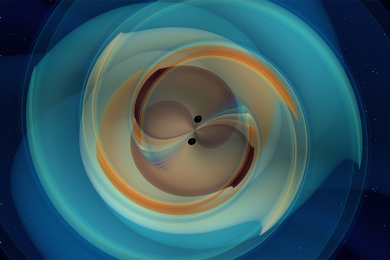
A binary black hole merger likely produced gravitational waves equal to the energy of eight suns.
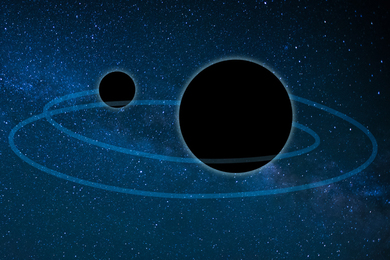
Researchers suggest a novel process to explain the collision of a large black hole and a much smaller one.
IAIFI will advance physics knowledge — from the smallest building blocks of nature to the largest structures in the universe — and galvanize AI research innovation.
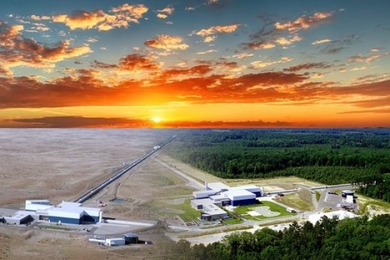
Despite the planet’s seeming standstill, graduate students continue to use LIGO to identify astrophysical events.
Astrophysicist and associate head of the physics department will succeed Michael Sipser.
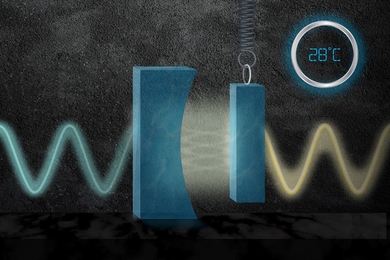
“Light squeezer” reduces quantum noise in lasers, could enhance quantum computing and gravitational-wave detection.
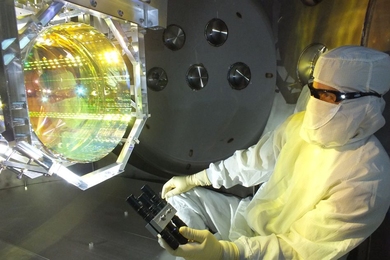
Study shows LIGO’s 40-kilogram mirrors can move in response to tiny quantum effects, revealing the “spooky popcorn of the universe.”
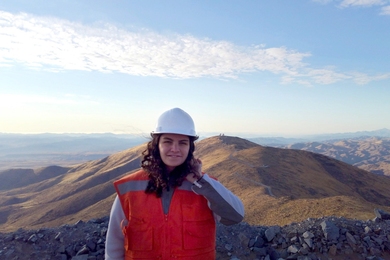
Danielle Frostig, a physics graduate student, is developing an instrument to study how the heaviest elements in the universe are produced.
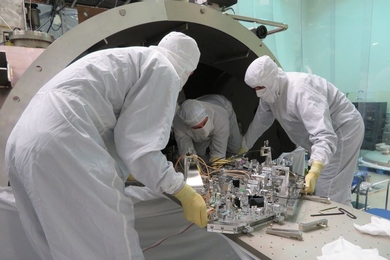
Technology “squeezes” out quantum noise so more gravitational wave signals can be detected.
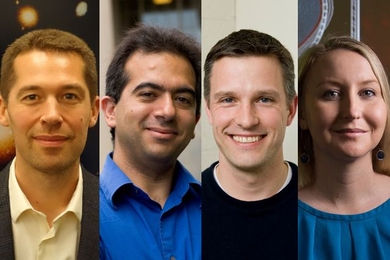
Matthew Evans, Joseph Formaggio, Markus Klute, and Anne White are named MIT’s newest APS fellows for their contributions to physics.
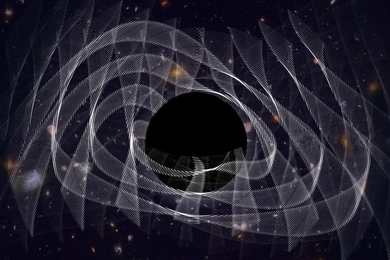
Results support Einstein’s theory and the idea that black holes have no “hair.”
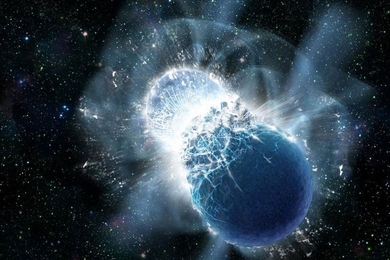
Findings reported just weeks into the network’s latest operating run. (Press release)
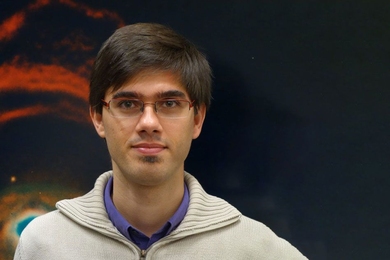
“We will keep listening for these faint and remote cosmic whispers,” says the physics professor.
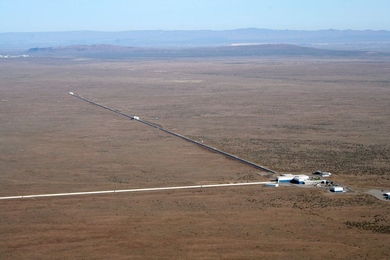
“If we are very lucky, we might observe something new … or maybe even something totally unexpected.”