
Scene at MIT: Donations of personal protective equipment ready for local hospitals
Labs across campus respond to a call; MIT sends thousands of items directly to area hospitals in need.
Labs across campus respond to a call; MIT sends thousands of items directly to area hospitals in need.

Professor Martin Culpepper provides caution on the use of 3D printing to make masks and other PPE for individuals on the front lines of the Covid-19 crisis.
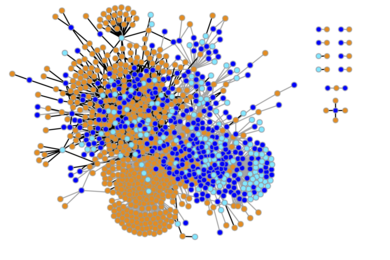
With help from artificial intelligence, researchers identify hidden power of vitamin A and ordinary chewing gum glaze.

Study shows removing liability concerns slightly increases C-section procedures during childbirth.

Dimagi’s data-collection platform has helped improve health care for hundreds of millions of people around the world.
![“I’ve been drawn to [international] experiences mainly because I love school, and I love the classroom experience, but it just can’t compare to living with people and understanding their way of life and the issues they face every day," says senior Kendyll Hicks.](/sites/default/files/styles/term_page__news_article/public/images/202003/MIT_Kendyll_Hicks_01.jpg?itok=OmYpgGt1)
Through on-site projects in developing countries and internships in the business world, Kendyll Hicks explores the political and economic drivers of global health.

The MIT Humanitarian Supply Chain lab led a blended supply chain management course with Addis Ababa University.

CCI and Takeda collaborate on a theoretical approach leveraging networks of people and machines in support of individuals experiencing depression.

Some basic metrics do effectively diagnose care quality, according to MIT economists.

A week of learning with MIT Bootcamps sparked ideas that Jal Panchal and Maria Hahn are taking forward to solve problems in health care.

Computer scientists’ new method could help doctors avoid ineffective or unnecessarily risky treatments.
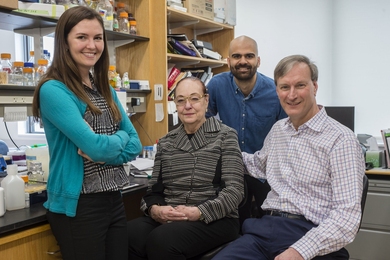
Gift establishes the Brit Jepson d’Arbeloff Center on Women's Health.

Models that map these relationships based on patient data require fine-tuning for certain conditions, study shows.

Study shows no effect from program intended to reduce repeated hospitalizations by targeting high-cost patients.

Economists analyze how patients and health care providers value Medicaid.