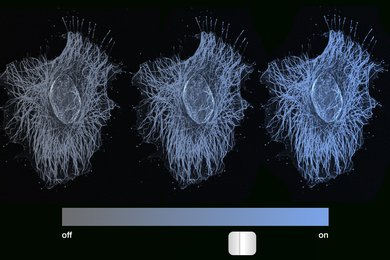
Study finds cell memory can be more like a dimmer dial than an on/off switch
The findings may redefine how cell identity is established and enable the creation of more sophisticated engineered tissues.
The findings may redefine how cell identity is established and enable the creation of more sophisticated engineered tissues.

The longtime MIT professor and Nobel laureate was a globally respected researcher, academic leader, and science policy visionary who guided the careers of generations of scientists.

Researchers developed a tool to recreate cells’ family trees. Comparing cells’ lineages and locations within a tumor provided insights into factors shaping tumor growth.
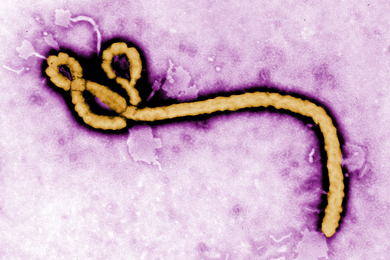
Combining powerful imaging, perturbational screening, and machine learning, researchers uncover new human host factors that alter Ebola’s ability to infect.

A new approach for testing multiple treatment combinations at once could help scientists develop drugs for cancer or genetic disorders.
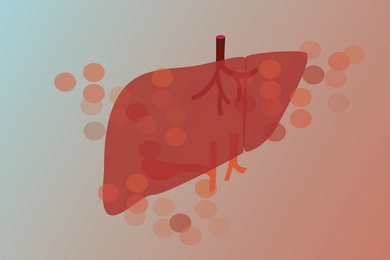
The approach collects multiple types of imaging and sequencing data from the same cells, leading to new insights into mouse liver biology.
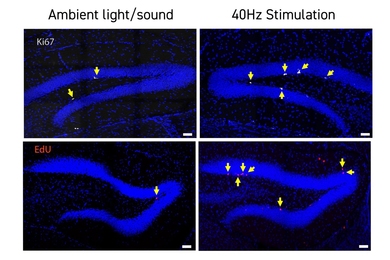
New evidence suggests sensory stimulation of gamma-frequency brain rhythm may promote broad-based restorative neurological health response.
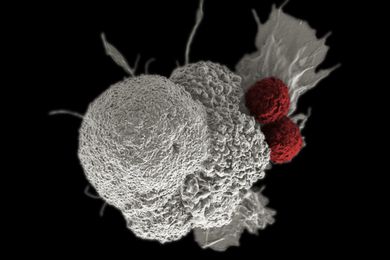
Founded by MIT researchers, Senti Bio is giving immune cells the ability to distinguish between healthy and cancerous cells.

MIT biologists have found that defects in some transfer RNA molecules can lead to the formation of these common conditions.
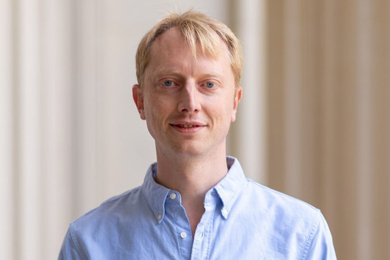
MIT associate professor recognized for exceptional distinction in teaching, research, and service at MIT.

CAMP4 Therapeutics is targeting regulatory RNA, whose role in gene expression was first described by co-founder and MIT Professor Richard Young.
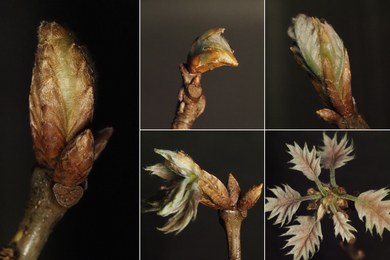
Scientists have found that trees in cities respond to higher temperatures differently than those in forests, potentially masking climate impacts.

A new analysis suggests our language capacity existed at least 135,000 years ago, with language used widely perhaps 35,000 years after that.
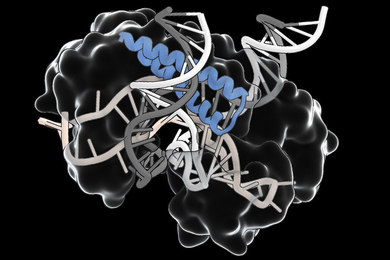
The programmable proteins are compact, modular, and can be directed to modify DNA in human cells.

Colleagues remember the longtime MIT professor as a supportive, energetic collaborator who seemed to know everyone at the Institute.