From contemporary syntax to human language’s deep origins
New paper amplifies hypothesis that human language builds on birdsong and speech forms of other primates.
New paper amplifies hypothesis that human language builds on birdsong and speech forms of other primates.
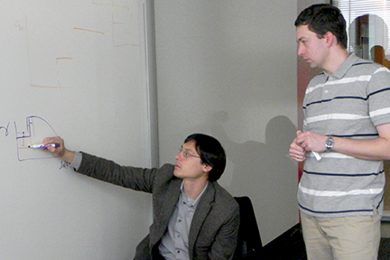
Biophysicist Jeff Gore and collaborators urge applying lessons from yeast colony collapse to tumor growth.
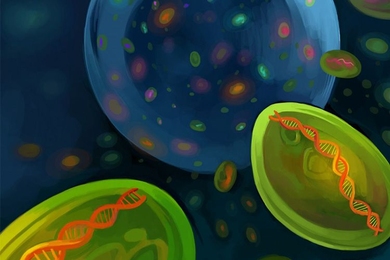
One species, a few drops of seawater, hundreds of coexisting subpopulations.
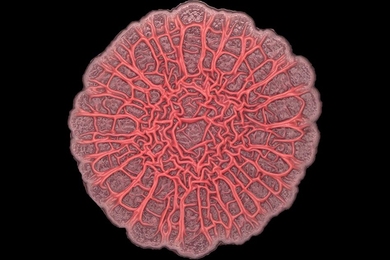
Research shows the success of a bacterial community depends on its shape.

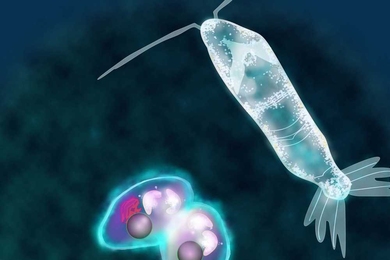
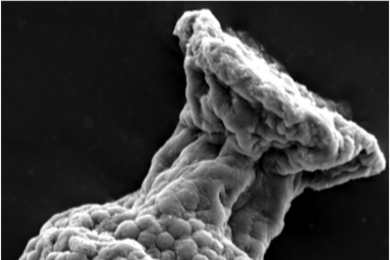
Some 200 million years ago, an increase in atmospheric CO2 caused acidification of the oceans and global warming that killed off 76 percent of marine and terrestrial species on Earth.
Linguistics and biology researchers propose a new theory on the deep roots of human speech.
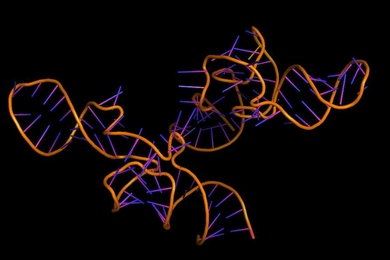
MIT biologists find that alternative splicing of RNA rewires signaling in different tissues and may often contribute to species differences.
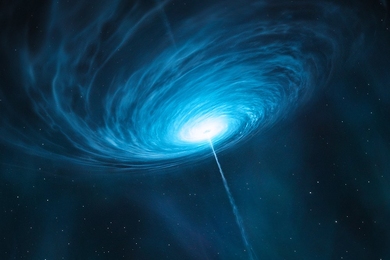
The very first stars may have turned on when the universe was 750 million years old.
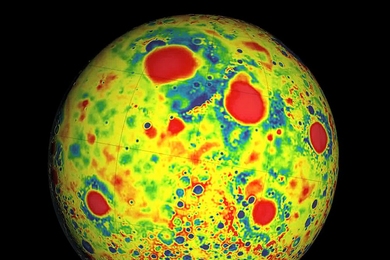
Twin spacecraft create a highly detailed gravity map of the moon, finding an interior pulverized by early impacts.
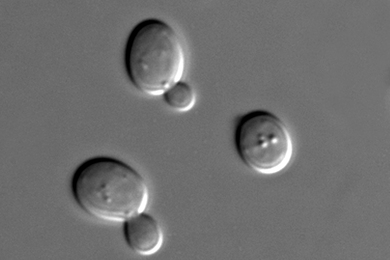
Yeast cells that share food have a survival edge over their freeloading neighbors — particularly when there is bacterial competition.
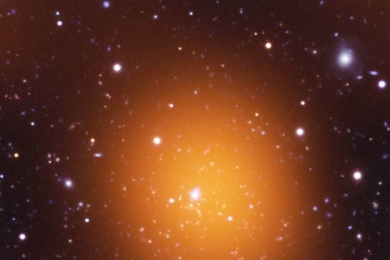
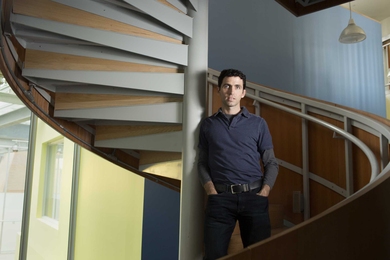
Manolis Kellis uses computational techniques to decipher human disease.
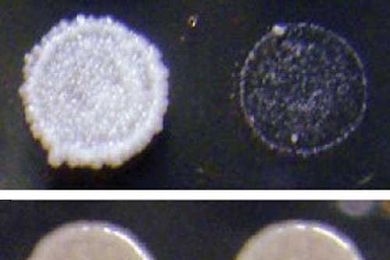
For the first time, researchers find prions in wild strains of yeast, and show they can help the organisms withstand stress.