Undergraduates explore practical applications of artificial intelligence
SuperUROP scholars apply deep learning to improve accuracy of climate models, profitably match computers in the cloud with customers, and more.
SuperUROP scholars apply deep learning to improve accuracy of climate models, profitably match computers in the cloud with customers, and more.

The MIT team’s project was one of seven pitched at the Rabobank-MIT Food and Agribusiness Innovation Prize competition.
Future of Data, Trust, and Privacy initiative aims to address AI-driven analytics and changing attitudes about personal data.
The 15th annual MIT Sloan Sports Analytics Conference puts social issues into play.
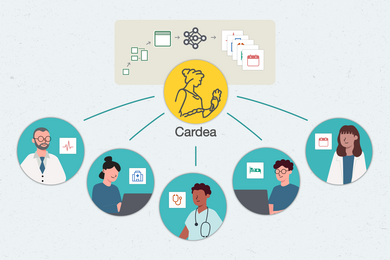
Cardea software system aims to bring the power of prediction to hospitals by streamlining complex machine learning processes.
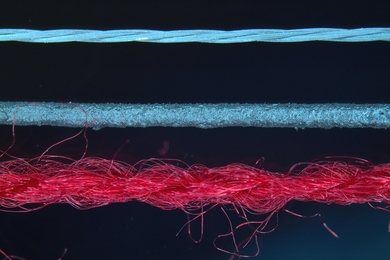
By measuring a person’s movements and poses, smart clothes developed at MIT CSAIL could be used for athletic training, rehabilitation, or health-monitoring for elder-care facilities.

Analysis quantifies a dramatic price drop that parallels similar improvements in solar and wind energy, and shows further steep declines could be possible.
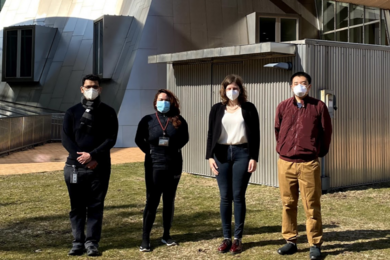
A new tool helps humans better understand and develop artificial intelligence models by searching and highlighting representative scenarios.
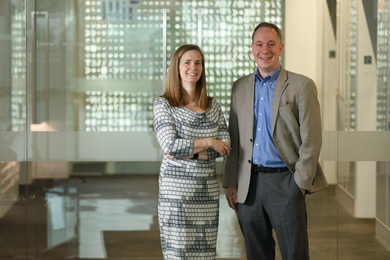
Leveraging years of MIT cognitive science research, Nara Logics incorporates findings about the brain into its AI platform.
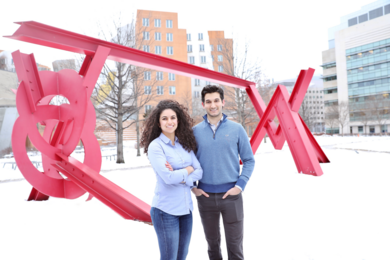
With technology new and old, instructors try to recreate the interactivity of their pre-Covid classroom.

Social media users share charts and graphs — often with the same underlying data — to advocate opposing approaches to the pandemic.
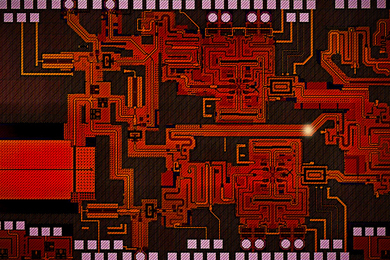
The advance could improve energy efficiency of data centers and lighten the load for electronics-rich vehicles.
New project by inventor of LobbyView.org will advance trade theory and the ability of citizens to influence public policymaking.

A new algorithm offers insights into consumer spending by identifying what someone purchased from only the bill total.
Case’s new lab investigates why cancer arises when disruptions in cellular organization change how cells sense mechanical forces.