Guided learning lets “untrainable” neural networks realize their potential
CSAIL researchers find even “untrainable” neural nets can learn effectively when guided by another network’s built-in biases using their guidance method.
MIT-IBM Watson AI Lab researchers developed an expressive architecture that provides better state tracking and sequential reasoning in LLMs over long texts.
A new book providing a roadmap for blending innovation with tradition among shrinking towns blossomed from a practicum in the MIT Department of Urban Studies and Planning.
Tools for forecasting and modeling technological improvements and the impacts of policy decisions can result in more effective and impactful decision-making.
The technique can help scientists in economics, public health, and other fields understand whether to trust the results of their experiments.
A new atlas charts the diversity of an influential cell type in the brains of mice and marmosets.
Using a versatile problem-solving framework, researchers show how early relapse in lymphoma patients influences their chance for survival.
Cutting air travel and purchasing renewable energy can lead to different effects on overall air quality, even while achieving the same CO2 reduction, new research shows.
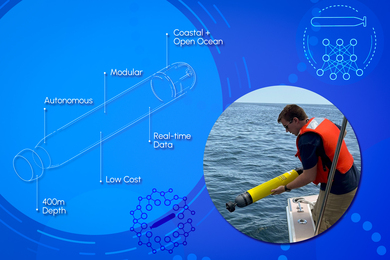
AquaCulture Shock program, in collaboration with MIT-Scandinavia MISTI, offers international internships for AI and autonomy in aquaculture
Large language models can learn to mistakenly link certain sentence patterns with specific topics — and may then repeat these patterns instead of reasoning.
MIT researchers developed a way to identify the smallest dataset that guarantees optimal solutions to complex problems.
MIT PhD students who interned with the MIT-IBM Watson AI Lab Summer Program are pushing AI tools to be more flexible, efficient, and grounded in truth.
MIT PhD student and CSAIL researcher Justin Kay describes his work combining AI and computer vision systems to monitor the ecosystems that support our planet.
Researchers find that design elements of data visualizations influence viewers’ assumptions about the source of the information and its trustworthiness.
How the MIT-IBM Watson AI Lab is shaping AI-sociotechnical systems for the future.