Population decline often goes hand-in-hand with economic stagnation in rural areas — and the two reinforce each other in a cycle. Can digital technologies advance equitable innovation and, at the same time, preserve cultural heritage in shrinking regions?
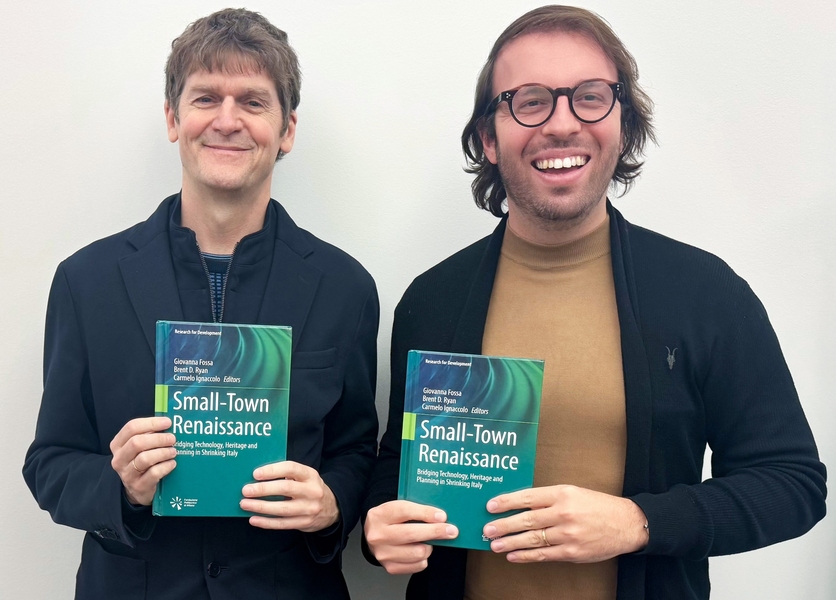
A new open-access book, edited by MIT Vice Provost and Department of Urban Studies and Planning (DUSP) Professor Brent D. Ryan PhD ’02, Carmelo Ignaccolo PhD ’24 of Rutgers University, and Giovanna Fossa of the Politecnico di Milano, explores the transformative power of community-centered technologies in the rural areas of Italy.
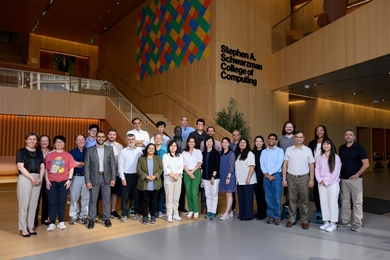
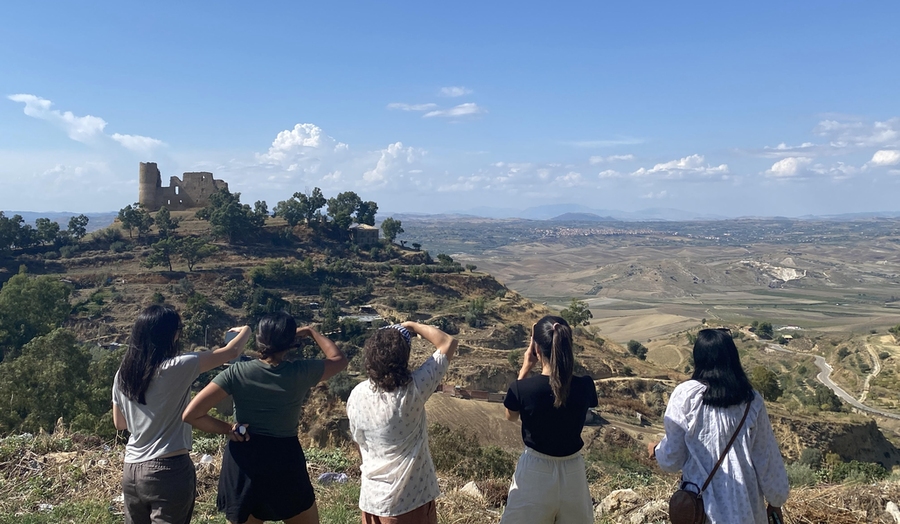
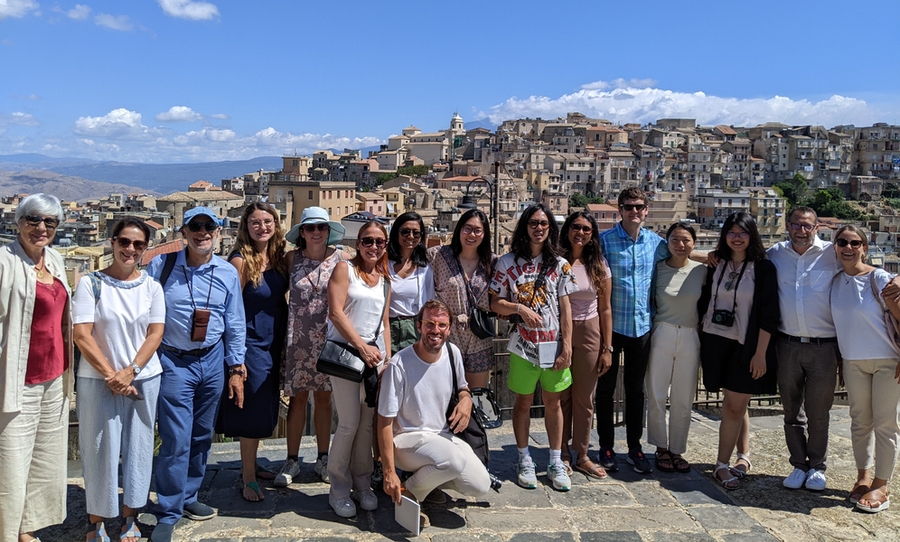
“Small Town Renaissance: Bridging Technology, Heritage and Planning in Shrinking Italy” (Springer Nature, 2025) investigates the future of small towns through empirical analyses of cellphone data, bold urban design visions, collaborative digital platforms for small businesses, and territorial strategies for remote work. The work examines how technology may open up these regions to new economic opportunities. The book shares data-driven scholarly work on shrinking towns, economic development, and digital innovation from multiple planning scholars and practitioners, several of whom traveled to Italy in fall 2022 as part of a DUSP practicum taught by Ryan and Ignaccolo, and sponsored by MISTI Italy and Fondazione Rocca, in collaboration with Liminal.
“What began as a hands-on MIT practicum grew into a transatlantic book collaboration uniting scholars in design, planning, heritage, law, and telecommunications to explore how technology can sustain local economies and culture,” says Ignaccolo.
Now an assistant professor of city planning at Rutgers University’s E.J. Bloustein School of Planning and Public Policy, Ignaccolo says the book provides concrete and actionable strategies to support shrinking regions in leveraging cultural heritage and smart technologies to strengthen opportunities and local economies.
“Depopulation linked to demographic change is reshaping communities worldwide,” says Ryan. “Italy is among the hardest hit, and the United States is heading in the same direction. This project offered students a chance to harness technology and innovation to imagine bold responses to this growing challenge.”
The researchers note that similar struggles also exist in rural communities across Germany, Spain, Japan, and Korea. The book provides policymakers, urban planners, designers, tech innovators, and heritage advocates with fresh insights and actionable strategies to shape the future of rural development in the digital age. The book and chapters can be downloaded for free through most university libraries via open access.