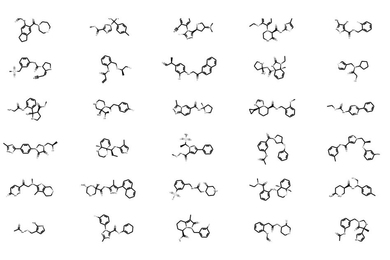
Automating molecule design to speed up drug development
Machine-learning model could help chemists make molecules with higher potencies, much more quickly.
Download RSS feed: News Articles / In the Media / Audio
Machine-learning model could help chemists make molecules with higher potencies, much more quickly.

Given a video of a musical performance, CSAIL’s deep-learning system can make individual instruments louder or softer.
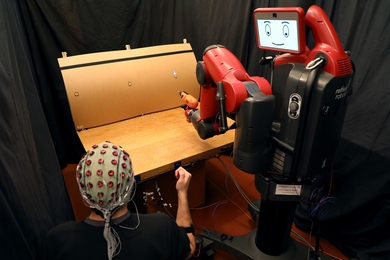
Computer Science and Artificial Intelligence Laboratory system enables people to correct robot mistakes on multiple-choice tasks.
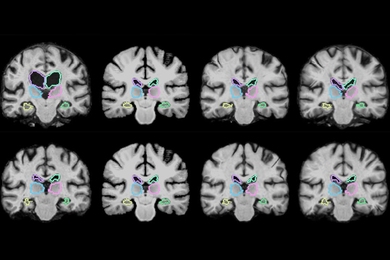
Algorithm makes the process of comparing 3-D scans up to 1,000 times faster.
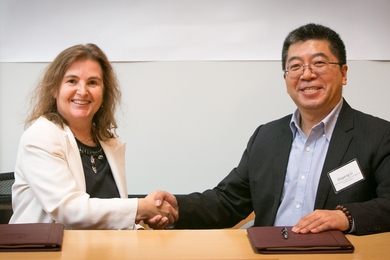
Lab will work with Chinese company on research in artificial intelligence, language processing, and human-computer interaction.

Wireless smart-home system from the Computer Science and Artificial Intelligence Laboratory could monitor diseases and help the elderly “age in place.”

Faculty from across the Institute tapped to lead new initiative in human and machine intelligence.
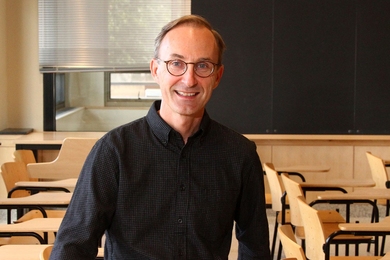
Award-winning applied mathematician and professor has served as interim department head for the past year.

With novel system, data scientists can analyze massive networks without the need for power-hungry servers.

Activity simulator could eventually teach robots tasks like making coffee or setting the table.

Researchers design 3-D-printed, driverless boats that can provide transport and self-assemble into other floating structures.

Study tracks eye movement to determine how well people understand English as a foreign language.

Algorithm computes “buffer zones” around autonomous vehicles and reassess them on the fly.

MIT researchers and industry form new consortium to aid the drug discovery process.
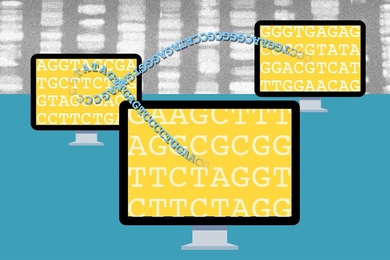
Cryptographic system could enable “crowdsourced” genomics, with volunteers contributing information to privacy-protected databases.