Popular new major blends technical skills and human-centered applications
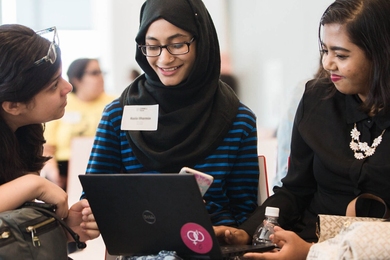
Combining computer science, data science, and economics, Course 6-14 prepares students to address thorny quandaries in many fields.
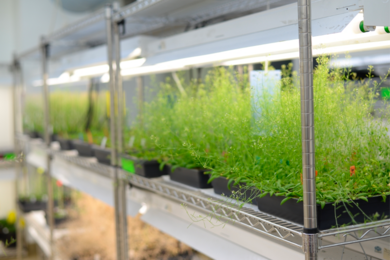
The Raman spectroscopy-based method enables early detection and quantification of pathogens in plants, to enhance plant disease management.
MIT visiting scholar is motivated by foundational science at the edges of the periodic table.
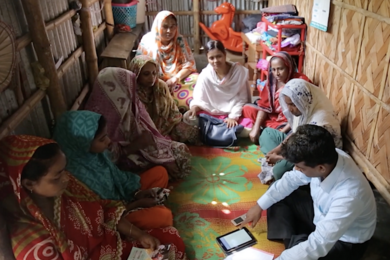
Professor Fotini Christia is part of a team examining the challenges of implementing community policing across a range of countries.
Houston discusses leading the company through the pandemic in a fireside chat hosted by the MIT Schwarzman College of Computing.
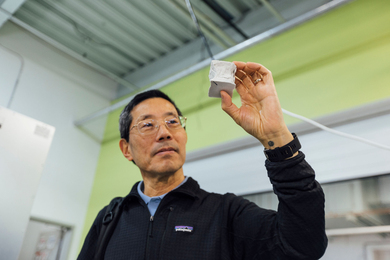
Paper-based blood test developed by SMART researchers can rapidly determine the presence of SARS-CoV-2 neutralizing antibodies.
A life-detecting radar, a microscale motor, and a quantum network architecture are among this year's most innovative new technologies.
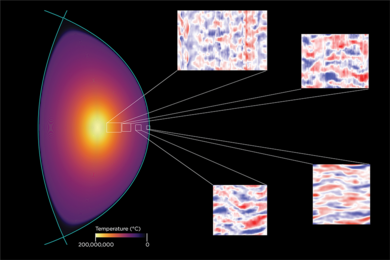
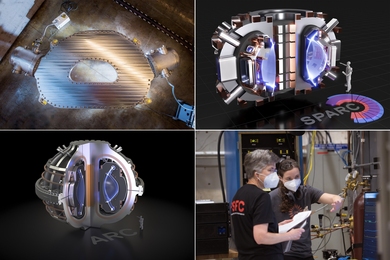
By incorporating the scattering of RF waves into fusion simulations, MIT physicists improve heating and current drive predictions for fusion plasmas.
MIT students connect with Israelis and Palestinians to learn how to leverage science, technology, and entrepreneurship.
Biogen’s support is part of the biotechnology company’s Healthy Climate, Healthy Lives Initiative.
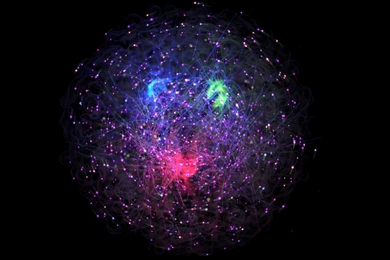
The Common Ground for Computing Education is facilitating collaborations to develop new classes for students to pursue computational knowledge within the context of their fields of interest.
Researchers decipher when and why immune cells fail to respond to immunotherapy, and suggest that T cells need a different kind of prodding in order to re-engage the immune response.
Artificial intelligence is top-of-mind as Governor Baker, President Reif encourage students to “see yourself in STEM.”
Film examines the history and international impact of the 1999 Study on the Status of Women Faculty in Science at MIT, through interviews with Nancy Hopkins and other leading scientists.
The K. Lisa Yang Integrative Computational Neuroscience (ICoN) Center will use mathematical tools to transform data into a deep understanding of the brain.