The MIT-IBM Computing Research Lab launches to shape the future of AI and quantum computing
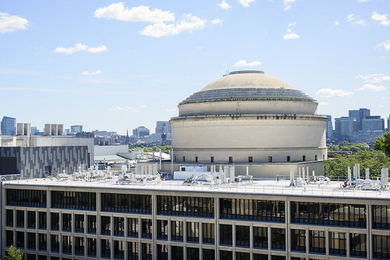
Building on a long-standing MIT–IBM collaboration, the new lab will chart the convergence of AI, algorithms, and quantum computing.
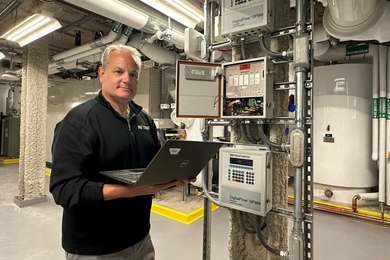
Greentown Labs CEO Georgina Campbell Flatter emphasizes the importance of collaboration in the entrepreneurship space, and the role that universities play in this landscape.
The undergraduate team topped the scoreboard for the sixth year in a row and also took the Elizabeth Lowell Putnam Prize again.
MIT students see the Earth's curvature in reborn AeroAstro intro course.
PhD student Carissma McGee studies exoplanets and examines intellectual property frameworks for space collaborations.
Build for Ukraine 2.0 united students, researchers, and Ukrainian collaborators to prototype solutions shaped by wartime conditions.
Jointly led by the MIT Morningside Academy for Design, MIT Schwarzman College of Computing, and the Hasso Plattner Institute in Potsdam, the hub will foster a dynamic community where computing, creativity, and human-centered innovation meet.
Academia-industry relationship is an early-stage accelerator, supporting professional progress and research.
Through an interdisciplinary collaboration between MIT and the Museum of Fine Arts, Boston, researchers are creating playable physical and synthesized replicas.
The advanced manufacturing group becomes a member and will contribute equipment to MIT.nano.
Offering substantial prize funding alongside workshops, classes, and mentorship, the initiative helps translate early-stage biotech research into venture-ready innovation.
A collaboration between MIT’s Leaders for Global Operations, Boeing, and Engineering Tomorrow brings aspiring engineers from the classroom to the factory floor.
Strahinja Janjusevic brings an international perspective and US Naval Academy education to his graduate research in the MIT Technology and Policy Program.
Researchers find mice modeling the autism spectrum disorder fragile X syndrome exhibit the same pattern of differences in low-frequency waves as humans — a new marker for treatment studies.
In STS.059 (The Bioeconomy and Society), students explore the social and political factors at work in the biology, biotech, and biological engineering sectors.