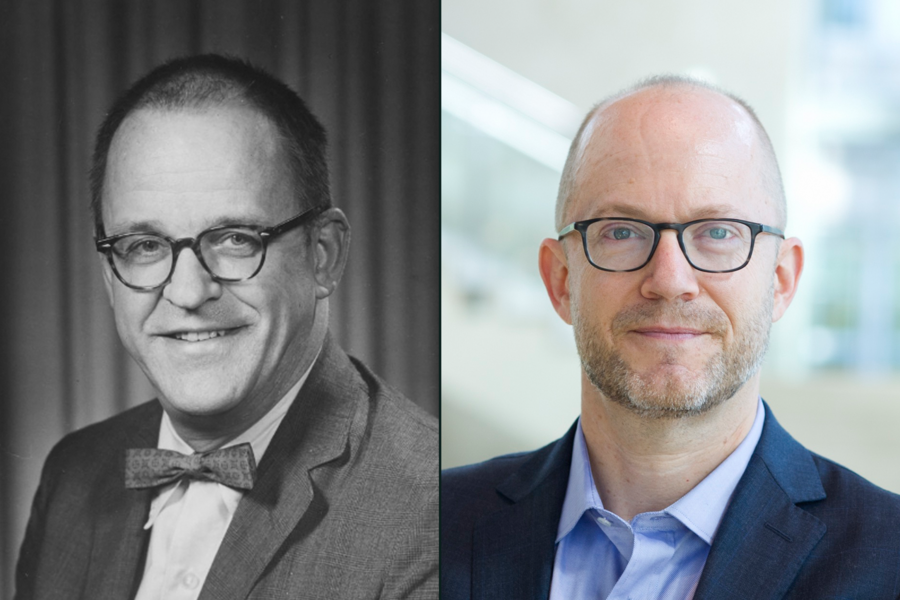
At a moment when global alliances are shifting, technological change is accelerating, and the boundaries between science and geopolitics are dissolving, understanding the world demands new ways of thinking.
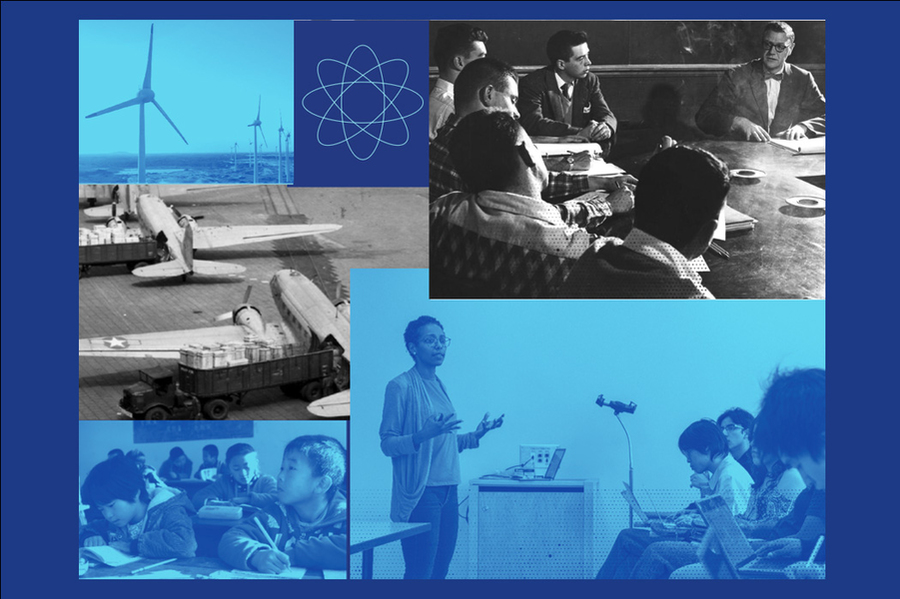
For 75 years, the MIT Center for International Studies (CIS) has helped meet that challenge — bringing together engineers, social scientists, and policy practitioners to confront the most pressing global challenges of their time. From developing the foundations of modern international security to redefining how the United States engages with the world, CIS has not only studied global affairs, it has helped shape them.
What distinguishes CIS is not just the scope of its work, but the way it approaches it.
At MIT, international studies does not sit apart from science and technology, it is embedded within it. This proximity has enabled generations of scholars to tackle geopolitical problems with tools and perspectives rarely found in traditional academic and policy environments.
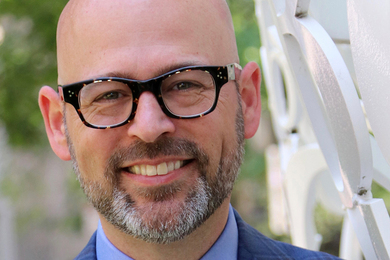
“Being situated within the world’s leading technical institution enables a lot of exciting possibilities,” says Evan Lieberman, the director of CIS and the Total Professor of Political Science and Contemporary Africa. “We focus on critical problems in international development and security — always with an eye towards the challenges and opportunities presented by technological change. Beyond that, a big part of our mission is to provide global perspectives and engagement avenues relevant to scientists and engineers.”
Established during the dawn of the Cold War, CIS pioneered a new understanding of global power: that science, technology, and geopolitics were becoming deeply intertwined. From the beginning, it convened faculty across disciplines — economics, political science, engineering, and beyond — setting a template that has since become a model for institutions around the world. Over the decades, this approach has produced an outsized impact.
In 1961, a memorandum to President John F. Kennedy from MIT economist Max Millikan — the inaugural director of CIS — helped inspire the creation of the Peace Corps, fundamentally reshaping how the United States engages in global development.
CIS scholars such as Lincoln Bloomfield and William “Bill” Kaufman played a central role in establishing security studies as a rigorous academic field in the late 1950s. Less than two decades later, Jack Ruina and George Rathjens founded the center’s Arms Control and Defense Policy Program (now known as the MIT Security Studies Program), which has influenced generations of policymakers and trained generations of scholars.
The study of modernization and political development has also long been central to the work of the center, with notable luminaries such as Lucian Pye and Myron Weiner helping to lead the way.
A legacy of global exchange
At the same time, CIS has reshaped how knowledge flows across borders. The MIT International Science and Technology Initiatives (MISTI), launched in 1983 by Institute Professor Suzanne Berger, has sent thousands of MIT students abroad to work, study, and conduct research alongside international partners — experiences that extend far beyond traditional study abroad. In doing so, it helped change longstanding assumptions about the United States’ role in the world, demonstrating that learning is most powerful when it is reciprocal.
That ethos of mutual exchange continues to define CIS today. Through initiatives such as the Global Seed Funds, MIT faculty, researchers, and their students collaborate with academic partners around the world to advance shared research agendas.
The connection between these initiatives can be traced to Richard Samuels, Ford International Professor of Political Science and director of CIS from 2000 until 2023. His creation of the MIT-Japan Program in 1981 served as the model for MISTI. He was also the visionary behind the launch of the Global Seed Funds in 2008.
Together, these programs reflect a consistent vision: that the strongest ideas emerge through sustained engagement with partners around the world.
Expertise in action
Drawing on deep regional expertise, CIS also serves as a platform for global engagement across MIT, mobilizing cross-disciplinary knowledge to respond to unfolding international crises and inform both scholarly and policy debates.
Its MIT-MENA Program, led by Richard Nielsen, associate professor of political science, recently convened experts to assess the energy and security implications of disruptions in the Strait of Hormuz; the MIT-Ukraine Program, under the direction of Elizabeth Wood, Ford International Professor of History, brings together scientific, technical, and academic expertise to design sustainable solutions for a nation at war; and the MIT-China Program, directed by Yasheng Huang, professor of global economics and management at the MIT Sloan School of Management, is creating a hub for scholars and policy experts focused on balancing the Institute’s engagement with China.
Scholarship that shapes security
For decades, the MIT Security Studies Program, directed since 2019 by Taylor Fravel, the Arthur and Ruth Sloan Professor of Political Science, has been a leading incubator of ideas that have shaped debates on grand strategy, nuclear policy, civil conflict and Asian security. Its affiliated scholars, fellows, and graduate students have produced policy relevant research that continues to inform policymakers grappling with an increasingly complex international security challenges.
Building on that legacy, SSP recently established the Center for Nuclear Security Policy (CNSP) — made possible by a $45 million gift from the Stanton Foundation. Directed by Vipin Narang, the Frank Stanton Professor of Nuclear Security and Political Science, the CNSP aims to expand MIT’s leadership in addressing one of the most urgent challenges of our time: managing the risks posed by nuclear weapons in a rapidly evolving and uncertain geopolitical environment.
Another cornerstone of CIS’s security work is Seminar XXI, currently led by Kelly Greenhill, who holds faculty appointments at MIT and Tufts University. The annual, nine-month program brings together rising leaders from across the U.S. government, military, and national security community. In three decades, more than 2,500 participants have engaged deeply with issues such as nationalism, technological disruption, and global conflict — developing new frameworks for decision-making in high-stakes environments.
Advancing research, expanding dialogue beyond its anchor programs, CIS continues to invest in the next generation of scholars and practitioners. Undergraduate research initiatives, postdoctoral fellowships, and visiting scholar programs — including the Robert E Wilhelm Fellowship — create space for emerging and established leaders to explore critical questions, from governance and corruption to political reform and social change.
It also prioritizes policy-relevant research by supporting conferences, workshops, labs, and research initiatives on key problems in international affairs.
Finally, CIS plays a vital role in connecting MIT to the broader world. Through public events like the Starr Forum, the center brings leading global voices to campus, fostering dialogue on issues that shape international politics and policy.
The next 75 years
As CIS looks to the future, its mission is evolving to meet a dramatically changing global landscape.
“The moment we’re in now is so different from the Cold War era,” says Lieberman. “We’re seeing a much more complex global system, with new actors and new kinds of challenges.”
In what Lieberman describes as CIS 2.0, the center is sharpening its focus on the forces that will define the coming decades. This includes the geopolitical implications of artificial intelligence, the future of global cooperation in an era of climate crisis, and the evolving role of the United States within an increasingly contested international order.
Addressing these challenges will require exactly the kind of interdisciplinary, globally engaged approach that has defined CIS for the past 75 years. It will also require a renewed commitment to collaboration — across fields, across institutions, and across countries.
“A key source of our value added is to convene complementary sources of expertise,” Lieberman says. “It’s about bringing people together who might not otherwise be in the same room, and asking how we can have the greatest possible impact.”
Seventy-five years after its founding, CIS remains guided by a simple but powerful idea: that understanding the world — and improving it — demands more than any single discipline, perspective, or nation can offer alone.
The CIS’s 75th anniversary symposium, taking place Oct. 15-16, will explore the defining challenges of today with leading thinkers.