
An easier way to engineer plants
MIT-led team uses nanoparticles to deliver genes into plant chloroplasts.
MIT-led team uses nanoparticles to deliver genes into plant chloroplasts.

New system of “strain engineering” can change a material’s optical, electrical, and thermal properties.
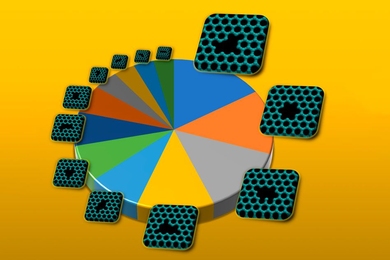
Theoretical analysis distinguishes observed “holes” from the huge list of hypothetically possible ones.

First measurement of its kind could provide stepping stone to practical quantum computing.
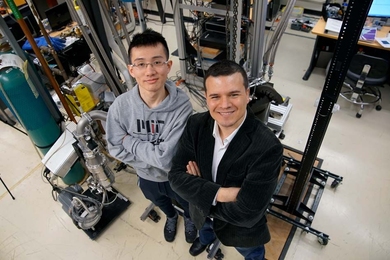
"Magic-angle" graphene named 2018 Breakthrough of the Year; first ionic plane and earliest evidence of hydrogen gas named to top 10 breakthroughs.
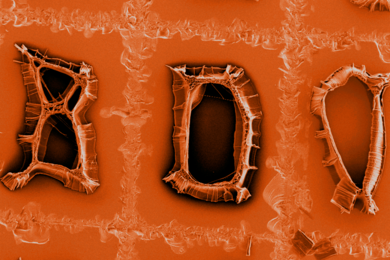
A grad student's research project unexpectedly yields a spooky message made from millions of carbon nanotubes.
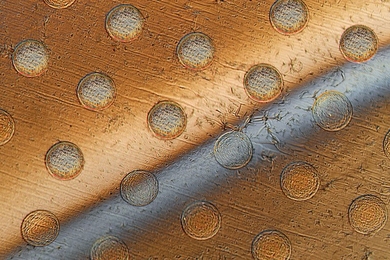
Technique from MIT could lead to tiny, self-powered devices for environmental, industrial, or medical monitoring.

Efficient method for making single-atom-thick, wafer-scale materials opens up opportunities in flexible electronics.
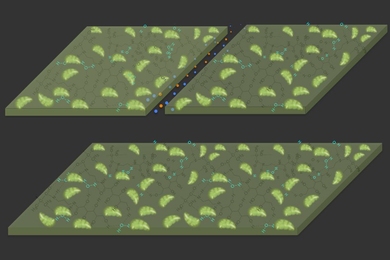
Taking a page from green plants, new polymer “grows” through a chemical reaction with carbon dioxide.
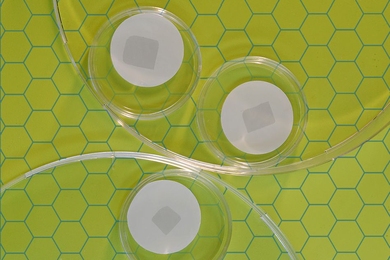
Fabrication technique could be integrated into manufacturing to make large-scale membranes.
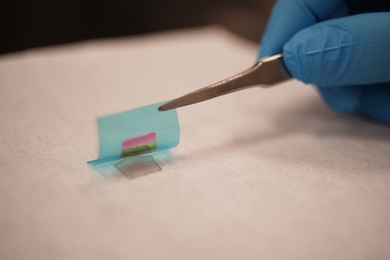
Cost-effective method produces semiconducting films from materials that outperform silicon.

New bolometer is faster, simpler, and covers more wavelengths.

The brittle material can turn flexible when made into ultrafine needles, researchers find.
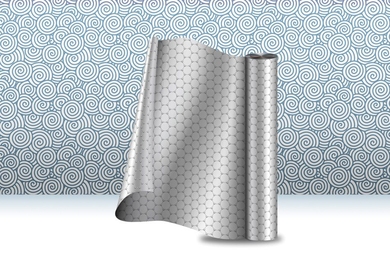
Scalable manufacturing process spools out strips of graphene for use in ultrathin membranes.
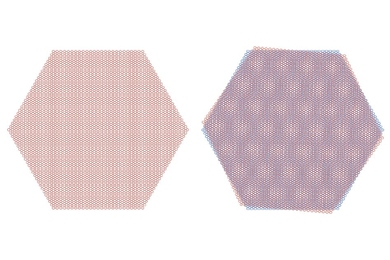
When rotated at a "magic angle," graphene sheets can form an insulator or a superconductor.