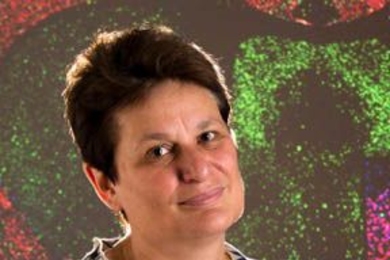
McGovern Institute awards 2017 Scolnick Prize to Catherine Dulac
Neurobiologist honored for her work on how pheromones control brain function and behavior.
Neurobiologist honored for her work on how pheromones control brain function and behavior.

A $20 million gift from Lisa Yang and Hock Tan ’75 SM ’75 will catalyze multidisciplinary autism research.
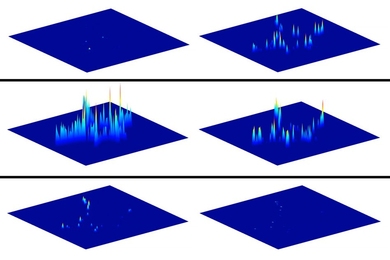
New technology could help neuroscientists understand how dopamine influences brain activity.
Research Scholars Program in Brain and Cognitive Sciences brings talented students to the department.

MIT scholars produce new method of harvesting correct answers from groups.
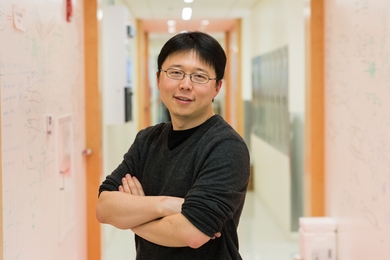
CRISPR pioneer named to inaugural chair created by Patricia and James Poitras '63, founders of MIT’s Poitras Center for Affective Disorders Research.
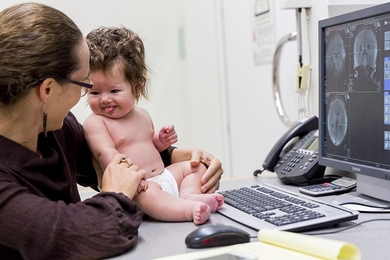
MRI scans reveal surprising similarities in activity patterns of infant and adult visual cortex.
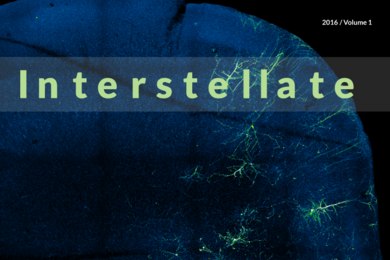
Caitlin Vander Weele, a graduate student in brain and cognitive sciences, launches a collaborative neuro-art pictorial magazine.

Study suggests computational role for neurons that prevent other neurons from firing.
Study finds the brain is biased toward rhythms based on simple integer ratios.
Study suggests reduced plasticity could account for reading difficulties.

Longtime professor and former department head spent a lifetime investigating the mechanisms of visual perception.
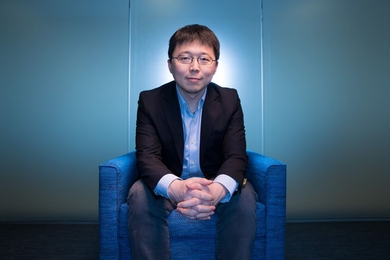
MIT and Broad Institute scientist shares recognition with four other scientists for developing CRISPR gene-editing systems.
![“…[I]f humans behave similarly to mice in response to this treatment, I would say the potential is just enormous, because it’s so noninvasive, and it’s so accessible,” says Li-Huei Tsai, the Picower Professor of Neuroscience, when describing a new treatment for Alzheimer’s disease.](/sites/default/files/styles/term_page__news_article/public/images/201612/MIT-li-huei-tsai.jpg?itok=eVlLbwfP)
Noninvasive technique reduces beta amyloid plaques in mouse models of Alzheimer’s disease.
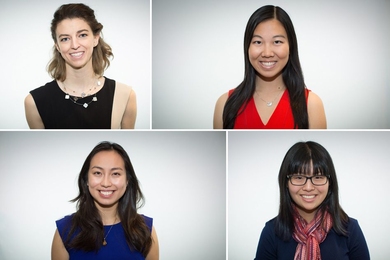
Alix de Monts, Lisa Ho, Anita Liu, and Melody Liu will study for one year at Tsinghua University in China.