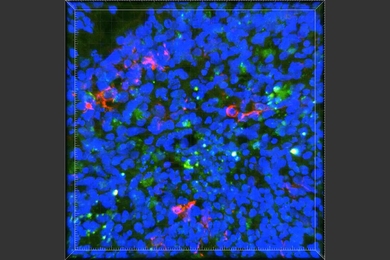
Neuroscientists discover roles of gene linked to Alzheimer’s
Study reveals why people with the APOE4 gene have higher risk of the disease.
Study reveals why people with the APOE4 gene have higher risk of the disease.

MIT faculty members are among 19 top scientists selected from across the nation.

Study tracks eye movement to determine how well people understand English as a foreign language.

Graduating students and alumni will conduct research abroad in 2018-19 academic year.

MIT grad students explain why some people hear "Yanny" and others hear "Laurel" in the audio clip that's taken the world by storm.

MIT neuroscientist is recognized for her pioneering work on the complexity and function of the basal ganglia.

Scientists pinpoint neural interactions that are necessary for observational learning.
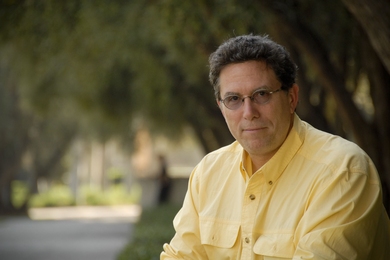
Neuroscientist honored for his work on the biology of neural stem cells and neural circuits that control emotional behaviors.

Finkelstein, Kardar, Wen, and Zhang honored for research achievements.

Study shows children remain adept learners until the age of 17 or 18.
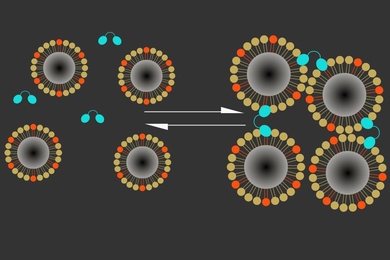
System detects direct signals of neural activity; could reveal patterns underlying behavior.

MIT cognitive scientist recognized for her work on the organization of the human brain.
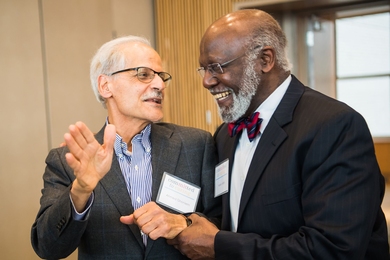
MIT’s Committed to Caring Award selects third slate of dedicated professors.

Neuroscientists train a deep neural network to analyze speech and music.

Prestigious honor society announces 213 new members this year.