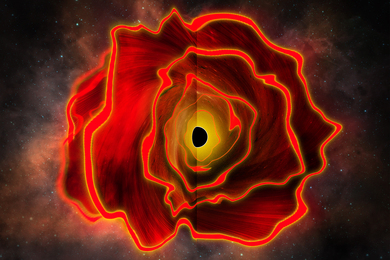
Astronomers discover a brand-new type of astrophysical object: A black hole star
The mashup of a black hole and an enormous star has never been seen before and could explain the mysterious little red dots often found in deep-space images.
The mashup of a black hole and an enormous star has never been seen before and could explain the mysterious little red dots often found in deep-space images.
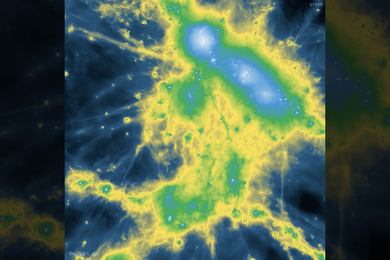
An MIT-led team used bright radio bursts to illuminate a vast source of matter that was previously unaccounted for.
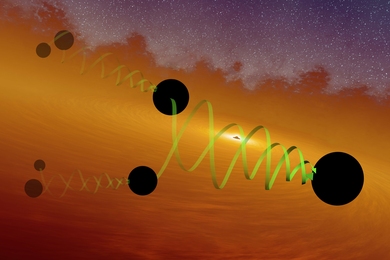
Physicists have found signs of colliding black holes that are themselves products of previous black hole smash-ups.

By analyzing X-ray reverberations and other astrophysical data, Erin Kara seeks to understand the most extreme objects in the universe.
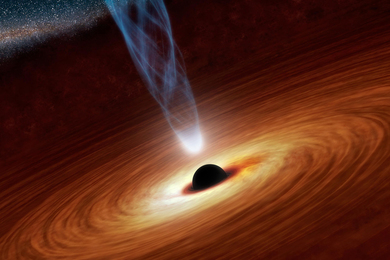
When the universe was just 850 million years old, this voracious black hole was already surprisingly mature, a new study finds.
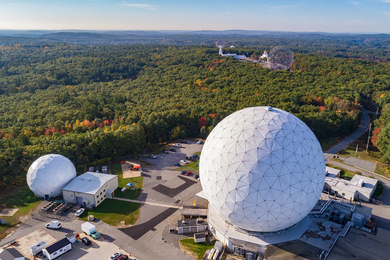
The legendary radio astronomy telescope returns to its science and educational mission at MIT Haystack Observatory.
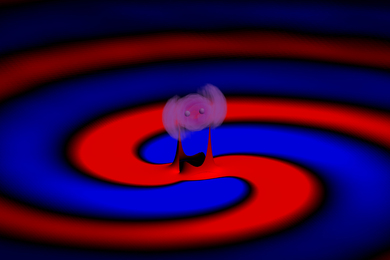
Gravitational waves emitted by colliding black holes may bear imprints of dark matter, which physicists could detect with a new model.

On GBH’s new show The Curiosity Desk, MIT LIGO researchers revel in the beauties of fundamental discovery science and MIT astronomers talk planetary defense.
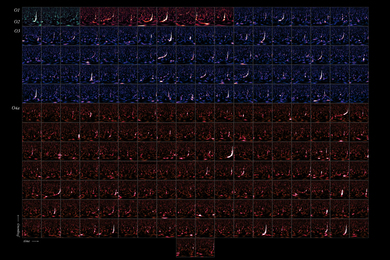
The latest crop of space-time wobbles includes a variety of heavy, fast-spinning, and lopsided colliding black holes.
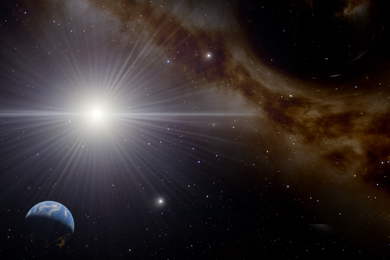
If a new proposal by MIT physicists bears out, the recent detection of a record-setting neutrino could be the first evidence of elusive Hawking radiation.
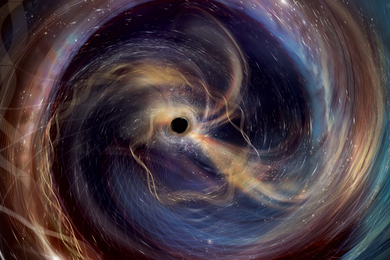
LIGO, Virgo, and KAGRA celebrate the anniversary of the first detection of gravitational waves and announce verification of Stephen Hawking’s black hole area theorem.

The longtime MIT professor shared a Nobel Prize for his role in developing the LIGO observatory and detecting gravitational waves.
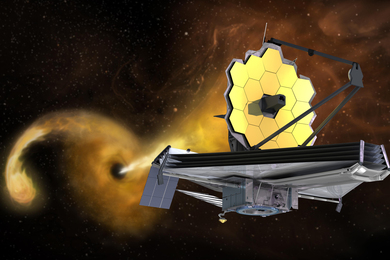
Unlike active galaxies that constantly pull in surrounding material, these black holes lie dormant, waking briefly to feast on a passing star.
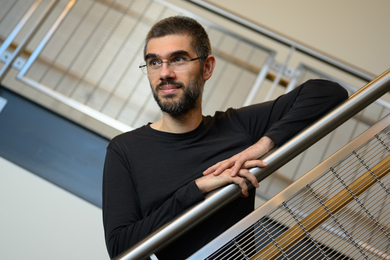
Physicist Salvatore Vitale is looking for new sources of gravitational waves, to reach beyond what we can learn about the universe through light alone.
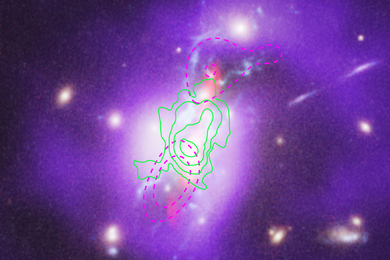
Observations from NASA’s James Webb Space Telescope help to explain the cluster’s mysterious starburst, usually only seen in younger galaxies.