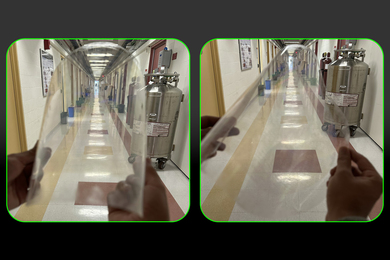
Fabrication platform could enable flexible, transparent next-generation photonic chips
This scalable process produces high-performance chips for applications like discreet wearables or pliable augmented-reality displays.
This scalable process produces high-performance chips for applications like discreet wearables or pliable augmented-reality displays.
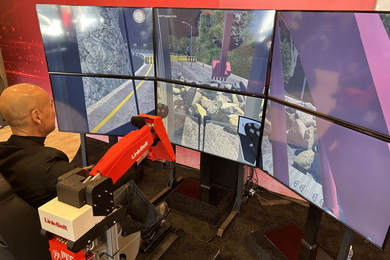
The new, more intuitive system could speed up the training process for excavator operators.
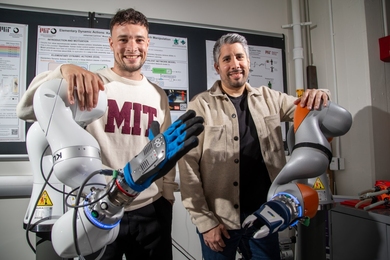
MIT engineers introduce an adaptive physical therapy system that uses generative AI to learn from physical therapists and interactively support stroke patients.
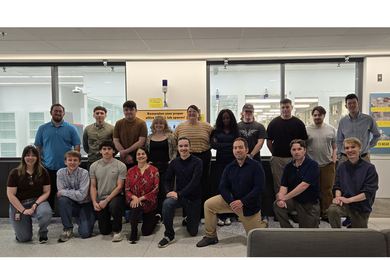
A hands-on boot camp teaches integrated photonics to community and four-year college students in the region.
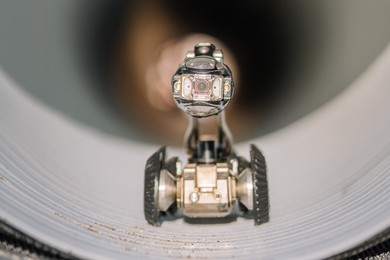
Researchers combined an efficient algorithm with dedicated hardware to rapidly generate 3D maps for navigation using minimal memory and power.
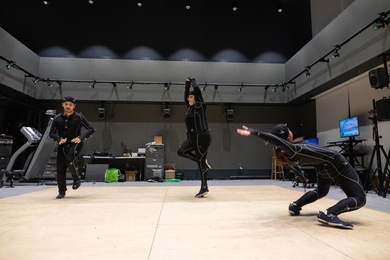
MIT.nano Immersion Lab collaborates with Emerson College students to advance the art of virtual production.
MIT professor will use the fellowship in behavioral sciences to advance a book on theme parks as immersive systems, extending her research from digital worlds to physical ones.
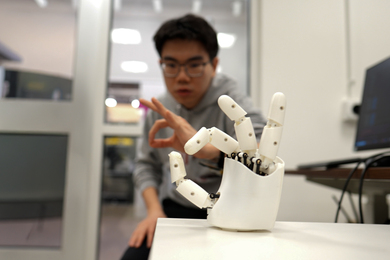
By moving their hands and fingers, users can direct a robot to play piano or shoot a basketball, or they can manipulate objects in a virtual environment.
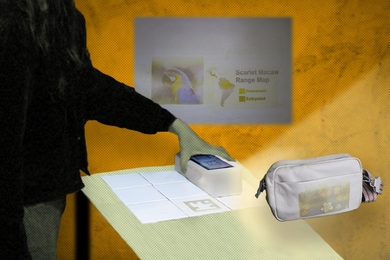
The portable “ChromoLCD” device combines LCD and LED lighting to customize high-quality designs onto things like shirts and whiteboards.
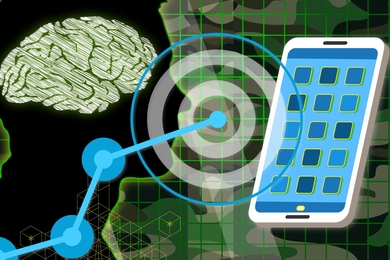
Tools build on years of research at Lincoln Laboratory to develop a rapid brain health screening capability and may also be applicable to civilian settings such as sporting events and medical offices.
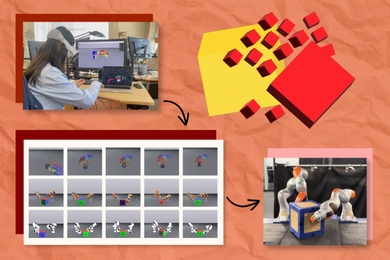
The PhysicsGen system, developed by MIT researchers, helps robots handle items in homes and factories by tailoring training data to a particular machine.
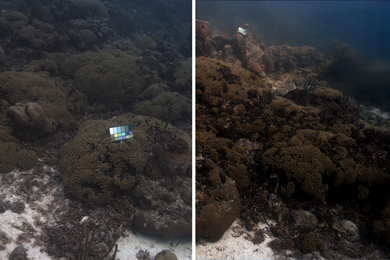
The color-correcting tool, known as “SeaSplat,” reveals more realistic colors of underwater features.
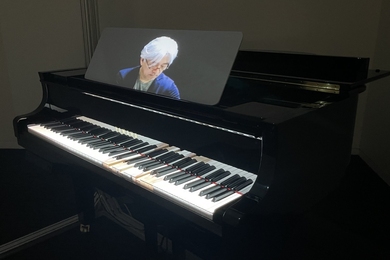
MIT researchers lay out design principles behind the TeleAbsence vision, how it could help people cope with loss and plan for how they might be remembered.
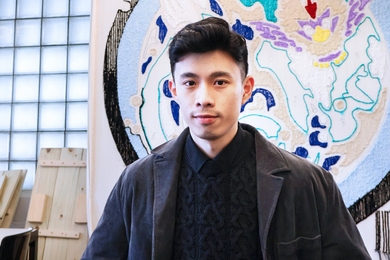
MAD Fellow Alexander Htet Kyaw connects humans, machines, and the physical world using AI and augmented reality.
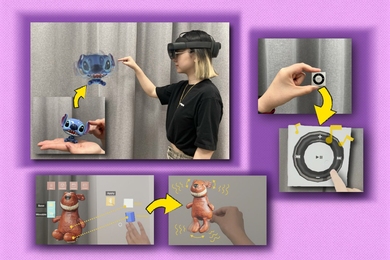
“InteRecon” enables users to capture items in a mobile app and reconstruct their interactive features in mixed reality. The tool could assist in education, medical environments, museums, and more.