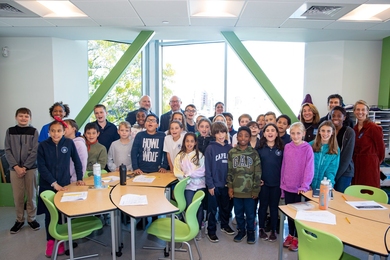
Bringing artificial intelligence and MIT to middle school classrooms
MIT researchers and collaborators have developed an open-source curriculum to teach young students about ethics and artificial intelligence.
MIT researchers and collaborators have developed an open-source curriculum to teach young students about ethics and artificial intelligence.
As natural language processing techniques improve, suggestions are getting speedier and more relevant.

Study: After eBay improved its translation software, international commerce increased sharply.
![Designed by an MIT team using artificial intelligence, “The [R]evolution of Hip Hop Breakbeat Narratives” is an immersive art installation designed for the forthcoming Universal Hip Hop Museum in New York City.](/sites/default/files/styles/term_page__news_article/public/images/201912/mit-hip-hop-museum-breakbeat-narratives-A1.jpg?itok=yVVI7kZi)
With its centerpiece exhibit for the forthcoming Universal Hip Hop Museum, an MIT team uses artificial intelligence to explore the rich history of hip hop music.
Stimuli that sound or look like gibberish to humans are indistinguishable from naturalistic stimuli to deep networks.
A novel experimental facility integrates automation and active learning, illuminating a path to accelerated scientific discovery.
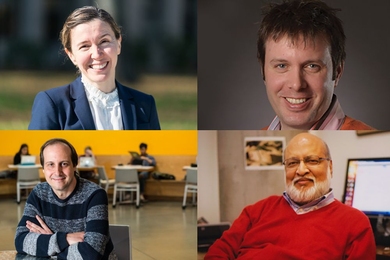
The Institute's largest academic department reorganizes with new leadership as part of the formation of the MIT Schwarzman College of Computing.

Model registers “surprise” when objects in a scene do something unexpected, which could be used to build smarter AI.
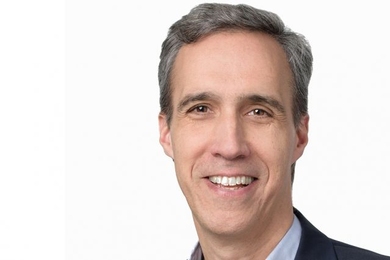
The inaugural dean shares an update on the process of building a college.

With “In Event of Moon Disaster,” the MIT Center for Advanced Virtuality aims to educate the public on deepfakes with an alternative history of the moon landing.
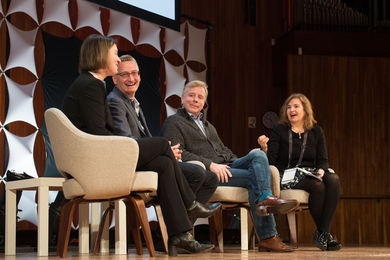
As automation rises in the workplace, speakers explore ways to train students and reskill workers.

Using deductive reasoning, the bot identifies friend or foe to ensure victory over humans in certain online games.
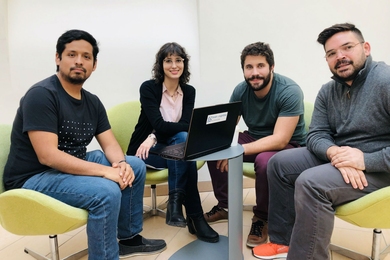
To help the region catch up, students organize summit to bring Latin policymakers and researchers to MIT.
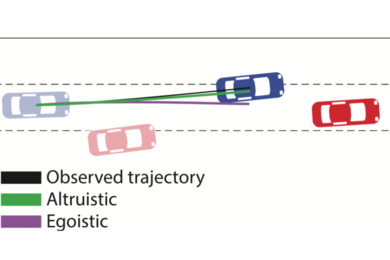
System from MIT CSAIL sizes up drivers as selfish or selfless. Could this help self-driving cars navigate in traffic?
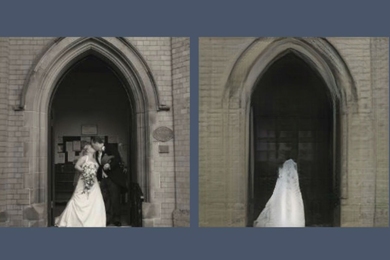
New tool highlights what generative models leave out when reconstructing a scene.