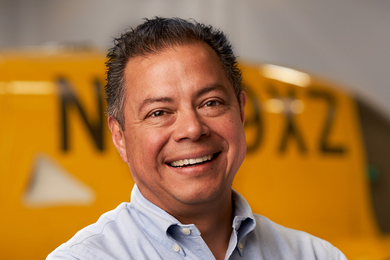
Building the self-flying future
For Leon Villegas SM ’08, MBA ’08, a journey of lifelong learning brought him from Mexico to building autonomous air taxis, with a key stop at MIT.
For Leon Villegas SM ’08, MBA ’08, a journey of lifelong learning brought him from Mexico to building autonomous air taxis, with a key stop at MIT.

In collaboration with industry representatives, Momentum students tackle wildfire suppression and search-and-rescue missions while building soft skills.

The computer-vision technique behind these maps could help avoid contrail production, reducing aviation’s climate impact.
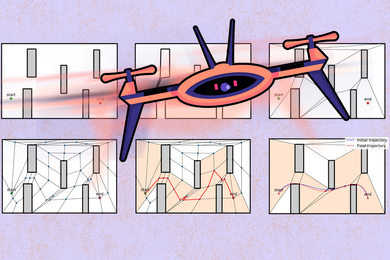
New algorithm could enable fast, nimble drones for time-critical operations such as search and rescue.
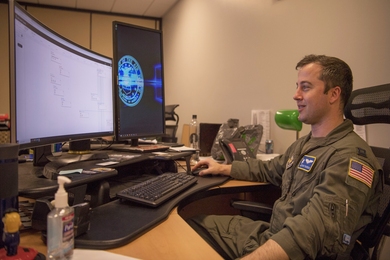
An optimization tool from the Department of Air Force–MIT AI Accelerator is transforming the laborious process of staffing C-17 cargo flights.
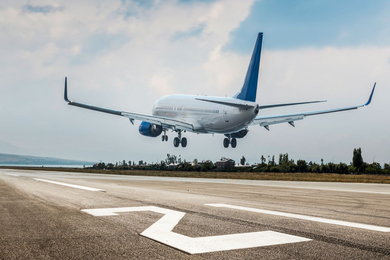
Proposed design could reduce nitrogen oxide emissions by 95 percent, a new study finds.
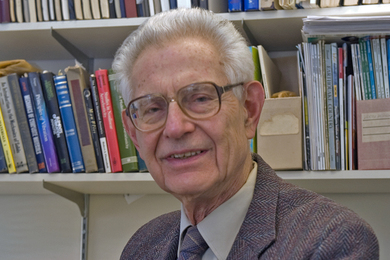
Longtime MIT professor and expert in aeroelasticity, structural dynamics, and composite materials remembered for his kindness and dedication to mentorship.

Book co-authored by Associate Professor Julie Shah and Laura Major SM ’05 explores a future populated with robot helpers.

On the ground, windy conditions strengthen these electrical flashes, but new experiments tell a different story for flying objects.
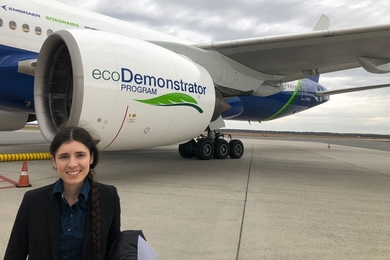
Jacqueline Thomas PhD ’20 recounts her final academic year at MIT, from once-in-a-lifetime field work to a virtual thesis defense.
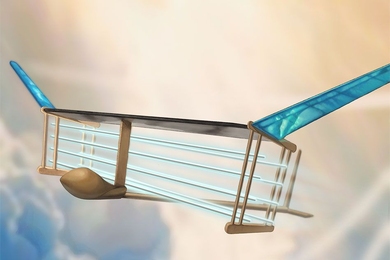
The silent, lightweight aircraft doesn’t depend on fossil fuels.

Longtime MIT professor was known for key contributions to aircraft and spacecraft designs.
Study shows that network carriers receive more complaints than cheaper airlines, regardless of actual service quality.
AeroAstro labs will research sustainable aviation solutions for the FAA.
Carbon nanotube deicing technologies developed at MIT could be in flight tests as early as next year.